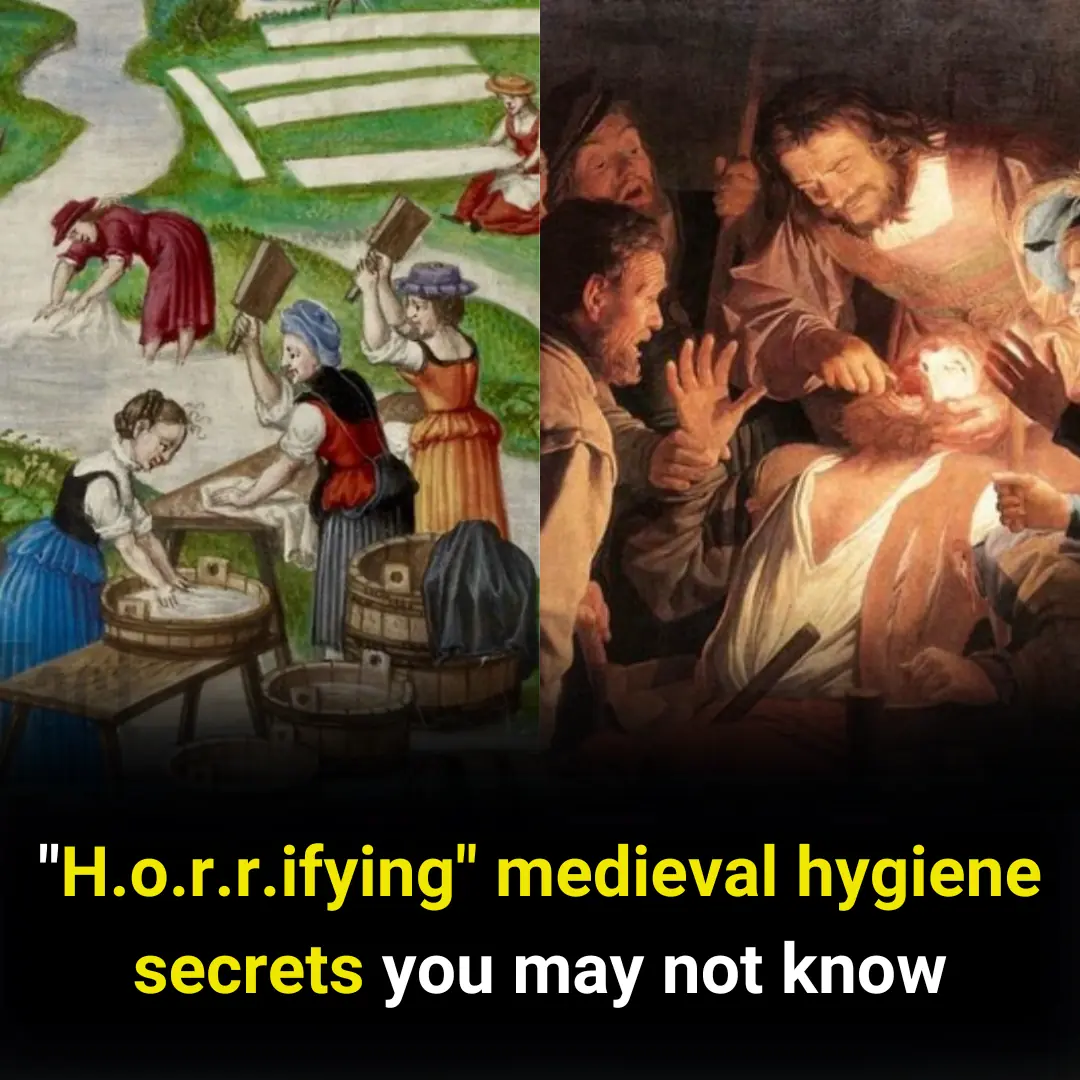
In the Middle Ages, personal and public hygiene was very different from today, and there were some surprising facts. Here are some interesting "hygiene secrets" from the period:
1. Toilets and waste disposal
Many castles and citadels had "garderobes", which were toilets built outside the walls, where waste fell directly into the moat or the ground below.
Some cities had primitive sewer systems, but most waste was dumped into the streets or rivers.
Farmers often used animal and even human excrement to fertilize their fields.
2. Bathing habits
Despite the misconception that medieval people were dirty, they did bathe, especially in the early days. Many cities had public baths where people could relax and wash.
However, in the 14th-15th centuries, due to fear of the plague, frequent bathing was restricted because it was believed that water could open pores and allow germs to enter.
3. Dental problems
The Middle Ages did not have toothpaste, but they used charcoal, salt or herbs to clean their teeth.
Some of the upper classes used scented wood or linen to clean their teeth.
4. Clothing and laundry
Because bathing was infrequent, people often wore many layers of linen undershirts to absorb sweat and changed them frequently.
The rich hired a washer, while the poor washed themselves with river or well water.
5. Combating bad odors
Perfumes and dried herbs such as lavender and rosemary were used to cover up unpleasant odors.
Some people stuffed scented sachets into their clothes to keep the smell pleasant.
Although medieval sanitation was quite primitive compared to today, people of that time also had many adaptations to stay as clean and healthy as possible.