He Gave Up Everything to Care for the Love of His Life in a Vegetative State — Their Story Will Break Your Heart
There are moments when life changes so suddenly that a person barely has time to understand what is happening. One minute, a young couple is making plans for the future, imagining a home filled with laughter, children, and ordinary happiness. The next, a medical emergency turns everything they once knew upside down.
For David César and Bruna de Sousa, that moment arrived on January 28, 2018. They were still young, deeply in love, and looking forward to building a family together. They had known each other since childhood, grown closer as teenagers, and eventually married after years of preparing for a shared future. Their dreams were simple: work, spend time together, strengthen their relationship, and one day welcome a child.
But an ordinary afternoon became the beginning of a struggle neither could have imagined.
While the couple was relaxing and watching a movie, Bruna suddenly began experiencing convulsions. What followed was a devastating medical emergency involving cardiac and respiratory arrest. David rushed to find help, desperately trying to save the woman he loved. Doctors eventually managed to resuscitate her, but the lack of oxygen had already caused severe damage.
The woman who had once shared every ordinary moment with him now faced a completely different reality. She could no longer walk or speak, and she required continuous assistance with everyday activities.
For David, the question was no longer what kind of future they would build together. It was how he could help Bruna survive the future that had suddenly been placed before them.
He would spend the following years learning how to care for his wife, navigating hospitals, medical appointments, financial difficulties, and exhausting daily responsibilities. He would also discover that love during a medical crisis requires far more than emotional promises.
It requires patience when progress is slow, courage when the future is uncertain, and the strength to keep going even when the person you love cannot respond in the way they once did.
Yet one part of their story is particularly difficult to forget: David did not see Bruna merely as a patient who needed assistance. He continued to see her as the childhood friend, partner, and wife with whom he had imagined growing old.
And when people suggested that he should abandon his responsibilities and begin a completely different life, his answer revealed just how deeply their relationship still mattered to him.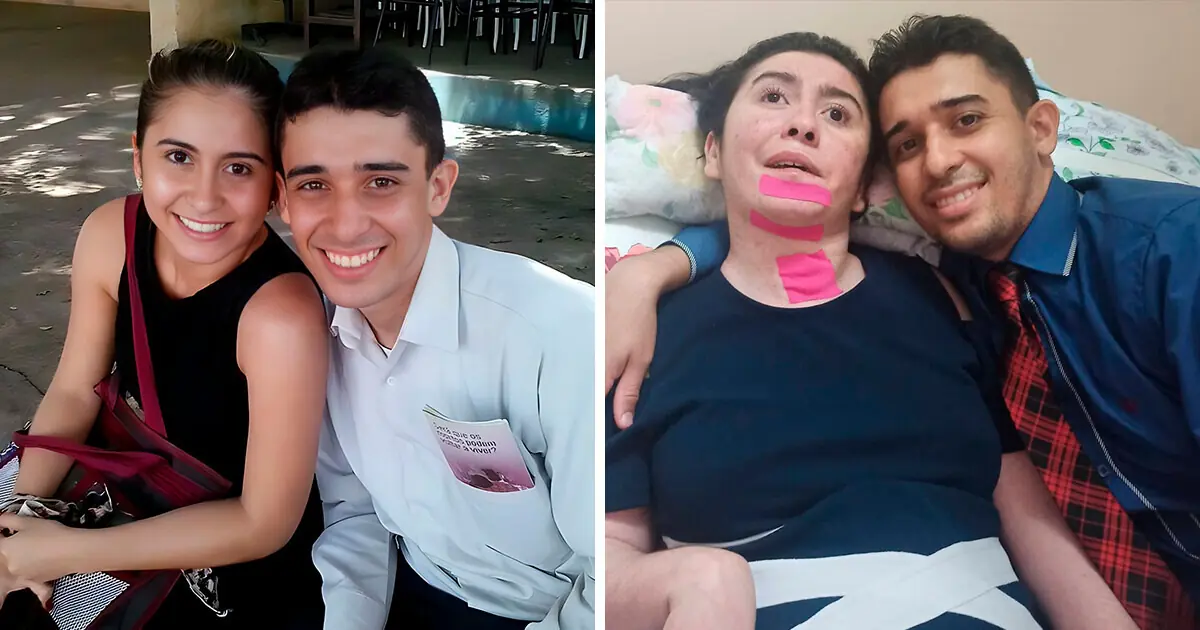
A Love Story That Began Long Before the Tragedy
David César and Bruna de Sousa did not meet as strangers searching for romance. According to David's account in an interview with Brazilian publication UOL VivaBem, they had known each other since childhood.
Their relationship developed over many years. They made a commitment to each other when they were teenagers, around the age of 14, although they officially began dating at 18.
Rather than rushing into marriage, they decided to wait until they felt emotionally and financially prepared. They wanted to establish themselves, understand their responsibilities, and create a stable foundation before making a lifelong commitment.
Eventually, they married when they were both 21.
Their early relationship was built around ordinary routines that many young couples would recognize. During the day, they worked. In the evenings, they spent time together, attended church, and maintained their relationship with family and friends.
Weekends were opportunities to visit relatives, go out, and enjoy time away from their responsibilities.
There was nothing extraordinary about the life they were building, and that was precisely what made it meaningful.
Bruna worked as a teaching assistant, helping include children with Down syndrome in classroom activities. David worked in an administrative position before later becoming an app-based driver.
They were not living a life of extraordinary wealth or luxury. Their plans centered on creating a secure home, supporting one another, and gradually achieving the things they hoped to accomplish.
One of their biggest dreams was to have a child in 2020.
It was a future they discussed with excitement, believing they still had plenty of time to make their plans a reality.
Looking back at photographs from that period, it is easy to see why their story has affected so many people. The images show two young adults smiling together, seemingly unaware of how dramatically their lives would change.
The photographs also remind readers that the people who experience devastating medical emergencies are not simply patients or subjects of dramatic headlines. They are individuals with histories, relationships, ambitions, and families.
Before Bruna became someone who needed constant care, she was a young woman with a profession, personal interests, and dreams of becoming a mother.
Before David became her primary caregiver, he was a husband looking forward to building a family with the woman he had loved since childhood.
Their story did not begin with tragedy. It began with a relationship that had grown gradually over many years.
And that history would become one of the reasons David continued to fight for their future.
The Afternoon That Changed Everything
January 28, 2018, began like an ordinary day.
David and Bruna visited his mother for lunch. After eating, they settled down to watch a movie together.
Nothing suggested that the afternoon would become a medical emergency.
Then Bruna suddenly became unwell.
According to David's interview, she began experiencing convulsions, followed by cardiorespiratory arrest. The emergency happened without the warning signs he had expected from a serious illness.
He later explained that Bruna had seemed healthy and had not complained of pain or other problems beforehand.
The suddenness of the event left him struggling to understand what was happening.
He immediately rushed outside, asking neighbors whether someone could lend him a vehicle so he could get his wife to an emergency medical facility.
There was no time to prepare emotionally. He simply needed to find help.
When Bruna reached medical care, doctors worked to restore her vital functions. David recalled that approximately 25 minutes passed before the medical team managed to resuscitate and intubate her.
Those minutes were critical.
The brain depends on a continuous supply of oxygen. When circulation and breathing stop, brain cells can begin suffering damage very quickly. The longer the brain remains without sufficient oxygen, the greater the risk of lasting neurological injury.
Bruna was transferred to a hospital, where she experienced another cardiorespiratory arrest.
Medical professionals conducted examinations and evaluations over the following days to understand the extent of the damage.
The news David eventually received was devastating.
Doctors explained that the prolonged lack of oxygen had caused serious neurological consequences. She had suffered brain injury and additional complications, including cardiac arrhythmia.
David recalled that the medical team had prepared him for the possibility that Bruna might remain in a persistent vegetative state. They reportedly told him that even the possibility of her opening her eyes would represent a significant development.