David's decision to remember and discuss their shared past was one way of keeping that history present.
The Dreams They Had Not Forgotten
Among the details David shared, one of the most emotional was the couple's original dream of having a child.
Before Bruna's medical emergency, they had hoped to become parents in 2020.
It was a natural next step in the life they had imagined together.
The emergency forced them to reconsider almost everything.
Instead of preparing for parenthood, they had to focus on Bruna's survival, rehabilitation, and long-term care.
Their plans were put on hold.
David did not describe the loss of those dreams as a reason to stop loving Bruna. Instead, he continued to hope that one day they might be able to return to the future they had once imagined.
He expressed his belief that treatment and rehabilitation could bring further improvements.
He wanted to see Bruna recover and eventually resume some of the activities that had once been part of their shared life.
Such hope can be emotionally important, although it should not be confused with a guaranteed medical prognosis.
Families dealing with severe brain injuries often live between hope and uncertainty.
They may celebrate small changes while also learning to adapt to limitations that remain.
The process can be slow and unpredictable.
For David, remembering their dreams gave him a reason to continue looking forward.
He did not know exactly what the future would bring, but he wanted to preserve the possibility of a better life.
That is perhaps the most human part of their story.
People do not always need certainty to continue caring for someone they love.
Sometimes they simply need a reason to believe that tomorrow is worth facing.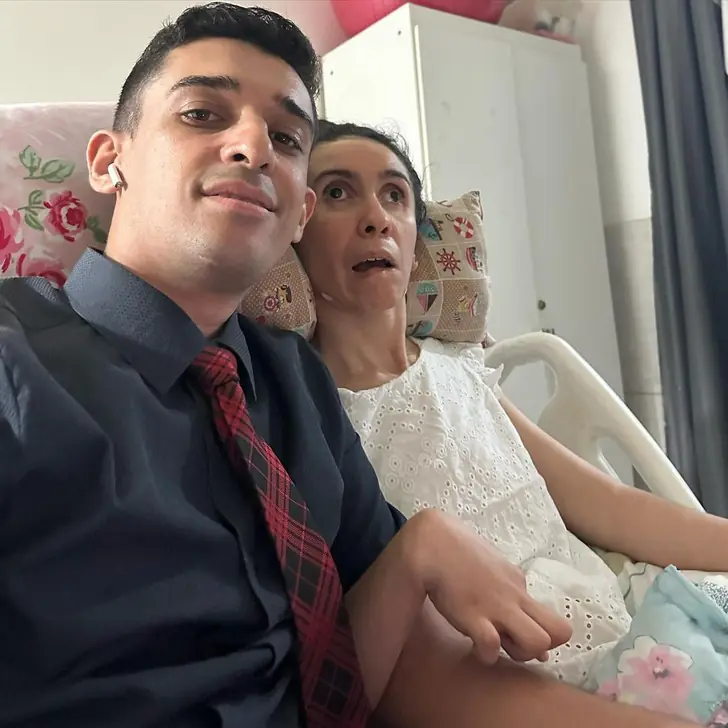
The Photographs That Tell Two Different Stories
The images associated with David and Bruna have become an important part of how people understand their relationship.
One photograph shows them when they were younger, smiling together before the medical emergency.
Their expressions capture the happiness of a couple who had spent years building a relationship.
Another photograph shows David beside Bruna after her condition changed.
The contrast is difficult to ignore.
The first image represents the life they had planned.
The later image represents the reality they were forced to confront.
But both photographs show the same two people.
It is important not to look at the later photographs only through the lens of tragedy.
Bruna remains the woman David chose to marry. David remains the partner who shared her childhood memories and adult life.
Their relationship did not become meaningless because their circumstances changed.
The photographs also remind readers that medical emergencies can happen to people who appear healthy.
Bruna was reportedly not experiencing obvious warning symptoms before the event described by David.
That does not mean every sudden illness can be predicted or prevented.
It does demonstrate why prompt emergency care and access to medical services are important.
For families, the experience can be life-changing in ways that are difficult to anticipate.
The emotional consequences may continue long after the initial emergency.
The financial impact can also remain for years.
And the person who survives may need a level of support that changes the daily routine of everyone around them.
Looking at the photographs, it is tempting to focus only on David's sacrifice.
But Bruna's story deserves equal attention.
She was the person who experienced the medical emergency, the neurological injury, the prolonged hospitalization, and the loss of much of her previous independence.
Her life should not be reduced to an illustration of someone else's devotion.
She deserves to be remembered as a person whose future changed unexpectedly and whose family continued trying to provide her with dignity and care.
An Ending That Is Really About Continuing
The story of David César and Bruna de Sousa became widely shared because it raised a question that many people find difficult to answer:
What does love look like when the person you love can no longer live the way they once did?
For David, the answer was found in everyday actions.
It was helping Bruna with personal care.
It was organizing medical appointments.
It was working late at night to earn money.
It was speaking to her about their memories.
It was looking for additional treatment options.
It was accepting assistance from relatives and volunteers rather than pretending he could manage everything alone.
And it was continuing to regard her as his wife.
The story does not suggest that every caregiver must make identical decisions. Nor does it mean that people who cannot provide full-time care have failed their loved ones.
Long-term disability creates challenges that require compassion, medical support, and realistic decisions.
But David's experience shows how powerful a person's commitment can become when they refuse to see a loved one only through the limitations of an illness.
Their story also highlights the importance of community.
The volunteers who helped during Bruna's hospitalization, the relatives who assisted at home, the healthcare professionals who provided treatment, and the people who contributed to fundraising all played a role.
David may have carried much of the daily responsibility, but the journey was not made possible by one person alone.
As reported in the Brazilian interviews, Bruna's condition had shown some improvements during her hospitalization, and she continued to receive support after returning home.
The available reports do not establish a complete recovery or provide a verified account of her medical condition today. It is therefore important not to present the earlier treatment hopes as a confirmed happy ending.
What can be said is that their story became a powerful example of the difficulties faced by families living with severe neurological injury.
It is also a reminder that people providing care need emotional support, financial assistance, and opportunities to rest.
Perhaps the most meaningful part of David's story is not simply that he stayed.
It is that he continued to see a person, a partner, and a shared history where others might have seen only a medical diagnosis.
He had once imagined growing old with Bruna, raising children, and enjoying the ordinary pleasures of married life.
The emergency changed those plans, but it did not erase the years they had spent building their relationship.
And while nobody can promise what the future will bring, David's commitment demonstrates that compassion is often expressed through the smallest repeated actions rather than dramatic declarations.
Sometimes love is not a perfect photograph or a beautiful wedding promise.
Sometimes it is waking up, preparing another day of care, arranging another appointment, and finding the strength to continue.
For David and Bruna, that became the reality of their life together.
Their story leaves readers with one question worth considering:
If the person you loved could no longer give you the life you once imagined, would you still find a way to make that person's life meaningful?