If you use your phone as an alarm clock, place it on a nearby table rather than directly beside your pillow. This allows you to hear the alarm without making it as easy to reach for the device every time you wake up.
A bedroom should provide an opportunity to rest, not become an extension of your work inbox or social media feed.
4. It May Affect Your Mood and Emotional Well-Being
The relationship between sleep and emotional health is significant. When people do not get enough quality sleep, they may become more irritable, impatient, or sensitive to everyday stress. Small problems can feel more difficult to manage, and maintaining a positive mood may require more effort.
Late-night phone use can contribute to this pattern in several ways. Spending too much time scrolling can reduce sleep duration, while emotionally intense content can leave the mind active when it should be winding down.
For example, reading upsetting news, comparing your life with carefully selected images on social media, or participating in an online argument may create feelings of worry, frustration, or inadequacy. Work messages received late at night can also make it difficult to stop thinking about unfinished tasks.
Some people repeatedly check their phones because they are waiting for a reply or worried about missing an important update. This anticipation can keep their attention focused on the device instead of allowing them to relax.
However, it is important not to assume that using a phone at night directly causes anxiety or depression. Emotional health is influenced by many factors, including personal circumstances, relationships, physical health, and existing mental health conditions. Nighttime phone habits may contribute to difficulties for some people, but they are not the only possible explanation.
If you notice that scrolling leaves you feeling worried or emotionally drained, try avoiding stressful content before bed. Replace it with a calming activity, such as reading a book, listening to gentle music, or preparing for the following day.
5. Poor Sleep Can Make Concentration More Difficult
Sleep helps the brain process information, support memory, and maintain attention. When nighttime phone use repeatedly reduces the amount of sleep you get, the consequences may become noticeable during the following day.
You might find it harder to concentrate on work, remember small details, follow conversations, or complete tasks efficiently. Some people also experience slower reactions and greater difficulty making decisions when they are tired.
These effects can be especially important for students, office workers, drivers, and anyone whose responsibilities require sustained attention. A person may blame themselves for being unproductive without realizing that their bedtime routine is contributing to the problem.
The difficulty can become more noticeable when late-night phone use occurs repeatedly. Losing sleep over several nights may leave you feeling increasingly exhausted, even if you occasionally sleep longer to compensate.
Frequent phone checking can also interrupt concentration during the day. A quick glance at a notification may lead to several minutes of browsing, making it harder to return to the original task.
To improve focus, try protecting your sleep schedule and keeping the phone away during periods that require concentration. Turn off unnecessary alerts and decide in advance when you will check messages.
Better sleep does not guarantee perfect concentration, but it can help reduce avoidable fatigue and support more consistent performance.
6. The Habit Can Become Difficult to Control
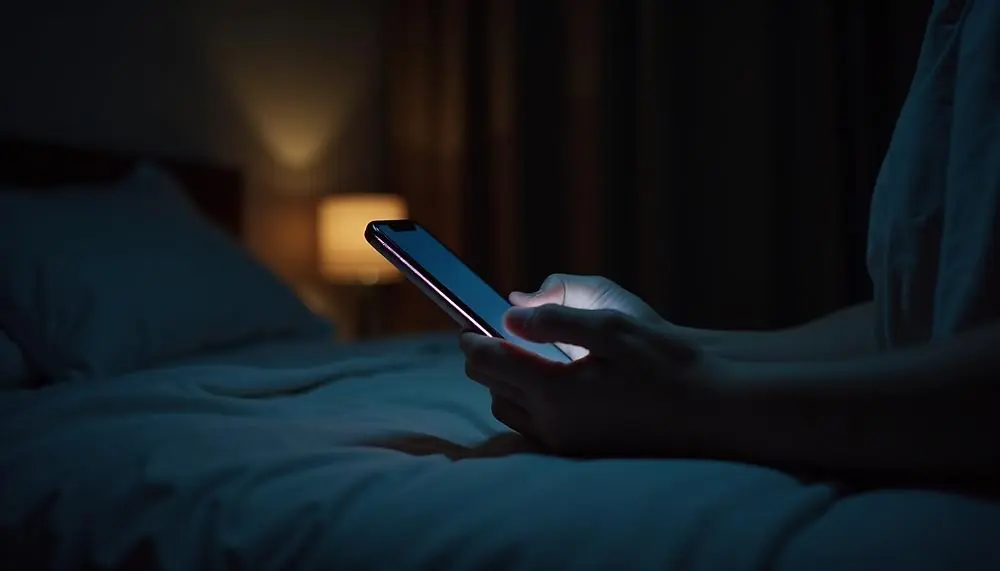
For many people, checking a phone before sleeping begins as a simple routine. Eventually, it may become an automatic behavior that happens even when they are not expecting a message or looking for anything important.
Smartphones are designed to make content easy to access. New posts, videos, notifications, and messages can encourage people to keep checking because the next interaction might provide something interesting or rewarding.
This pattern can make it difficult to stop at the planned time. Someone may recognize that they are tired and still continue scrolling because putting the phone down feels less appealing than seeing what appears next.
The habit can also create a sense of discomfort when the phone is out of reach. Some people worry that they will miss important news, messages, or social interactions if they do not check frequently.
This does not mean that every person who uses a phone frequently has an addiction. However, if device use repeatedly interferes with sleep, work, relationships, or everyday responsibilities, it may be worth changing the routine.
Rather than relying entirely on self-control, make the environment support your goal. Charge the phone away from the bed, move distracting applications off the home screen, and disable notifications that are not important.
You can also begin with a manageable target, such as avoiding social media for the final 15 minutes before sleep. Once this becomes easier, extend the phone-free period gradually.
7. Keeping a Phone Beside Your Bed Is Not Automatically Dangerous
There is an important difference between keeping a phone in the bedroom and using it in a way that disrupts sleep.