Sun protection is also important for the lips, especially for people who spend considerable time outdoors.
These measures do not eliminate every possible risk, but they can help reduce preventable exposure to known harmful factors.
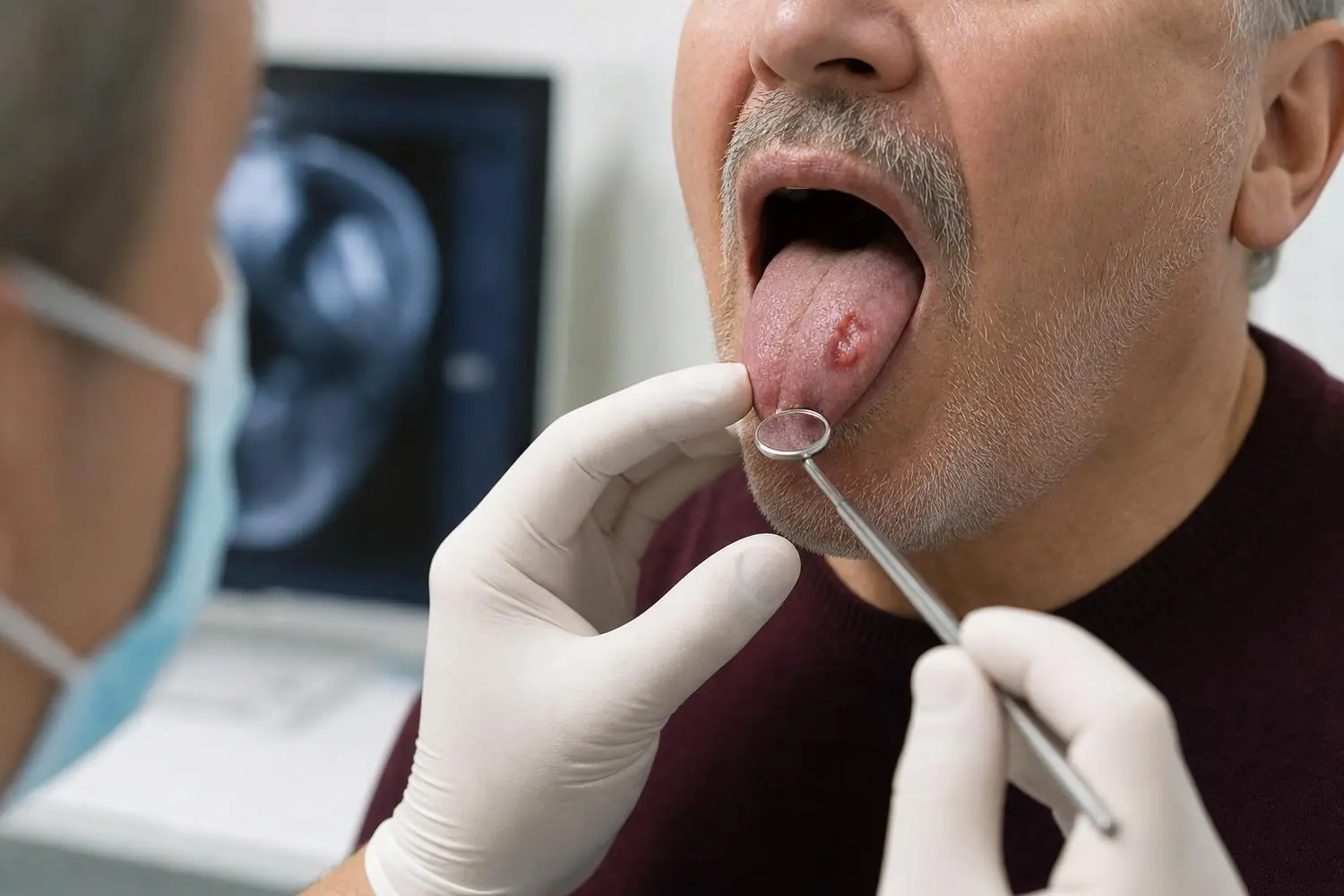
Who Should Pay Particular Attention to Oral Changes?
Anyone can develop a bump inside the mouth, including children and young adults.
However, some people may benefit from being especially attentive to persistent changes.
Older adults may have a higher risk of certain oral diseases, and some may wear dentures or dental appliances that can create repeated friction.
People who smoke or use smokeless tobacco should be particularly careful about unexplained oral lesions.
Those who drink heavily, have a history of oral cancer, or have other relevant medical risk factors should also discuss persistent abnormalities with a healthcare professional.
It is important to remember that risk factors do not determine an individual's diagnosis.
A person without any known risk factors can still develop an oral condition that needs treatment. Likewise, having a risk factor does not mean that every bump is cancer.
The purpose of knowing these factors is to encourage appropriate evaluation, not to create fear.
What Happens If the Bump Is a Harmless Cyst?
If a dentist determines that a bump is a small mucocele, treatment may not be necessary immediately.
Some mucoceles resolve naturally, especially when they are small and the affected area is no longer being irritated.
A dentist may recommend monitoring the lesion and avoiding habits such as lip biting or repeatedly touching the swelling.
If the cyst is large, uncomfortable, recurrent, or interfering with eating or speaking, treatment may be considered.
Depending on the case, a clinician may remove the cyst and the affected minor salivary gland tissue to reduce the likelihood of recurrence.
The appropriate treatment depends on the location, size, and behavior of the lesion.
A person should not attempt to drain a mucocele at home, even if it appears to contain clear fluid.
What Happens If the Bump Is an Irritation Fibroma?
An irritation fibroma may remain stable for a long time.
If it is small and does not interfere with daily activities, a dentist may first address the source of irritation.
For example, a sharp tooth may be adjusted, or a poorly fitting appliance may be repaired.
If the growth remains, becomes uncomfortable, or requires confirmation of the diagnosis, removal may be recommended.
The procedure is often performed under local anesthesia.
The removed tissue may be sent to a laboratory for examination, particularly when the diagnosis is not completely certain.
After treatment, avoiding repeated irritation is important. If the original cause remains, a similar growth may develop again.
When a Mouth Bump Requires Urgent Attention
Most small oral bumps are not emergencies.
However, certain symptoms require prompt medical attention.
Seek urgent care if swelling in the mouth is rapidly increasing and is affecting breathing or swallowing.
A rapidly spreading infection, severe facial swelling, fever with significant oral swelling, or difficulty opening the mouth may also require urgent evaluation.
If the bump is accompanied by persistent bleeding that does not stop, seek immediate medical assistance.
For a persistent unexplained lesion without emergency symptoms, arrange a dental or medical appointment rather than waiting for it to become painful.
A healthcare professional can help determine whether the condition requires routine treatment, further testing, or referral to an oral surgeon or specialist.
A Simple Oral Health Check You Can Do at Home
A brief visual check can help you notice changes, but it should not replace regular dental visits.
Once in a while, when brushing your teeth, take a moment to look at the inside of your mouth.
Use a mirror and good lighting.
Check the lips, inner cheeks, gums, tongue, and the area beneath the tongue.
Look for a new bump, persistent sore, unusual patch, or area that seems thicker than the surrounding tissue.
If you notice something unusual, make a note of when you first saw it.
You may take a photograph for your own comparison, provided it can be done comfortably and without repeatedly irritating the area.
If the change persists, grows, or develops other symptoms, show the photograph to your dentist.
The purpose of this simple habit is to recognize changes early, not to diagnose them independently.
Regular dental examinations remain important because some areas of the mouth are difficult to inspect accurately at home.
The Most Important Thing to Remember
A small bump inside the mouth can have many explanations. It may be a harmless mucus-filled cyst, a benign fibroma caused by repeated irritation, a minor injury, or another oral condition.
The appearance of the bump alone is not enough to determine its cause.
The most important signs to remember are persistence, growth, unexplained bleeding, unusual color changes, and difficulty chewing, swallowing, or speaking.
If an unexplained lump or sore remains for more than two weeks, arrange an examination with a dentist or doctor. Do not wait for it to become painful before seeking advice.
Most oral bumps are not cancer. However, recognizing persistent changes and getting them checked is one of the simplest ways to protect your oral health.
A small bump may turn out to be nothing serious, but getting the right answer is always better than guessing.