At first glance, the image looks fairly simple: a large group of dark and light animal silhouettes arranged together against a pale background. You can immediately recognize a cow in the center and what appears to be a bear on the left.
But then the question at the top changes everything:
“How many animals do you actually see?”
Suddenly, the image becomes much more difficult.
What initially looks like one large animal scene is actually a visual puzzle designed to make your brain search for shapes hidden inside other shapes. Some animals are clearly visible, while others are formed by negative space, overlapping silhouettes, or cleverly positioned body parts.
The challenge is not simply about having good eyesight. It is about how your brain interprets visual information.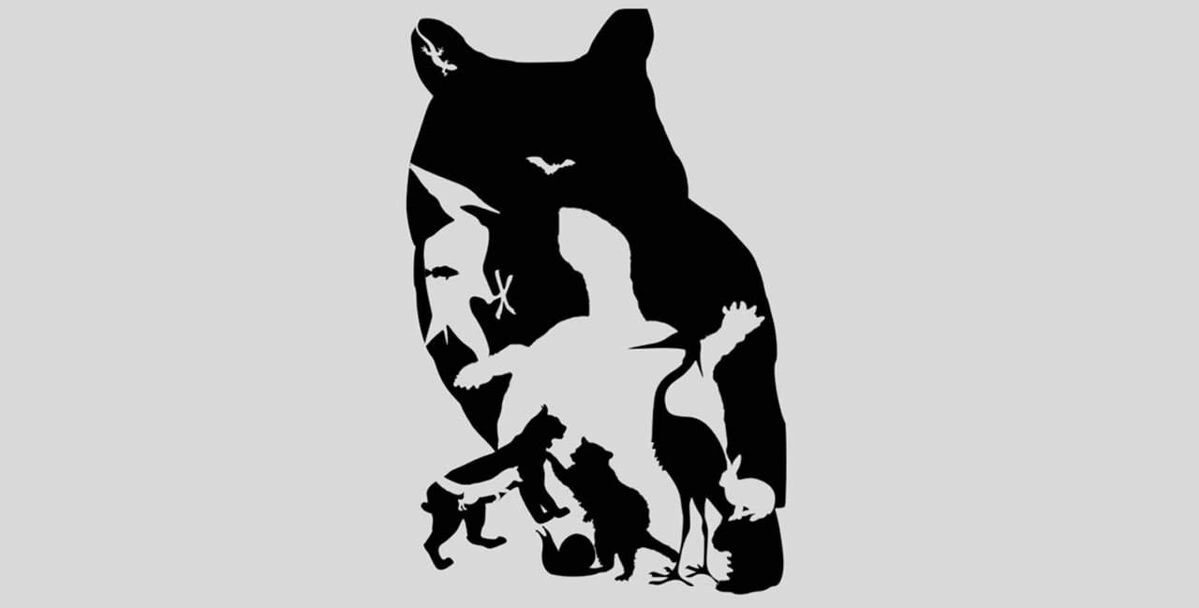
The First Animals You Notice
Most people will probably identify the largest and most obvious figures first.
The cow is the easiest one to recognize. Its head, horns, body, legs, and tail create a strong silhouette in the center of the image.
On the left, another large dark shape resembles a bear walking forward. Its head, back, legs, and rounded body are clearly defined.
These large animals act as visual anchors.
Once your brain recognizes them, however, it tends to assume that it understands the entire picture.
And that's exactly where the puzzle becomes interesting.
Look Beyond the Obvious Shapes
The trick is that several animals appear to overlap.
Instead of giving every animal its own separate outline, the artist uses the boundaries of one figure to create another.
This is a classic technique used in optical illusions and hidden-object puzzles.
Your brain normally tries to organize complicated visual information as quickly as possible. When it sees a familiar outline resembling a cow, it tends to group the surrounding shapes together rather than carefully analyzing every curve.
That's why you can look directly at the image and still miss animals that are right in front of you.
The Negative Space Is Important
One of the biggest clues in this puzzle is the negative space.
Negative space refers to the areas around and between objects rather than the objects themselves.
In ordinary images, we tend to focus on the positive shapes—the things that are actually drawn.
In an optical illusion, however, the empty areas can form recognizable figures.
A curved section between two larger animals may suddenly look like a head.
A gap between legs may resemble another animal's body.
A dark region that initially appears to be part of a larger silhouette may actually contain an entirely separate figure.
This means you shouldn't only ask:
“What animal is this shape?”
Instead, ask:
“What other animal could be created by the space around it?”
Try Looking at the Image in Sections
If you want to solve the puzzle yourself, don't stare at the entire image at once.
Break it into smaller sections.
Start With the Left Side
Focus on the large dark animal.
The bear-like silhouette is relatively easy to recognize.
Look carefully around its head, back, legs, and underside.
Instead of assuming every dark shape belongs to the bear, examine where one outline seems to stop and another shape might begin.
Move to the Center
The white cow is the most prominent figure in the center.
Look at its neck, chest, legs, and underside.
The overlapping dark shapes beneath and around the cow are particularly important.
Try following each contour separately rather than treating the entire dark region as one object.
Examine the Lower Center
This is where the puzzle becomes especially deceptive.
A small mouse-like animal can be seen near the bottom center.
Because it is much smaller than the main figures, your eyes may initially treat it as part of the larger silhouette.
Once you notice it, however, its shape becomes much easier to recognize.
Finally, Look Toward the Right
A small cat-like figure appears on the right side beneath the larger animal shapes.
Its upright body and pointed ears make it easier to identify once you know where to look.
But don't stop there.
The spaces around the cat and the larger silhouettes may contain additional shapes.
Why Do People See Different Numbers?
This is one of the most entertaining aspects of visual puzzles.
Two people can look at exactly the same image and report different answers.
One person may identify only the obvious large animals.
Another may notice several smaller figures.
Someone else may count a shape that another person considers merely part of an existing animal.
This happens because visual perception is an interpretation, not simply a direct recording of everything in front of your eyes.
Your brain uses previous experience, patterns, expectations, contrast, and context to decide what you're looking at.
If a shape resembles an animal, your brain may categorize it as one.
But if the same shape is viewed from another angle—or if you stop thinking of it as part of the larger figure—you may suddenly recognize something completely different.
Your Brain Loves Familiar Patterns
Humans are extremely good at recognizing patterns.
We can identify faces in clouds, shapes in shadows, animals in rock formations, and familiar objects in random textures.
This tendency is related to a phenomenon called pareidolia.
Pareidolia occurs when the brain interprets ambiguous visual information as something recognizable.
Seeing a face in a cloud is a simple example.
Hidden-animal puzzles use a similar psychological principle, but in a more deliberate way.
The artist creates shapes that can genuinely be interpreted as animals while arranging them so that several interpretations compete for your attention.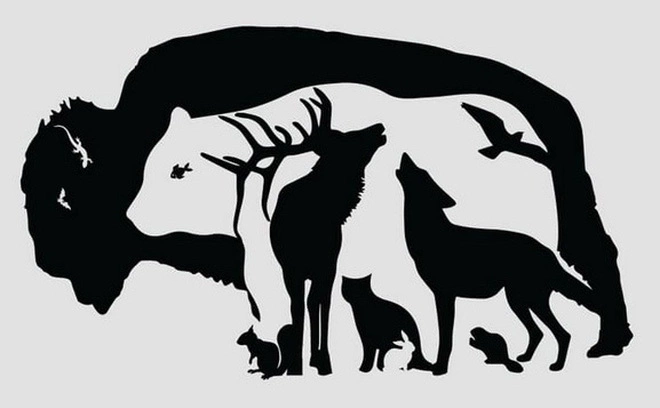
Why the Largest Animal Gets Your Attention First
Size is one reason.
Large, high-contrast shapes naturally attract attention.
The cow occupies a central position and has a very recognizable body structure.
The bear-like figure on the left is also large and visually distinct.
Your brain therefore processes these figures first.
Once you've identified them, you may unconsciously stop searching.
This is called inattentional blindness in a broader psychological sense: when attention is focused on one aspect of a scene, people can fail to notice other visible information.
The animals haven't disappeared.
Your attention has simply been directed elsewhere.
A Fun Way to Test Yourself
Before looking up or discussing the possible answer, try this:
Look at the image for about 30 seconds.
Count only the animals you are absolutely certain about.
Then look away.
After a few seconds, look at the image again and deliberately search for:
-
Small heads
-
Ears
-
Tails
-
Feet
-
Curved backs
-
Snouts
-
Gaps between legs
-
Shapes created by negative space
You may suddenly notice an animal you completely missed during your first viewing.
This is often called the “now you can't unsee it” effect.
Once your brain has learned a particular interpretation of a shape, it becomes much easier to recognize it again.
Don't Let Color Fool You
Another clever feature of the puzzle is its limited color palette.
The image primarily uses dark blue and white silhouettes against a light background.
There are no realistic textures, detailed fur patterns, or photographic clues.
This forces your brain to rely heavily on shape and outline.
In a realistic photograph, you might recognize a cat because of its fur, eyes, whiskers, and facial features.
Here, you may have only a few curves and angles.
That makes the challenge much harder—and much more interesting.
Why These Puzzles Are So Addictive
Hidden-object puzzles are popular because they create a small reward every time you discover something new.
At first, you see one or two animals.
Then you notice another.
Then another.
Each discovery changes your understanding of the entire image.
It's almost like solving a miniature mystery.
The challenge also creates a natural desire to prove yourself:
“I know there has to be another one.”
So you keep looking.
This makes optical illusions particularly effective for social media because people naturally want to comment with their answer and compare it with everyone else.
There Isn't Always One Simple Answer
When solving an image like this, it's important to distinguish between clearly intended animals and shapes that merely resemble animals.
Human brains are excellent at finding patterns, so if you stare at an abstract shape long enough, you may eventually see almost anything in it.
A good puzzle answer should therefore be based on consistent features such as:
-
A recognizable head
-
A body outline
-
Distinct legs
-
Ears or horns
-
A tail
-
A coherent animal posture
If a supposed animal requires you to imagine several missing features, it may simply be part of another silhouette rather than a separate figure.
The Real Challenge Is How You Look
The fascinating part of this image isn't just the number of animals.
It's the way the puzzle demonstrates how perception works.
We often assume that seeing is passive—that our eyes simply collect information and our brains record it.
In reality, your brain is constantly filtering, organizing, and interpreting what your eyes receive.
That is why two people can look at the same picture and notice different things.
It is also why an optical illusion can make you question something you thought was obvious.
So, How Many Animals Are There?
The obvious figures include the bear-like animal, the cow, the small mouse, and the cat-like figure, while additional overlapping shapes can be interpreted as other animals depending on how the silhouettes are separated.
That ambiguity is part of what makes the image work so well as a puzzle.
Rather than simply asking for a number, the better challenge is:
Can you identify every distinct animal shape you believe the artist intentionally hid in the composition?
Take another look before deciding.
Follow the outlines.
Ignore what you think you already know.
Look at the empty spaces.
Then move your attention from left to right and back again.
You may find that an animal you completely missed the first time was sitting in plain sight.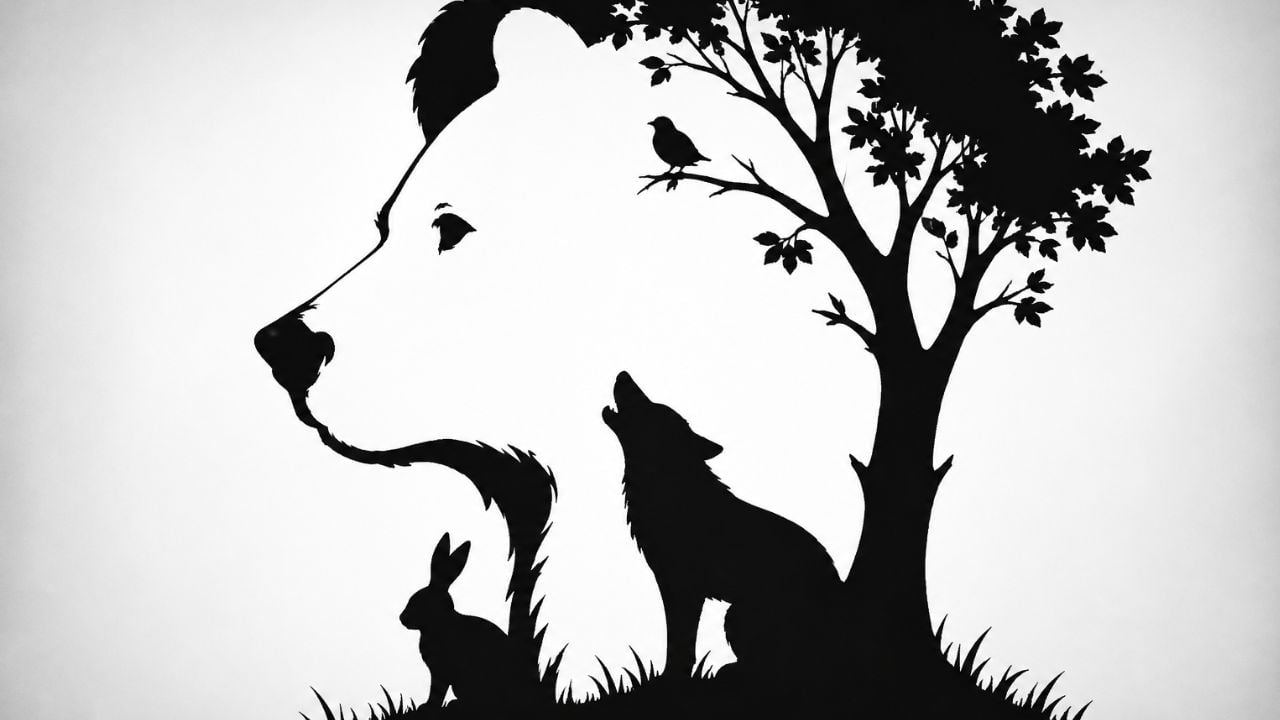
Final Thoughts
This image is a great reminder that our eyes don't always tell the whole story.
The brain is constantly making assumptions about shapes, boundaries, and objects. In everyday life, this ability helps us process complicated environments quickly. In a visual puzzle, however, that same ability can work against us.
The large cow and bear immediately capture your attention, while smaller and overlapping figures remain hidden until you deliberately change the way you look at the image.
So don't rush to give your answer.
Take another look.
How many animals do you actually see?
And more importantly, can you point to every single one?
That is where the real challenge begins.