Eggs are an affordable, versatile source of protein, choline, vitamin D, and other nutrients that support muscle, brain, and overall health. Although concerns about dietary cholesterol have led some people to hesitate to eat eggs regularly, research sugge
How Often Should You Eat Eggs?
You can eat up to one egg per day.
Previous research suggested that regularly eating eggs—particularly the yolks—was associated with higher cholesterol levels and a greater risk of heart disease. However, more recent research disputes this claim, finding no significant association between egg consumption and mortality from heart disease.
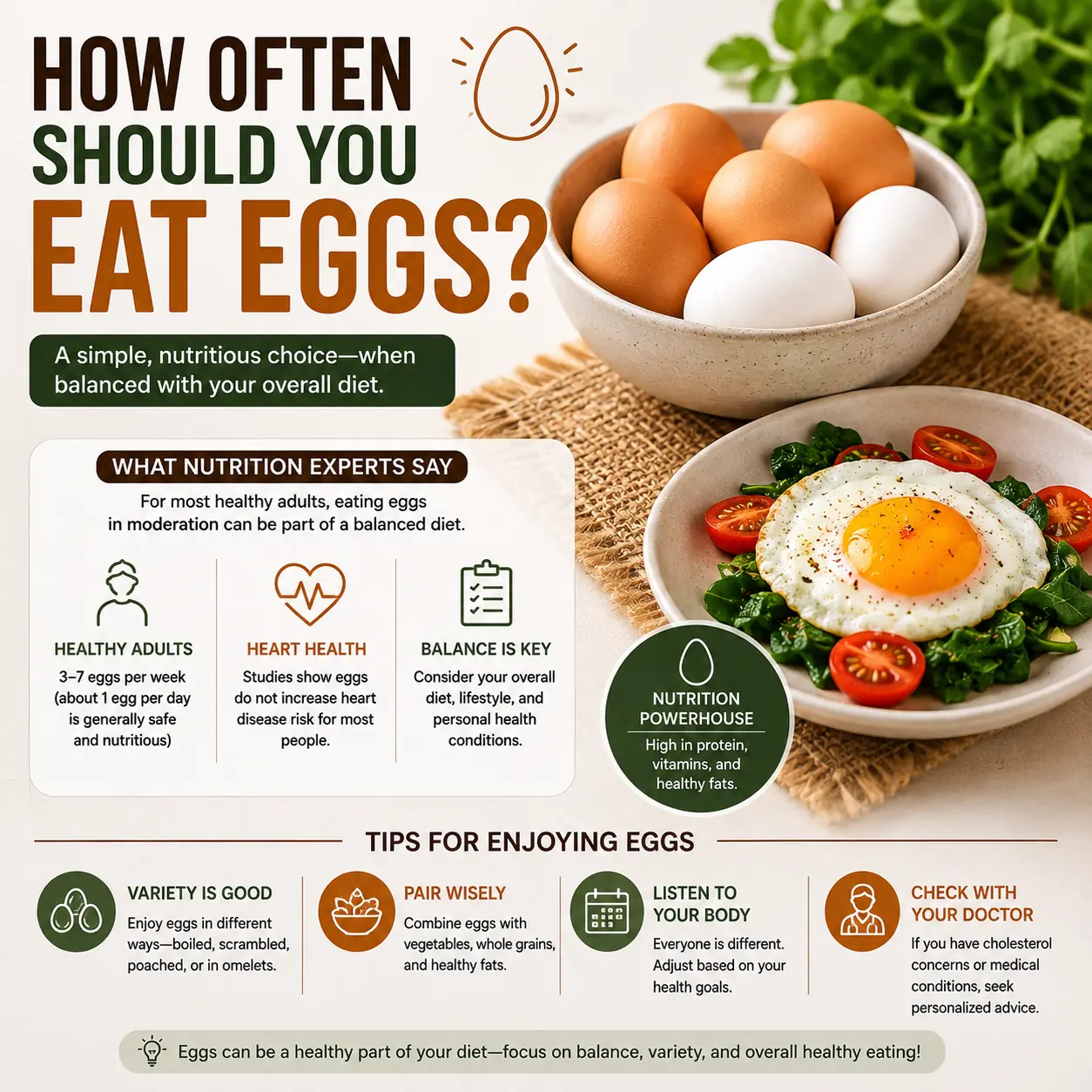
Still, it’s recommended to limit eggs to one per day, given the link between high dietary cholesterol intake and heart disease. Research shows that dietary cholesterol is associated with lower heart disease when intake is less than 250 milligrams (mg) per day. But that association reverses with higher cholesterol intake (greater than 250 mg per day).
The impact of regularly eating eggs depends on the rest of your diet. Although one egg contains 186 mg of cholesterol, it is just one part of the diet, and consuming multiple eggs per day—or eggs plus other foods high in dietary cholesterol—regularly may affect heart health.
Egg Health Benefits
Eggs are packed with essential nutrients that support overall health. Research suggests that regularly eating eggs may be associated with:
Reduced risk of stroke. One meta-analysis found that eating up to one egg daily may be linked to a 12% reduced risk of stroke. Eggs’ benefit on stroke risk may be due to their nutritional profile, specifically their antioxidant and protein content.
Increased muscle protein synthesis. Eggs are an excellent source of protein, delivering 6.5 grams per cooked egg. Notably, eggs are a source of leucine, an amino acid beneficial for muscle protein synthesis. It’s recommended to consume 700-3000 mg of leucine for maximal stimulation of muscle protein synthesis, and one egg delivers roughly 500 mg of leucine.4
Puglisi MJ, Fernandez ML. The health benefits of egg protein. Nutrients. 2022;14(14):2904. doi:10.3390/nu14142904

Better memory and reduced risk of cognitive impairment. One meta-analysis reported a lower risk of cognitive decline with 1 egg per day.6 Another study found that regularly eating eggs was associated with better memory and verbal fluency, and with a lower risk of cognitive impairment or dementia. Eggs provide choline, antioxidants, tryptophan, and specific fatty acids, which may contribute to memory, attention, and neuroprotection.
Increased satiety. Research suggested that regularly eating eggs increases satiety and may lower energy intake at subsequent meals, especially when eggs are eaten instead of a higher-carbohydrate food.85
Egg Nutrition
One large, cooked hard-boiled egg provides:93
Calories: 77.5
Protein: 6.5 grams (g)
Fat: 5.5 g (Saturated: 1.5 g)
Carbohydrates: <1 g
Fiber: 0
Choline: 150 milligrams (mg) (35% of the DV for females and 27% of the DV for males)
Vitamin A: 74.5 mcg (10% of the DV for females and 8% of the DV for males)
Vitamin D: 43.5 International Units (IU) (7% of the DV)
Cholesterol: 186 mg
 Tips for Incorporating Eggs into Your Diet
Top whole-grain toast with fried or poached eggs.
Make an omelet or scramble with vegetables.
Prepare egg muffins.
Add sliced hard-boiled eggs to salads, grain bowls, toast, ramen, soups, or pasta dishes.
Stir a beaten egg into oatmeal or savory porridge while cooking.
Bake eggs.
Turn leftovers into frittatas.
Add egg to fried rice.