There’s nothing more refreshing than biting into a perfectly ripe watermelon—juicy, sweet, and vibrant red inside. But choosing the right one from a pile of similar-looking melons can feel like a gamble. Some turn out bland, pale, or overly thick-rinded, leaving you disappointed.
The good news? There are simple, reliable signs that can help you pick a watermelon that’s ripe, sweet, and full of flavor. Once you know what to look for, you’ll rarely get it wrong again.
1. Look for the Field Spot (Creamy Yellow Patch)
One of the most important indicators of ripeness is the field spot—the area where the watermelon rested on the ground while growing.
A good watermelon should have:
- A creamy yellow or deep golden spot
Avoid melons with:
- A white or pale green spot (this usually means it was picked too early)
The deeper and richer the yellow color, the longer the fruit ripened on the vine—resulting in a sweeter taste.
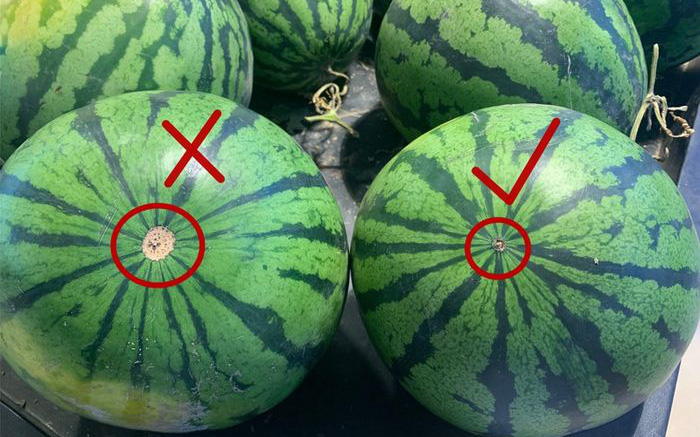
2. Check the Shape and Symmetry
A ripe watermelon should be:
- Uniform in shape (round or oval, depending on the variety)
- Free from irregular bumps or dents
Misshapen watermelons may indicate uneven growth, which can affect texture and flavor.
Consistency in shape usually means consistent sweetness inside.
3. Feel the Weight
Pick up the watermelon and compare it with others of similar size.
A ripe, juicy watermelon should:
- Feel heavy for its size
This indicates a high water content, which is a key sign of freshness and juiciness.
If it feels light, it may be dry or less flavorful.
4. Tap and Listen for a Deep Sound
This classic method actually works when done correctly.
- Gently tap the watermelon with your knuckles
- Listen to the sound it produces
A ripe watermelon should give:
- A deep, hollow sound
An unripe or overripe one may sound:
- Dull or flat
That hollow resonance suggests the flesh inside is firm, juicy, and well-developed.
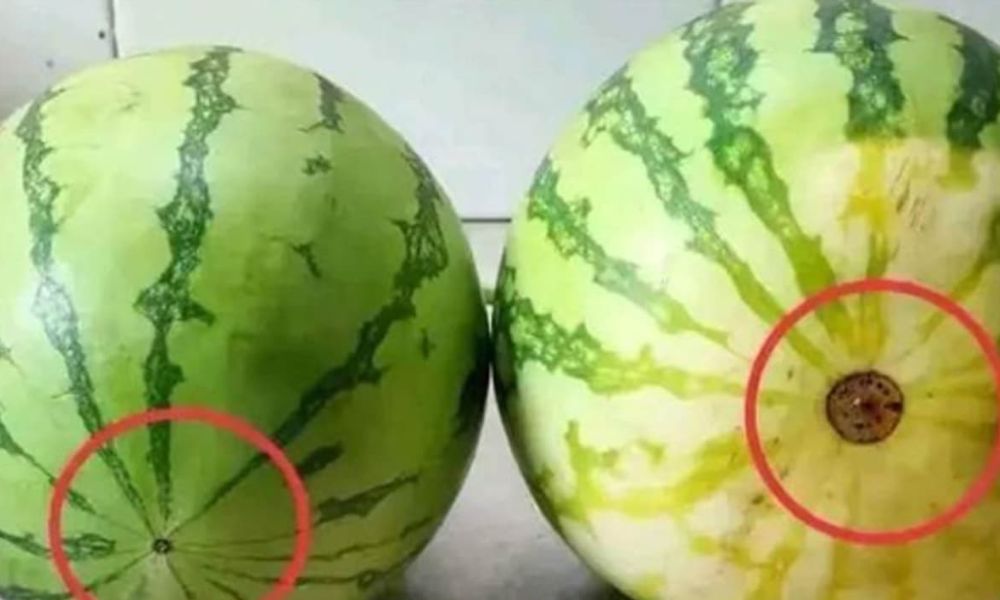
5. Look for Sugar Spots and Webbing
Sometimes you’ll notice rough, brown, web-like patterns or spots on the surface.
These are often signs that:
- The fruit is very sweet
- Bees have pollinated the flower well
While they may not look perfect, these markings are actually a good sign of flavor.
6. Examine the Rind (Skin)
The outer rind can tell you a lot about what’s inside.
A good watermelon should have:
- A dull (not shiny) surface
- A firm, hard rind
Shiny skin often means the watermelon is underripe. A matte finish indicates it has fully matured.
7. Check for a Thin Rind
While you can’t see the rind thickness from the outside directly, certain signs can help:
- A heavier watermelon usually has more flesh and less rind
- A smooth, firm exterior often indicates better internal quality
Thin rind means more edible fruit and a better overall eating experience.
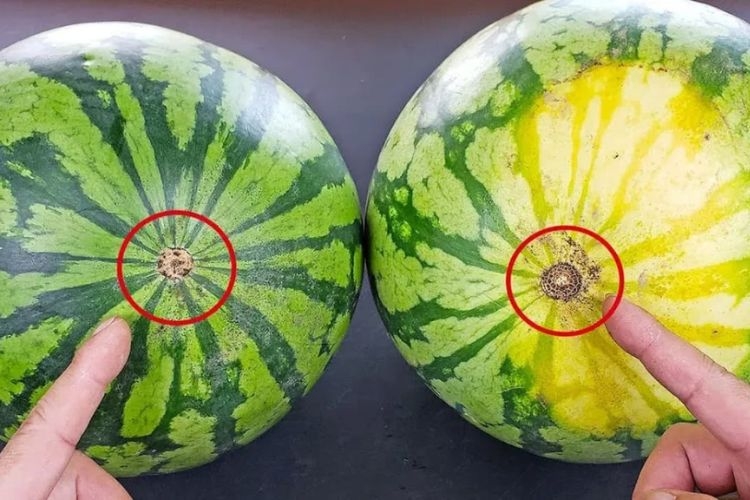
8. Look at the Stem (If Present)
If the watermelon still has a piece of stem attached:
- A dry, brown stem = ripe and naturally harvested
- A green stem = picked too early
A dried stem suggests the fruit had enough time to fully ripen on the vine.
9. Choose the Right Size
Bigger doesn’t always mean better. The best watermelon is one that feels right for its size.
Medium-sized watermelons often:
- Have better texture
- Offer balanced sweetness
Extremely large ones can sometimes be watery rather than sweet.
10. Trust the Overall Combination of Signs
No single method is perfect on its own. The key is to combine multiple indicators:
- Yellow field spot
- Heavy weight
- Hollow sound
- Dull rind
When a watermelon checks most of these boxes, your chances of picking a sweet, red, and juicy one increase significantly.
Final Thoughts
Choosing the perfect watermelon doesn’t have to be a guessing game. By paying attention to a few simple details, you can confidently select one that delivers on flavor, texture, and juiciness.
Next time you’re at the market, take a moment to inspect, tap, and compare. With a little practice, you’ll develop an instinct for picking the best watermelon every time - sweet, vibrant red, and absolutely refreshing.