Warts are small growths that can appear almost anywhere on the skin. They are extremely common, and although most are harmless, they can sometimes be uncomfortable, embarrassing, or surprisingly difficult to get rid of.
A wart may look like a simple bump, but not every wart looks the same.
Some are rough and raised. Others are flat and smooth. Some appear around the fingernails, while others develop on the soles of the feet and can become painful when you walk. Certain wart-like growths can also be mistaken for calluses, moles, skin tags, or other skin conditions.
Most warts are caused by human papillomaviruses (HPV) that infect the outer layer of the skin. Different HPV types tend to affect different areas of the body and can produce different-looking lesions.
The good news is that most common warts are not dangerous and may eventually disappear on their own. However, treatment can help when they are painful, spreading, persistent, or causing significant concern.
Here are 10 types of warts, how they may appear, and what treatment options are commonly used.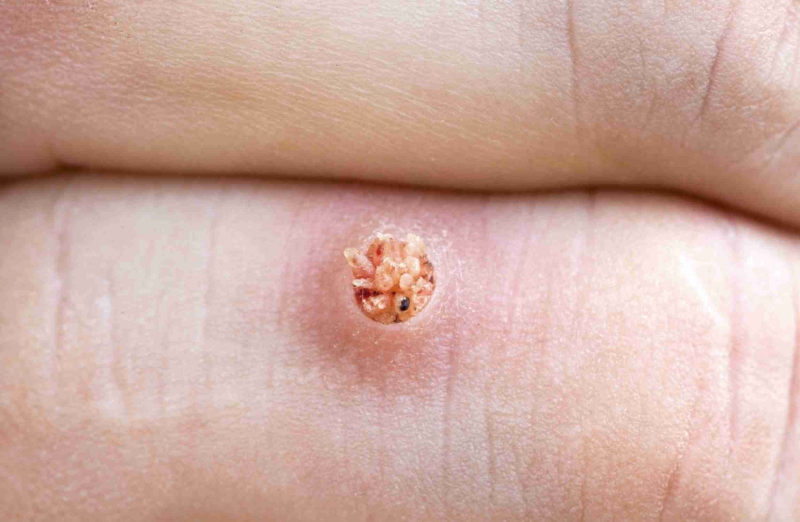
1. Common Warts
Common warts are probably the type most people imagine when they hear the word “wart.”
They often appear on the hands, fingers, knuckles, and around the nails. They typically have a rough, firm, grainy surface and may be flesh-colored, grayish, or slightly darker than the surrounding skin.
Small black dots can sometimes be visible inside them. These are often tiny blood vessels rather than dirt.
Common warts are contagious and can spread through direct skin-to-skin contact or by touching contaminated objects.
How Are Common Warts Treated?
Some common warts disappear without treatment, particularly in children and younger people.
When treatment is desired, options may include:
Salicylic acid: Available in many over-the-counter wart treatments. It gradually removes layers of the wart.
Cryotherapy: A healthcare professional freezes the wart, usually using liquid nitrogen.
Other office treatments: Persistent warts may sometimes require stronger prescription medications or procedures performed by a dermatologist.
Treatment can take several weeks, and recurrence is possible.
2. Plantar Warts
Plantar warts develop on the soles of the feet.
Because walking puts pressure on them, they often grow inward rather than outward.
This can make them particularly uncomfortable.
A plantar wart may have a rough surface and sometimes appears flattened because of pressure from standing and walking. Tiny dark dots may also be visible.
They can sometimes be confused with calluses.
One clue is that normal skin lines may be interrupted as they cross the wart.
Treatment for Plantar Warts
Salicylic acid is commonly used for plantar warts, often over a period of several weeks.
A healthcare professional may also use cryotherapy or another procedure when over-the-counter treatment isn't effective.
Comfort can sometimes be improved with protective padding that reduces pressure on the affected area.
Avoid cutting or digging into a plantar wart yourself. Doing so can cause bleeding, infection, and injury to surrounding tissue.
3. Flat Warts
Flat warts are smaller and smoother than common warts.
They may appear flat-topped rather than raised, and their color can range from flesh-colored to slightly pink or brownish.
They frequently appear on the face, backs of the hands, arms, or legs.
Unlike some other wart types, flat warts can occur in larger numbers.
Children and teenagers may be particularly prone to them.
Because of their location, treatment needs to be considered carefully, especially on the face.
How Are Flat Warts Treated?
Flat warts may eventually disappear without treatment.
A dermatologist may recommend medications or procedures depending on their location and number.
Some treatments that work well on thicker warts can irritate facial skin, so attempting aggressive treatment at home is not always a good idea.
4. Filiform Warts
Filiform warts have a distinctive appearance.
They tend to grow as thin, elongated projections that extend outward from the skin.
They are particularly common around the face, including the eyelids, nose, and mouth.
Because facial skin is delicate, even a small filiform wart can be noticeable.
They can also become irritated if repeatedly rubbed by clothing, glasses, or other objects.
Treatment Options
Because these warts often occur on the face, professional evaluation is generally preferable.
A dermatologist may remove them using techniques such as cryotherapy, excision, or other procedures depending on the location and size.
Don't try to cut a facial wart off with scissors or another household tool.
5. Periungual Warts
Periungual warts develop around or underneath the fingernails and toenails.
They often begin as small rough bumps but can eventually become larger.
Because of their location, they can interfere with nail growth and potentially damage the nail if they become extensive.
People who bite their nails or pick at the skin around their nails may be more likely to develop these warts because tiny breaks in the skin can provide an entry point for the virus.
Why They Can Be Difficult to Treat
Warts around nails can be stubborn.
Aggressive home treatment can damage the nail or surrounding tissue.
A dermatologist may use salicylic acid, cryotherapy, or other treatments depending on the location.
Don't aggressively cut, scrape, or dig around the nail in an attempt to remove the wart.
6. Subungual Warts
Subungual warts develop underneath the nail rather than simply around it.
They may cause changes in the nail's appearance or interfere with normal nail growth.
Because the wart is hidden beneath the nail, treatment can be challenging.
A nail may become uneven, distorted, or partially lifted.
Treatment
Treatment generally requires patience.
A dermatologist may need to use specialized approaches depending on how deeply the wart extends and whether the nail is involved.
Self-treatment can be difficult because attempting to remove the nail or scrape beneath it can cause significant injury.
7. Mosaic Warts
Mosaic warts are clusters of many small plantar warts that grow close together, often on the soles of the feet.
Rather than looking like one isolated lesion, they can form a broader patch.
They may not always be as painful as a single deeply embedded plantar wart, but walking can still become uncomfortable.
Treatment
Mosaic warts can be particularly persistent.
Salicylic acid preparations and professional cryotherapy are commonly used approaches, but multiple treatments may be required.
A dermatologist or podiatrist can help determine whether the growths are actually warts or another condition such as a callus.
8. Genital Warts
Genital warts are different from the common warts found on hands and feet.
They are caused by certain types of HPV that are transmitted through intimate sexual contact.
They can appear around the genitals or anus and may be small, flat, or raised. Some have a cauliflower-like appearance.
Although genital warts themselves are generally caused by HPV types that are different from those most commonly associated with cancer, an HPV infection can still have important sexual-health implications.
Treatment
Genital warts should be evaluated by a healthcare professional.
Treatment may involve prescription medications applied to the affected area or procedures such as cryotherapy or surgical removal.
Do not use ordinary over-the-counter wart removers intended for hands or feet on genital skin.
The skin in these areas is sensitive, and inappropriate products can cause significant injury.
It is also important to discuss sexual-health considerations and HPV vaccination with an appropriate healthcare professional.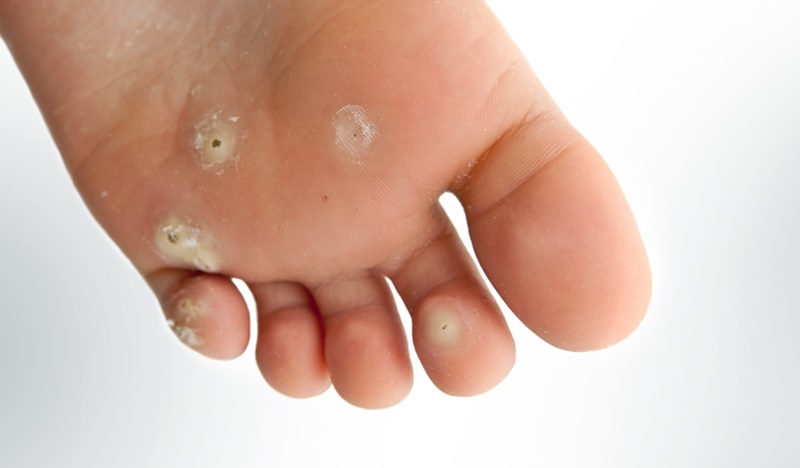
9. Oral or Mucosal Warts
HPV can sometimes produce wart-like growths in or around mucosal tissues, including areas of the mouth and throat.
These lesions are not the same as ordinary hand or foot warts and may require specialist evaluation.
Any persistent lump, growth, sore, or unusual lesion in the mouth should not automatically be assumed to be a wart.
There are many other possible causes.
What Should You Do?
A healthcare professional, dentist, dermatologist, or appropriate specialist can determine what the lesion may represent.
Avoid attempting to remove a growth from inside your mouth yourself.
Persistent oral lesions, especially those that bleed, become painful, grow, or fail to heal, deserve medical evaluation.
10. Wart-Like Lesions That May Not Actually Be Warts
This final category is important because not every rough bump is a wart.
Calluses, corns, skin tags, molluscum contagiosum, seborrheic keratoses, moles, and certain types of skin cancer can sometimes resemble warts.
A lesion that appears unusual, changes rapidly, bleeds without explanation, becomes painful, or refuses to heal may need a professional examination.
This is particularly important for adults who develop a new wart-like growth that doesn't behave like their previous warts.
Why Diagnosis Matters
Using a wart remover on the wrong skin lesion can delay diagnosis or irritate the tissue.
A dermatologist can often identify common warts by examining their appearance, but sometimes additional evaluation is needed.
When there is uncertainty, getting the correct diagnosis is more important than immediately treating the bump.
How Do Warts Spread?
Warts are caused by HPV and can spread through direct contact with an infected area.
The virus can also spread indirectly through contaminated objects or surfaces.
Small breaks in the skin can make it easier for HPV to enter.
Warts can also spread from one part of your own body to another.
For example, picking at a wart and then touching nearby skin can potentially transfer the virus.
Don't Pick or Bite Your Warts
This is especially important for warts around the fingernails.
Picking, biting, or cutting a wart can damage the skin and potentially help spread the virus.
It can also introduce bacteria and cause a secondary infection.
Keeping the area covered with an appropriate bandage can sometimes reduce picking and limit direct contact.
Are Warts Contagious?
Yes.
Although the risk of transmission varies, warts can spread between people.
That doesn't mean you need to isolate yourself because you have a wart.
Simple hygiene measures can help.
Don't share nail clippers or files.
Avoid picking at warts.
Wash your hands after touching the area.
Keep shared surfaces clean.
Avoid walking barefoot in communal wet areas if you have plantar warts.
Can Warts Go Away on Their Own?
Yes.
The immune system can eventually recognize and clear the HPV infection responsible for some warts.
This can take months or even longer.
Children often clear warts without aggressive treatment.
However, persistent or painful warts may warrant treatment, especially if they interfere with daily activities.
What About Home Remedies?
The internet is full of wart-removal remedies involving vinegar, garlic, duct tape, essential oils, or various plant extracts.
Some have been studied to a limited extent, but evidence varies significantly.
A remedy being “natural” does not automatically make it safe.
Acidic household products can burn skin.
Essential oils can cause irritation or allergic reactions.
Cutting or burning a wart can cause infection and scarring.
For evidence-based home treatment, salicylic acid products specifically designed for warts have the strongest established role among common over-the-counter options.
Follow the package instructions carefully.
How to Use Salicylic Acid Safely
Salicylic acid gradually breaks down the thickened tissue of many common and plantar warts.
Treatment usually requires repeated application over a number of weeks.
Before applying it, the affected area may be softened according to the product's instructions.
The medication should be applied specifically to the wart and not unnecessarily spread onto normal skin.
People with diabetes, poor circulation, reduced sensation in their feet, or certain other medical conditions should talk with a healthcare professional before treating foot lesions themselves.
Reduced sensation can make it easier to cause an injury without noticing it.
What Does Cryotherapy Do?
Cryotherapy uses extreme cold—typically liquid nitrogen in a clinical setting—to destroy wart tissue.
The treated area may blister afterward.
Several treatment sessions may be necessary.
Cryotherapy can be effective, but it can also cause pain, temporary swelling, pigment changes, or other local skin reactions.
It should be performed appropriately rather than improvised with household freezing products.
When Should You See a Doctor?
It's a good idea to have a skin growth professionally evaluated when:
You're not sure it's a wart.
It is painful or bleeding.
It changes rapidly.
It keeps coming back.
There are many warts appearing suddenly.
The lesion is on the face or genitals.
It is under or around a nail.
Home treatment isn't working.
You have diabetes or poor circulation.
You have a weakened immune system.
A healthcare professional can determine whether the lesion is actually a wart and recommend an appropriate treatment.
Can Warts Be Prevented?
There is no way to eliminate every risk of developing a wart, but several habits can reduce exposure and spread.
Keep your skin clean and avoid unnecessary contact with someone else's wart.
Don't share personal items such as nail clippers, razors, or towels.
Avoid biting your nails or picking at the skin around them.
Wear footwear in communal showers and pool areas.
Cover existing warts when practical.
And wash your hands regularly.
For genital HPV, vaccination offers important protection against several HPV types, including types associated with genital warts and certain cancers.
The HPV Vaccine and Warts
The HPV vaccine is primarily used to prevent infection with specific HPV types associated with cancers and genital warts.
It does not treat an existing wart.
Vaccination recommendations vary by age and country, so appropriate guidance should come from a healthcare professional.
For eligible people, HPV vaccination is an important part of preventive healthcare.
A Wart Isn't Usually an Emergency
Most ordinary warts are harmless.
They may be ugly, irritating, or annoying, but they generally don't represent a dangerous disease.
The bigger issue is recognizing when something isn't behaving like a typical wart.
A new lesion that rapidly changes, bleeds, ulcerates, becomes severely painful, or fails to heal should not be assumed to be a simple wart.
That is where professional diagnosis becomes important.:format(webp)/mun_coc_long_ban_chan2_2d3d5e5e7b.jpg)
The Bottom Line
Warts come in many forms, from common rough bumps on the fingers to plantar warts on the feet, flat warts on the face, filiform warts around the eyes, and genital warts associated with certain types of HPV.
Most are harmless and some eventually disappear without treatment.
When treatment is necessary, options can include salicylic acid, cryotherapy, prescription medications, or dermatologist-performed procedures depending on the type and location.
The most important rule is to avoid aggressive home removal.
Don't cut, burn, or dig into a wart.
Don't use ordinary wart-removal products on the face or genitals.
And don't assume every strange skin growth is a wart.
When a lesion is persistent, painful, bleeding, rapidly changing, located in a sensitive area, or simply doesn't look right, getting it checked by a healthcare professional is the safest move.
A wart may be a small problem—but knowing exactly what you're treating is a much bigger part of the solution.