Chapter 1: Why Do Your Feet Become Swollen? Understanding What Your Body Is Telling You
Swollen feet are a common problem that can affect people of different ages and lifestyles. You may notice that your shoes feel tighter in the evening, your ankles appear puffier than usual, or your feet leave temporary marks after wearing socks. Sometimes the swelling disappears after a night of rest. In other cases, it persists for days or keeps returning, making walking and everyday activities uncomfortable.
The medical term for swelling caused by excess fluid accumulating in body tissues is edema. When this fluid collects in the feet and ankles, the area may look enlarged, feel heavy, or become uncomfortable when you stand or walk. Pressing a finger gently against the swollen skin may leave a small indentation that remains briefly, although not all types of swelling behave this way.
Understanding why your feet are swollen is the first step toward choosing the right remedy. Although several simple daily habits may help relieve mild swelling, the most effective approach depends on its underlying cause.
The role of gravity and circulation
One of the most common reasons for swollen feet is remaining in the same position for too long. When you sit at a desk, stand behind a counter, travel for several hours, or spend much of the day on your feet, fluid can accumulate in the lower legs.
Gravity naturally encourages fluid to collect in the lowest parts of the body. Normally, veins return blood toward the heart, while surrounding muscles help push blood upward. The calf muscles are especially important because their contractions help move blood through the veins against gravity.
When you remain still for long periods, this muscular assistance decreases. Pressure inside the veins can rise, allowing fluid to move into surrounding tissues. The result may be swelling around the ankles and feet, particularly toward the end of the day.
This type of swelling often improves after walking, resting, or raising the legs. However, improvement with elevation does not automatically rule out an underlying medical condition.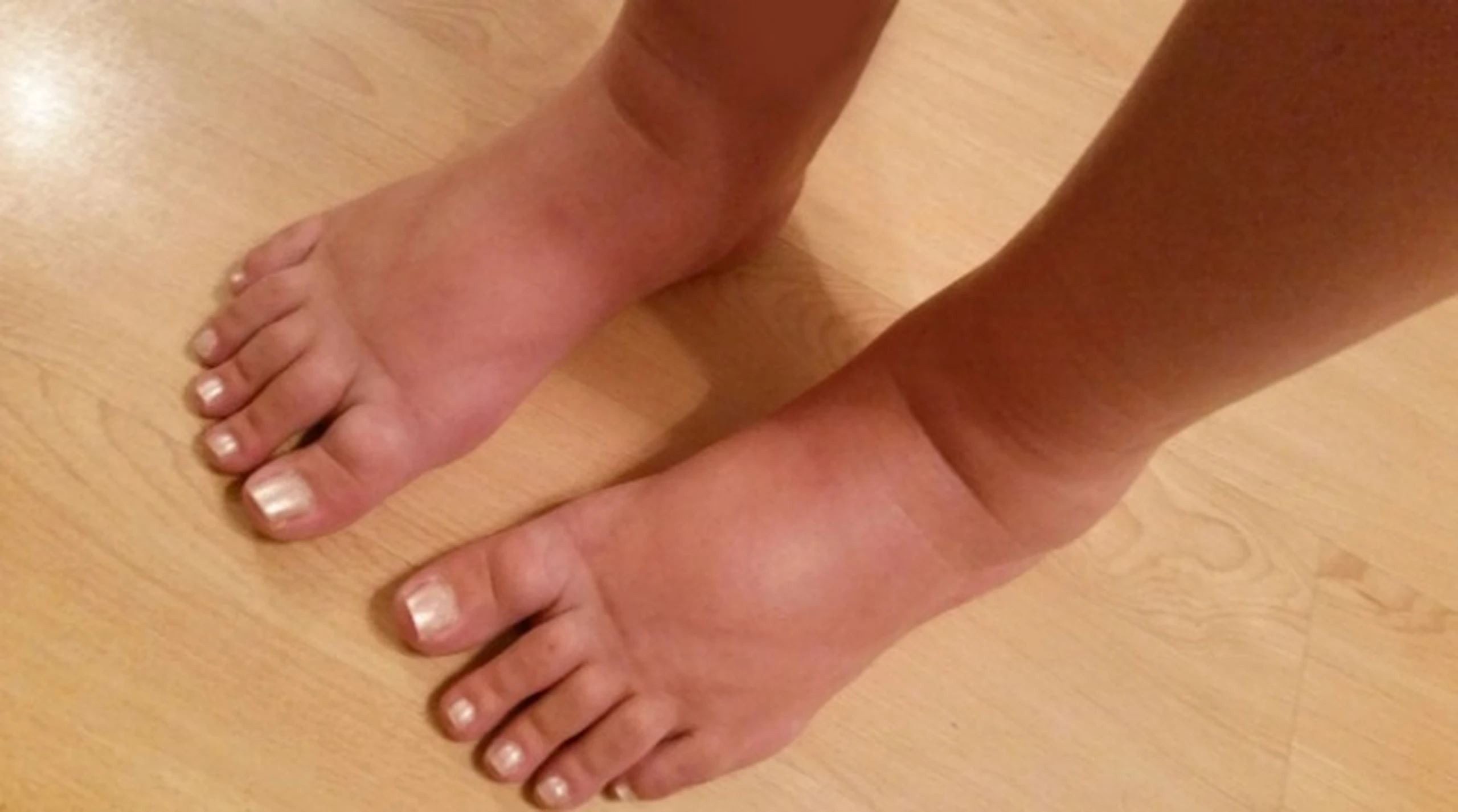
Other common causes of swollen feet
Heat can make swelling more noticeable. In warm weather, blood vessels near the skin widen to help the body release heat. This change, combined with prolonged standing or sitting, can contribute to fluid accumulation in the lower extremities.
Hormonal changes can also play a role. Some people experience swelling before menstruation or during pregnancy. Pregnancy-related swelling can be common, but sudden or severe swelling during pregnancy requires prompt medical assessment because it may indicate a serious complication.
Certain medications may contribute to edema. These include some blood pressure medicines, particularly calcium channel blockers such as amlodipine, as well as some anti-inflammatory medicines, corticosteroids, and hormonal treatments. If swelling begins after starting a new medication or changing a dose, consult your healthcare professional rather than stopping the medication yourself.
Vein problems can also cause persistent swelling. Chronic venous insufficiency occurs when the valves inside the leg veins do not function effectively, making it harder for blood to return to the heart. People with this condition may experience ankle swelling, heaviness, aching, visible varicose veins, or skin changes around the lower legs.
Other possible causes include lymphatic disorders, injuries, infections, blood clots, and conditions affecting the heart, kidneys, or liver. These causes are important because they cannot necessarily be addressed by lifestyle changes alone.
When swollen feet may signal something serious
Not every swollen foot is an emergency, but certain symptoms should never be ignored.
Seek emergency medical care if swelling occurs with shortness of breath, chest pain, fainting, or coughing up blood. These symptoms can indicate a serious problem, including a blood clot that has traveled to the lungs.
New swelling in only one leg, especially when accompanied by pain, warmth, redness, or tenderness, requires urgent medical evaluation because it may indicate deep vein thrombosis. Do not massage the affected leg while a blood clot is suspected.
A red, hot, painful foot with fever may indicate an infection. Sudden or severe swelling during pregnancy, particularly with a severe headache, vision changes, upper abdominal pain, or high blood pressure, also requires immediate assessment.
Persistent swelling, swelling that progressively worsens, or swelling accompanied by unexplained weight gain should be discussed with a healthcare professional.
Once serious causes have been considered, simple daily habits can often help people manage mild swelling associated with prolonged inactivity, heat, or other non-emergency factors. The goal is not simply to make the feet look less swollen. It is to improve comfort while supporting healthy circulation and identifying problems that require treatment.
Chapter 2: Elevate Your Feet, Move More, and Give Your Circulation a Helping Hand
Among the simplest ways to relieve mild swelling is to change the position of your legs and encourage regular movement. These habits work with the body's normal circulation rather than relying on supplements or unproven remedies.