What Breast Size Really Says About a Woman’s Body — and What It Doesn’t
The size of a woman’s breasts can attract attention, inspire comparisons, and fuel countless assumptions. But does breast size reveal anything about her hormones, reproductive health, or intimate anatomy? The scientific answer may surprise you.
Two women can stand side by side, have noticeably different breast sizes, and still share remarkably similar reproductive anatomy. Meanwhile, women with almost identical body shapes can have completely different hormonal patterns, reproductive histories, and physical characteristics.
Yet myths about women's bodies continue to circulate, particularly the belief that breast size can reveal the size, shape, or characteristics of a woman's intimate anatomy.
It is an assumption that sounds convincing to some people, especially because hormones influence several aspects of physical development. But there is an important difference between two body parts being influenced by hormones and one body part reliably predicting the structure of another.
Breast size does not reliably reveal a woman's genital anatomy.
There is no established medical measurement, scientific formula, or dependable physical relationship that allows someone to determine intimate anatomical characteristics simply by looking at breast size.
So what actually determines breast size? Why do some women naturally have smaller breasts while others have fuller ones? And if hormones influence both breast development and reproductive organs, why doesn't one provide a reliable clue about the other?
To understand the answer, it helps to look beyond appearance and examine how the female body develops.
The explanation begins with the structure of breast tissue itself, but the most interesting part involves the different biological processes that shape the reproductive system.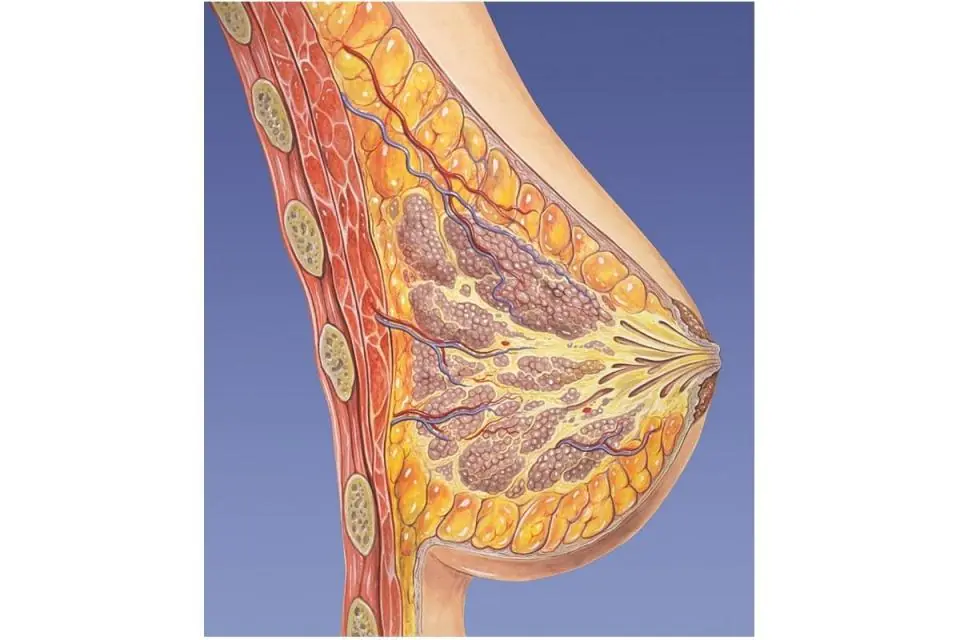
1. Why Breast Size Is Different From Woman to Woman
Breast size is one of the most visible examples of natural variation in the human body.
Some women develop relatively small breasts, while others naturally have a fuller chest. Between these two extremes are countless combinations of shapes, proportions, and tissue distributions.
These differences are not unusual. They are part of ordinary human biology.
Breasts are not made from a single type of tissue. They contain several components, including fatty tissue, glandular tissue, connective tissue, blood vessels, nerves, and lymphatic structures.
The proportions of these components differ between individuals.
Fatty tissue contributes significantly to the overall volume and softness of the breasts. Glandular tissue contains the structures involved in milk production, while connective tissue provides support and helps maintain the breast's shape.
This means two women with similar breast measurements may not have exactly the same internal tissue composition.
One woman may have a greater proportion of glandular tissue, while another may have more fatty tissue. Their breasts may appear similar from the outside even though their internal composition differs.
The reverse is also possible.
Two women may have noticeably different breast sizes while having broadly similar glandular structures.
Genetics plays a major role in determining these characteristics. A woman may inherit tendencies toward a particular body shape, fat distribution, and breast development from members of her family.
However, genetics is not the only influence.
Hormonal changes, body composition, pregnancy, breastfeeding, aging, and certain medications can also affect breast appearance.
This is why breast size should never be treated as a simple measurement of a woman's overall health or reproductive characteristics.
A smaller chest does not automatically indicate low estrogen levels, and larger breasts do not automatically indicate unusually high hormone levels.
Physical appearance is influenced by several interacting factors, and no single feature tells the entire story.
2. What Actually Determines Breast Size?
Understanding the biological structure of the breast helps explain why size varies so widely.
Genetics and inherited characteristics
Genetics influences many aspects of physical development, including body proportions and the distribution of fatty tissue.
A woman whose close relatives have naturally fuller breasts may be more likely to develop similar characteristics. However, inheritance does not operate like a fixed measurement.
Children do not necessarily inherit the exact breast size or shape of their mothers.
Several genes contribute to body development, and their effects interact with environmental influences and hormonal changes.
This is also why sisters can have different breast sizes despite sharing many genetic characteristics.
Their bodies may respond differently to hormonal signals, and their overall body composition may differ.
Genetics creates a biological starting point, not a guaranteed final appearance.
Hormones and breast development
Hormones play an important role in breast development, especially during puberty.
Estrogen is one of the major hormones involved in the development of breast tissue. It supports the growth of ducts and influences the surrounding tissues.
Progesterone also contributes to breast development and changes associated with the menstrual cycle.
During puberty, these hormonal signals help the breasts develop through several stages.
The process does not happen at exactly the same speed for everyone.
Some girls notice breast development relatively early, while others develop more gradually. One breast may also grow faster than the other.
These differences are generally part of normal development.
Hormonal activity continues to influence breast tissue after puberty.
During the menstrual cycle, fluctuations in estrogen and progesterone can cause temporary swelling, tenderness, or a feeling of fullness.
For some women, these changes are barely noticeable. Others experience more pronounced discomfort before menstruation.
Pregnancy creates another period of significant hormonal change.
The breasts may become fuller, more sensitive, or visibly different as the body prepares for possible breastfeeding.
These changes demonstrate that breast size is not permanently fixed after adolescence.
Body composition and fatty tissue
Fatty tissue is another important contributor to breast volume.
Because the breasts contain a substantial amount of fat, changes in overall body weight can sometimes affect their size.
Some women notice that their breasts become fuller when they gain weight and smaller when they lose weight.
However, the amount of change varies considerably.
Fat distribution is influenced by genetics, hormones, age, and other biological factors. Two women who have similar body weights may carry different proportions of fat in their breasts.
It is therefore inaccurate to assume that breast size can be used to calculate someone's body fat percentage or determine her general fitness.
Age and life experiences
Breasts can change throughout a woman's life.
During adolescence, breast tissue develops as part of puberty. In adulthood, menstrual cycles and pregnancy may produce temporary or lasting changes.
After breastfeeding, some women notice differences in fullness or shape.
As women get older, changes in connective tissue, skin elasticity, and hormone levels can also affect breast appearance.
Menopause is particularly important because declining estrogen levels can change the balance between glandular and fatty tissue.
Some women notice reduced fullness, while others experience relatively little visible change.
The key point is that breast size represents the combined influence of several biological processes rather than one isolated hormone or physical condition.