Before You Buy Meat at the Supermarket, Take a Closer Look at the Label: What the Color, Packaging, and Dates Really Tell You
That bright red steak may look like the freshest choice in the supermarket, but appearances can be deceiving. Before placing meat in your shopping cart, there are several important details you should check.
Imagine walking through the meat section of a supermarket. Several packages of beef are arranged neatly behind the refrigerated display. Some have a deep red color, others appear slightly purple, and a few have brownish areas around the edges.
Most shoppers instinctively reach for the brightest red package.
It looks fresh. It looks appetizing. And because red is commonly associated with freshly cut beef, many people assume that the reddest piece must be the newest and safest option.
But what if that assumption is not always correct?
The color of raw beef is influenced by natural pigments, oxygen exposure, packaging conditions, and chemical changes that occur after the meat is cut. A steak that appears darker or purplish may still be perfectly acceptable, while bright red meat is not automatically free from bacteria or other food-safety problems.
This is why the label deserves just as much attention as the meat itself.
The small information printed on a supermarket package can tell shoppers when the product was packaged, how it should be stored, whether it has been previously frozen, and how long it may remain suitable for use under the stated conditions.
Yet many people overlook these details because they are focused on appearance and price.
There is another reason to pay attention: raw meat can contain harmful microorganisms even when it looks, smells, and feels normal. No shopper can reliably determine microbiological safety simply by examining the color of a steak.
So, before buying your next package of beef, take a moment to understand what you are looking at.
In this guide, we will examine why meat changes color, which label details matter most, how packaging affects appearance, what warning signs deserve attention, and how to store and prepare beef safely at home.
Most importantly, we will explain why choosing meat by color alone can be one of the biggest mistakes shoppers make.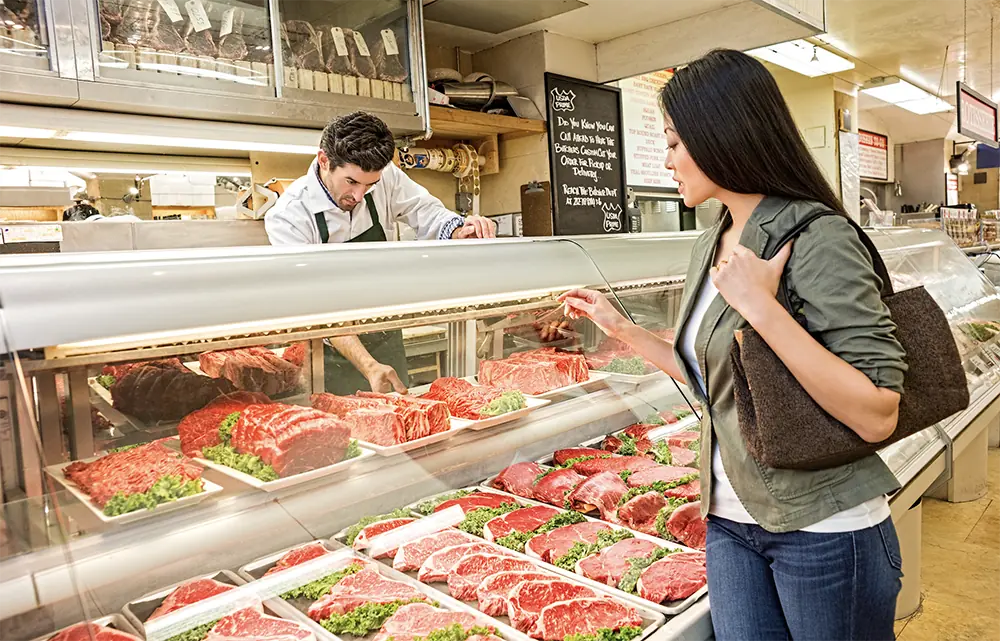
Chapter 1: Why the Color of Raw Beef Can Be Misleading
1. The Science Behind That Bright Red Color
The color of fresh beef is primarily influenced by a protein called myoglobin.
Myoglobin is found in muscle tissue, where it helps store and transport oxygen within muscle cells. It contains iron and gives meat much of its characteristic color.
The amount of myoglobin varies depending on several factors, including the animal's age, muscle type, and physical activity.
Muscles that work harder generally contain more myoglobin and may appear darker than muscles that perform less demanding activities.
This explains why different cuts of beef can have noticeably different shades even when they are all fresh.
However, myoglobin does more than determine the natural color of meat. Its chemical state also changes when it interacts with oxygen.
When freshly cut beef is exposed to oxygen, myoglobin can form oxymyoglobin, which produces the familiar bright cherry-red appearance that shoppers often associate with fresh steak.
This process is known as blooming.
It is one reason why beef that initially looks dark purple can become noticeably redder after being exposed to air.
The transformation does not necessarily mean that the meat has become fresher. It is primarily a chemical reaction involving the pigment.
That distinction is important.
A package of beef that looks darker is not automatically old, and a package that looks bright red is not automatically safe.
2. Why Some Beef Looks Purple or Dark Red
Have you ever purchased vacuum-sealed beef and noticed that it looked much darker than the meat displayed in a traditional supermarket tray?
This is usually related to the amount of oxygen surrounding the meat.
Vacuum packaging removes much of the air from inside the package.
Without sufficient oxygen, myoglobin remains largely in its deoxymyoglobin form, which has a purplish-red appearance.
When the package is opened and the beef is exposed to air, the surface may gradually become brighter red as oxymyoglobin forms.
This is a normal process under appropriate storage conditions.
It is also one reason consumers should avoid judging vacuum-packed beef by the same visual expectations they use for meat displayed in oxygen-permeable trays.
Nevertheless, a change in color after opening does not prove that a product is safe.
The meat must still be evaluated according to its packaging integrity, storage history, date information, and other relevant conditions.
If it has an unpleasant odor, a sticky or slimy texture, or damaged packaging, it should not be consumed simply because its color changes after exposure to air.
3. Why Brown Meat Is Not Always Spoiled
Brownish beef can make shoppers uncomfortable.
Many people believe that any brown discoloration means the meat has gone bad.
However, the situation is more complicated.
When oxymyoglobin loses its oxygen-related state and undergoes oxidation, it can form metmyoglobin.
This pigment produces brownish or grayish colors.
Such changes can occur naturally during refrigerated storage.
In some circumstances, the meat may still be acceptable even though its surface is no longer bright red.
This is particularly important when shopping for larger cuts of beef or vacuum-packed products.
A small area of discoloration does not necessarily indicate spoilage.
On the other hand, brown or gray meat combined with an unpleasant smell, slimy surface, damaged packaging, or evidence of temperature abuse should raise serious concerns.
Consumers should remember one fundamental rule: color alone cannot reliably establish whether meat is safe to eat.
Bacteria that cause foodborne illness may be present without producing obvious changes in appearance.
That is why proper refrigeration, handling, and cooking remain essential.
Chapter 1: What the Supermarket Label Is Really Telling You
4. The Difference Between Sell-By, Use-By, and Best-If-Used-By Dates
One of the most important things to examine before purchasing meat is the date printed on the package.
Unfortunately, many shoppers do not understand that different date labels can have different meanings.
Some assume that meat becomes dangerous immediately after the printed date. Others believe that a product is safe as long as the date has not passed.
Neither assumption is necessarily correct.
In the United States, several common date expressions appear on meat packaging.
Sell-By Date
A sell-by date is primarily intended to help retailers manage their inventory.
It tells the supermarket how long the product should remain available for sale under the applicable storage conditions.
It is not automatically the final day on which a consumer can safely eat the meat.
For example, a package of beef might display a sell-by date several days away. That information helps the store determine when the product should be removed from its display.
However, shoppers should still consider how the meat has been stored and how quickly they intend to use it.
Use-By Date
A use-by date generally indicates the manufacturer's recommended final date for using a product while maintaining its intended quality.