Raw meat juices can carry harmful microorganisms.
Always keep raw meat separated from foods that will be eaten without further cooking.
10. Why Vacuum-Sealed Beef Can Look Less Attractive but Still Be Suitable
The photograph accompanying this article shows large pieces of dark red beef.
Many shoppers might assume that meat with such a deep color is old or undesirable.
However, packaging technology can make a significant difference to appearance.
Vacuum packaging removes much of the oxygen surrounding the product.
This helps reduce oxidation and can extend the product's quality life when the meat is processed and stored correctly.
Because oxygen exposure is limited, the beef may appear darker or purplish.
That appearance is often normal.
When the package is opened, the surface can gradually become brighter as it encounters oxygen.
But vacuum packaging is not a magic protection system.
It does not eliminate bacteria or make meat safe at room temperature.
Vacuum-sealed beef must still be refrigerated according to the package instructions.
The packaging should also remain intact.
If a vacuum package is swollen, leaking, punctured, or no longer tightly sealed when it should be, do not assume the meat is safe.
A damaged package deserves caution, especially when its storage history is uncertain.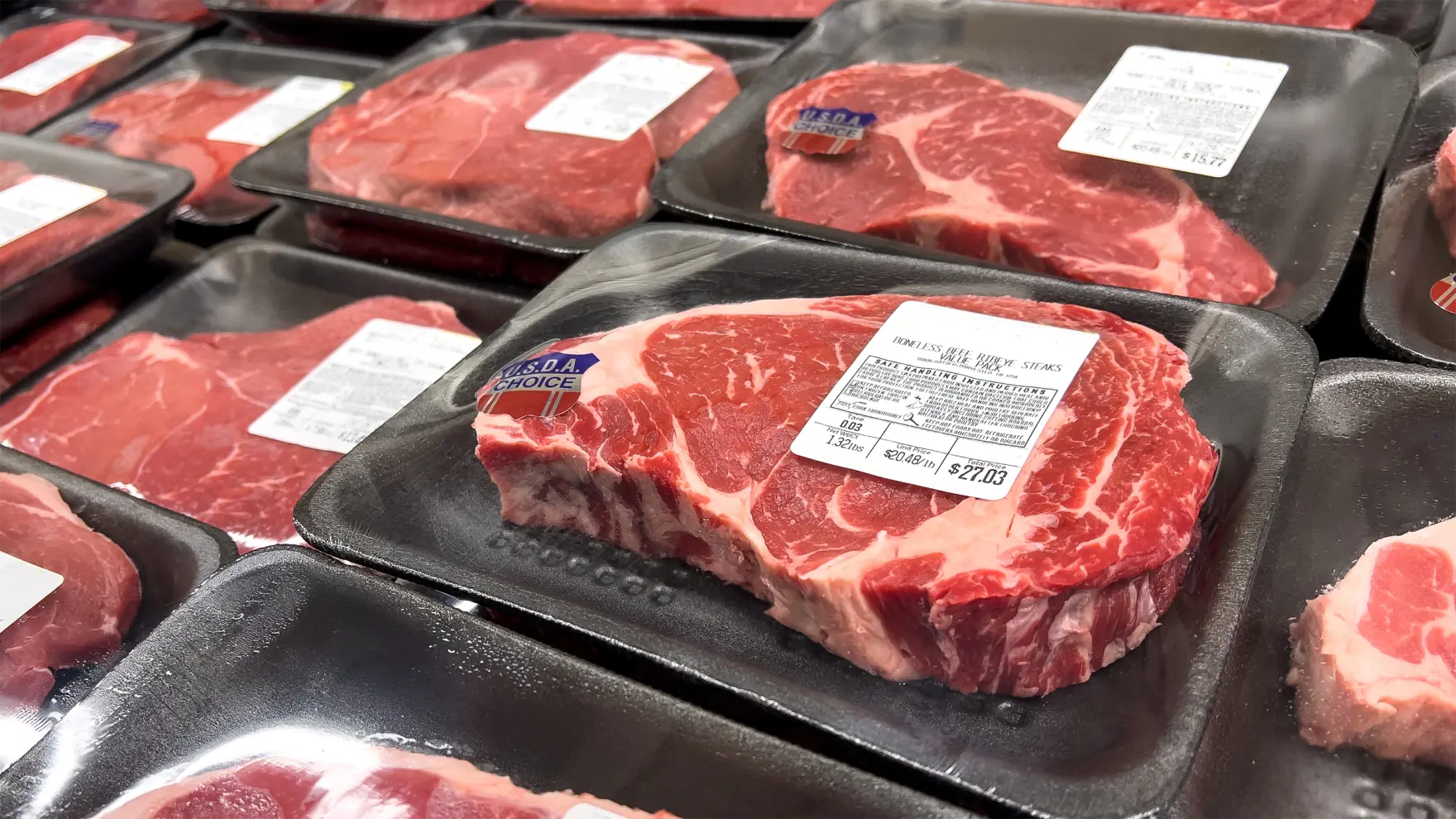
Chapter 2: The Warning Signs and Shopping Habits Every Meat Buyer Should Know
11. Three Things to Examine Before Putting Meat in Your Shopping Cart
After understanding the color and the label, shoppers should examine the physical condition of the package.
There are three particularly important areas.
First: Check the packaging.
Look for tears, holes, broken seals, and leaking liquid.
A package should be properly closed and should not appear to have been accidentally opened or damaged.
For vacuum-sealed products, the plastic should remain appropriately tight around the meat.
Second: Check the refrigerated display.
The meat should be kept in a properly functioning refrigerated case.
If the display appears unusually warm, or packages are sitting outside the refrigerated area for extended periods, consider choosing another product or asking supermarket staff for assistance.
Third: Check the condition of the meat.
Examine the surface through the packaging.
Look for unusual discoloration, excessive liquid, and other signs that suggest the product may have deteriorated.
Remember that normal color variations are possible.
The goal is not to find the brightest red steak.
It is to identify a properly packaged product that has been handled and stored appropriately.
12. Warning Signs That Should Make You Walk Away
Although color alone is unreliable, certain combinations of warning signs should not be ignored.
A product may be unsuitable for purchase if it has:
-
A strong sour, rotten, or otherwise unpleasant odor.
-
A sticky or slimy surface.
-
Packaging that is leaking or damaged.
-
An unusually swollen package.
-
Visible evidence of contamination.
-
Signs that the meat has not been kept properly refrigerated.
There is an important limitation here.
You cannot safely determine the absence of harmful bacteria by smelling or touching raw meat.
Some dangerous microorganisms do not produce obvious changes in smell, texture, or appearance.
Therefore, the absence of warning signs does not guarantee safety.
Proper storage and cooking remain necessary.
If you suspect that meat has been stored at an unsafe temperature, do not taste it to determine whether it is acceptable.
When in doubt, avoid purchasing it.
13. Why Ground Beef Requires Particular Attention
Ground beef deserves special consideration.
Unlike an intact steak, ground beef has been mechanically broken into smaller pieces.
During grinding, microorganisms that may have been present on the surface of the original meat can become distributed throughout the product.
This is why cooking temperature is especially important.
A whole steak may have bacteria primarily on its exterior, although contamination can occur in other ways.
Ground beef, however, requires sufficient cooking throughout the entire product.
A burger that looks brown on the outside may still not have reached a safe internal temperature.
Likewise, a burger that appears pink is not necessarily unsafe if it has reached the appropriate temperature.
Color is not a dependable cooking test.
For ground beef, the recommended minimum internal temperature in U.S. food-safety guidance is 160°F (71°C).
A food thermometer should be used to check the thickest portion of the burger or meat preparation.
This is especially important when serving children, older adults, pregnant people, or individuals with weakened immune systems.
14. Does Meat With More Marbling Always Mean Better Quality?
Not necessarily.
Marbling is an important characteristic in beef grading and can contribute to eating quality.
However, the best choice depends on personal preference, the intended dish, and the price.
Someone preparing a rich grilled steak may prefer a well-marbled ribeye.
Someone making a slow-cooked stew may find that a chuck roast offers better value.
A person trying to reduce saturated fat intake may prefer a leaner cut.
The mistake is assuming that one characteristic tells you everything about the meat.
Marbling does not establish freshness.
It does not reveal whether the package has been stored correctly.
And it does not guarantee that the meat will be tender if it is cooked improperly.
The smartest purchase considers several factors together.
15. What Does the Country-of-Origin Information Tell You?
Depending on the market and product category, meat packaging may include information about its country of origin.
This can help consumers understand where the product came from and make purchasing decisions based on personal preferences.
Some shoppers prefer locally produced beef.
Others are interested in imported products because of price, breed, or production practices.
However, country-of-origin information should not be confused with a direct measure of food safety.
Imported meat is not automatically unsafe, just as locally produced meat is not automatically free from risk.
Products should meet the relevant food-safety and import requirements of the market in which they are sold.
Consumers who want to know more about production practices can also look for additional information about the supplier, certification, and traceability.
The availability and meaning of these labels vary between countries.
16. Be Careful With Added Ingredients and Enhanced Meat Products
Not every package labeled as beef contains only an unmodified cut of muscle meat.
Some products are seasoned, marinated, injected, or otherwise enhanced before sale.
These products can be convenient, but their labels deserve careful examination.
Look for statements indicating added water, salt, flavorings, marinades, or other ingredients.
This information can affect:
-
Nutritional content.
-
Sodium intake.
-
Cooking behavior.
-
Final texture.
-
Price comparisons.
For example, two packages may appear similar in size, but one may contain added ingredients that change its overall composition.
This does not automatically make the product inferior.
It simply means shoppers should know what they are buying.
If you prefer plain beef without added seasoning or solutions, check the ingredient statement rather than relying on the front of the package.
17. Compare the Price Per Pound, Not Just the Total Price
A supermarket may display two packages of beef with different prices.
One might cost $12, while another costs $18.
At first glance, the less expensive package seems like the obvious choice.