Choose plain yogurt rather than heavily sweetened varieties if you want to keep added sugar lower.
Banana With a Little Nut Butter
A small banana with a modest amount of unsweetened peanut or almond butter can provide carbohydrates, fiber, fat, and some protein.
The combination may be more filling than a banana alone.
However, nut butter is energy-dense, so the amount matters if you are monitoring total calorie intake.
Banana With Oatmeal
A small portion of oatmeal with sliced banana can be a comforting snack, particularly on colder evenings.
Oats provide carbohydrates and soluble fiber. The banana adds sweetness, so many people do not need to add much extra sugar.
Keep the portion moderate if you are eating close to bedtime.
Banana With a Few Nuts
A banana and a small handful of unsalted nuts provide a combination of carbohydrates, fiber, and healthy fats.
Nuts also contribute magnesium and other nutrients. But they are relatively high in calories, so a small serving is usually sufficient.
Should You Add Honey or Sugar?
You can, but you usually do not need to.
A ripe banana is naturally sweet. Adding honey, syrup, sugar, or sweetened toppings increases the total sugar and energy content of the snack.
If your goal is to keep the snack simple, the banana itself may be enough.
10. What If You Eat a Banana and Still Cannot Sleep?
If you eat a banana at 11 PM and remain awake, that does not mean the fruit has failed. It was never a guaranteed sleep treatment.
Sleep is influenced by a combination of biological, environmental, and behavioural factors.
A late-night snack cannot compensate for every factor that interferes with rest.
Keep a Consistent Sleep Schedule
Going to bed and waking up at approximately the same time each day can help support the body's internal clock.
Large changes in sleep timing between weekdays and weekends may make it harder for some people to maintain a regular routine.
Reduce Caffeine Late in the Day
Coffee, tea, energy drinks, and some soft drinks contain caffeine. Caffeine can remain active in the body for several hours, so drinking it late in the afternoon or evening may affect sleep.
People vary in how sensitive they are to caffeine. If you regularly struggle to fall asleep, consider whether your afternoon and evening drinks may be contributing.
Make the Bedroom Comfortable
A dark, quiet, and comfortably cool bedroom can support better sleep.
Bright lights, noise, an uncomfortable mattress, or an overly warm room may make it harder to settle.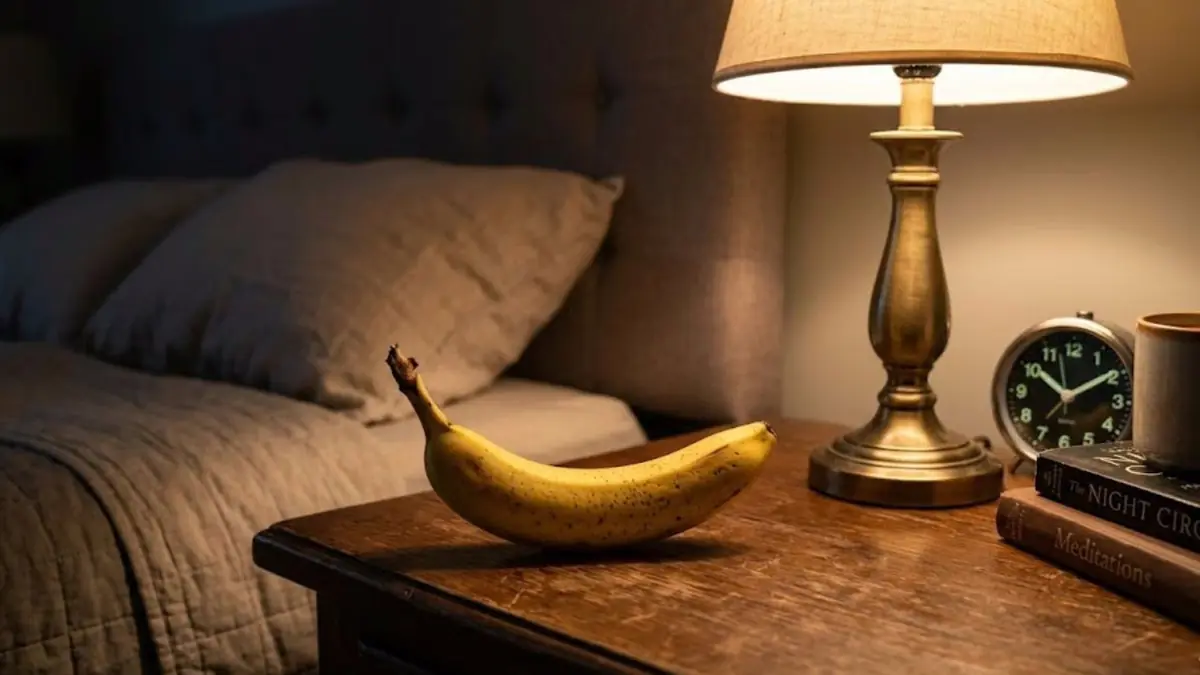
Reduce Screen Stimulation
Using a phone or computer immediately before bed can keep the mind engaged. Bright light in the evening may also affect the body's normal sleep signals.
A calmer routine—such as reading, listening to quiet music, or preparing for the next day—may be more helpful than searching for a food that promises instant sleep.
Do Not Ignore Persistent Insomnia
If difficulty falling asleep or staying asleep continues, affects daytime functioning, or occurs alongside other symptoms, speak with a healthcare professional.
Persistent insomnia may be related to stress, anxiety, pain, medication, sleep apnea, or other medical conditions.
A banana may be part of a healthy diet, but it cannot diagnose or treat these underlying problems.
11. Common Myths About Eating Bananas at Night
There are many claims about bedtime bananas. Some contain a small amount of truth, while others exaggerate what nutrition can do.
Myth: Eating a Banana at 11 PM Automatically Causes Weight Gain
Reality: A banana contains calories, but the time alone does not determine whether those calories become body fat. Overall eating patterns and energy balance matter more.
Myth: A Banana Works Like a Natural Sleeping Pill
Reality: Bananas contain nutrients involved in normal sleep-related processes, but there is no strong evidence that one banana reliably treats insomnia or makes everyone fall asleep faster.
Myth: Bananas Are Too High in Sugar to Eat at Night
Reality: Bananas contain natural sugars and carbohydrates, but they also provide fiber and other nutrients. Most healthy people can include them in a balanced diet.
Myth: Everyone Should Eat a Banana Before Bed
Reality: There is no need to eat a banana if you are not hungry. People with particular medical conditions or dietary restrictions may need individualized advice.
Myth: Bananas Prevent Nighttime Muscle Cramps
Reality: Potassium is important for normal muscle function, but cramps have many possible causes. A banana is not a guaranteed prevention or treatment.
Myth: Green Bananas Are Always Better Than Yellow Bananas
Reality: Green bananas generally contain more resistant starch, while ripe bananas are sweeter and softer. Neither is automatically best for everyone. Personal preference and digestive tolerance matter.
The Final Answer: Is It Okay to Eat a Banana at 11 PM?
For most healthy adults, yes—eating a banana at 11 PM is generally perfectly fine.
A banana provides carbohydrates, fiber, potassium, vitamin B6, and other nutrients. It can be a convenient alternative to cookies, chips, pastries, or other heavily processed snacks when you feel hungry before bed.
It may also help you feel more comfortable if hunger is keeping you awake. However, there is not enough direct evidence to say that eating a banana will reliably improve sleep or treat insomnia.
Its effect on digestion and blood sugar depends on the individual. Some people tolerate bananas easily, while others may experience bloating or discomfort. People with diabetes should consider the carbohydrate portion, and those with kidney disease or a medically restricted potassium intake should follow professional dietary advice.
The same principle applies to weight management: one banana at night does not automatically cause weight gain. What matters is your overall eating pattern and how much energy you consume over time.
So if it is 11 PM, your stomach is genuinely hungry, and you enjoy bananas, there is usually no reason to feel guilty about eating one.
Just keep the portion reasonable, pay attention to how your body responds, and remember that no single food can replace healthy sleep habits.
A banana before bed can be a sensible snack—not a miracle sleep remedy, and certainly not something most healthy people need to fear.