If You Notice These Red Dots on Your Skin, Here’s What They Might Mean
Many people occasionally notice small red dots appearing on their skin. Because these marks can appear suddenly and sometimes increase over time, they often cause concern.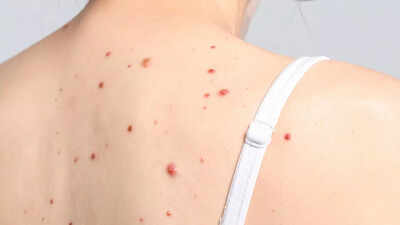
In most cases, however, these tiny red spots are harmless and are commonly known as cherry angiomas—a very common type of skin growth that develops when clusters of small blood vessels form near the surface of the skin.
Although they may look unusual at first, dermatologists say they are typically benign and not related to cancer.
What Are These Red Dots?
Cherry angiomas are small, bright red spots that can appear flat or slightly raised on the skin. They usually range from about 1 to 5 millimeters in size and can appear almost anywhere on the body, though they are most commonly found on the chest, arms, shoulders, or back.
These spots form when tiny blood vessels cluster together close to the skin’s surface, creating the characteristic red appearance.
Most people begin to notice them after the age of 30, and the number of spots often increases with age.
Why Do These Red Dots Appear?
The exact cause of cherry angiomas is not fully understood, but researchers have identified several possible factors that may contribute to their appearance.
Common factors include::max_bytes(150000):strip_icc()/Health-GettyImages-1368041284-db7e2b393eca43bf97f7cf7a7a4d7652.jpg)
-
Aging, which is the most common reason
-
Genetic predisposition
-
Hormonal changes, such as during pregnancy
-
Exposure to certain chemicals or medications
Because aging plays a significant role, these spots tend to become more common as people grow older.
Do They Cause Pain or Itching?
In most cases, cherry angiomas do not cause pain, itching, or discomfort. They are usually discovered by chance when someone notices a small red spot on their skin.
However, the spots may bleed if they are scratched, rubbed, or injured, since they contain small blood vessels close to the skin surface.
If irritation occurs or the spot frequently bleeds, it is best to avoid scratching and consult a medical professional.
When Should You See a Doctor?
While cherry angiomas are generally harmless, experts suggest seeing a doctor if you notice unusual changes in your skin.
You should consider medical advice if:
-
A red spot suddenly changes size, shape, or color
-
It becomes painful, itchy, or frequently bleeds
-
Many new spots appear very quickly
A dermatologist can usually identify cherry angiomas with a simple skin examination and determine whether further evaluation is necessary.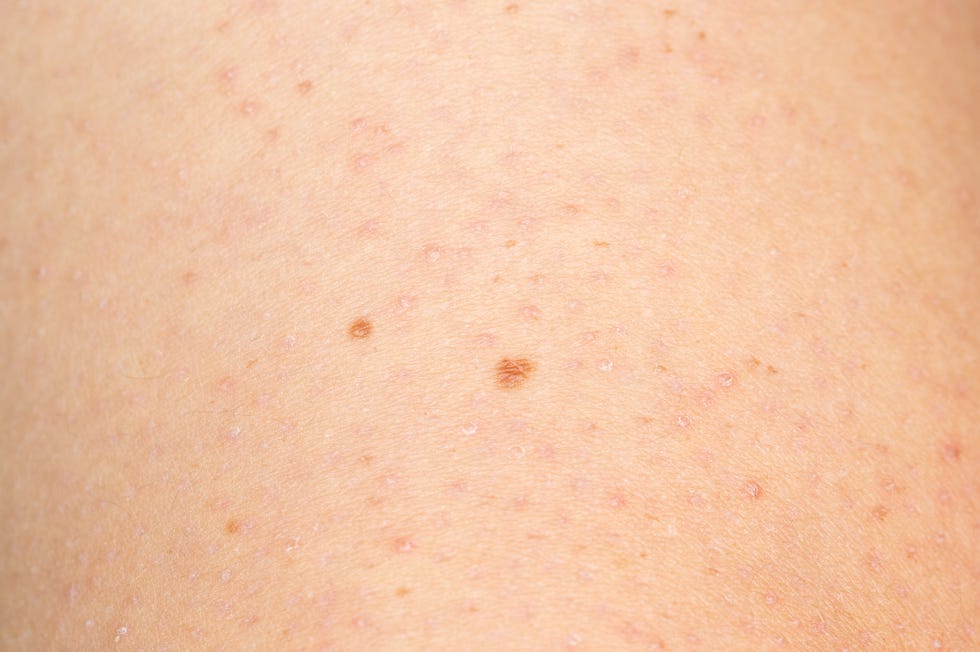
Can They Be Removed?
Most cherry angiomas do not require treatment because they are not harmful to health.
However, some people choose to remove them for cosmetic reasons or if the spots are frequently irritated. Doctors can remove them using medical procedures such as laser treatment, freezing (cryotherapy), or cauterization.
These procedures are typically quick and performed by trained professionals.
Don’t Panic if You See Them
Finding new spots on the skin can be worrying, but small red dots are usually nothing serious.
Understanding what they are and paying attention to any unusual changes can help you stay informed about your skin health. If there is ever uncertainty, a quick check with a dermatologist can provide reassurance and proper guidance.