Dogs sometimes lick or sniff themselves as part of normal grooming.
However, excessive attention to their own genital area may indicate irritation, infection, urinary problems, skin allergies, or other medical concerns.
Owners should pay attention to symptoms such as:
-
Redness or swelling.
-
Unusual discharge.
-
Frequent licking.
-
Difficulty urinating.
-
Blood in the urine.
-
Signs of pain.
-
Repeated attempts to urinate with little output.
Difficulty urinating, especially when a dog produces little or no urine, can be an emergency.
Do not assume that persistent genital licking is simply a grooming habit.
A veterinary examination may be necessary.
Can You Teach Your Dog to Greet People Without Sniffing Their Private Areas?
Absolutely.
The goal is not to eliminate your dog's sense of smell or prevent it from exploring the world.
Instead, you can teach it to express natural curiosity in ways that are comfortable for everyone.
A dog can gather information from a person's hands, clothing, and general surroundings without pushing its nose into private areas.
Establish a Predictable Greeting Routine
Choose a simple routine that everyone in the household can follow.
For example, when someone enters the home:
-
Ask your dog to sit.
-
Reward it for remaining calm.
-
Allow the visitor to approach only if they are comfortable.
-
Keep the interaction brief at first.
-
Reward the dog for maintaining appropriate distance.
Repeat this routine with different visitors.
Over time, the dog may begin associating the arrival of guests with sitting calmly rather than jumping or sniffing.
Give Visitors Clear Instructions
Guests may not know how to interact with your dog.
Some people enjoy dogs and immediately bend down to pet them.
Others feel uncomfortable around animals.
Explain that your dog is being trained to greet people calmly.
Ask visitors to avoid encouraging jumping or pushing the dog away dramatically.
If someone does not want to interact with the animal, respect that preference.
Your responsibility as an owner is to ensure that both the dog and the visitor feel comfortable.
Provide Appropriate Opportunities for Sniffing
It is important not to make the dog feel that all sniffing is forbidden.
Sniffing is a natural and important behavior.
Instead, provide suitable opportunities throughout the day.
A scent walk allows the dog to investigate different odors at its own pace.
A snuffle mat encourages it to search for hidden food.
Puzzle toys provide an additional mental challenge.
These activities can help satisfy the animal's natural investigative instincts.
Why Positive Reinforcement Works
Positive reinforcement involves rewarding a behavior that you want to see repeated.
When your dog sits calmly instead of jumping toward a guest, reward it.
When it responds to "leave it," offer praise or a treat.
When it remains relaxed around unfamiliar people, reinforce that behavior.
Over time, the dog learns which actions lead to positive outcomes.
This approach is generally more effective and less stressful than repeatedly shouting at an animal for doing something instinctive.
If your dog is extremely excitable, frightened, or difficult to redirect, professional guidance can help.
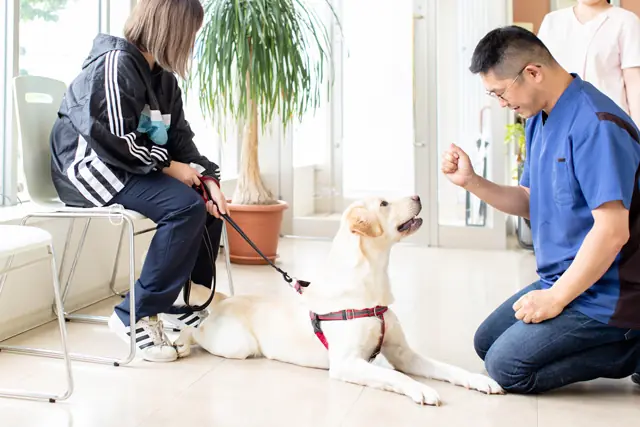
5 Common Misunderstandings About Dogs Sniffing Human Genital Areas
There are many explanations circulating online about this behavior.
Some are based on genuine canine biology, while others exaggerate what dogs can actually detect.
Here are five common misunderstandings.
Misunderstanding 1: A dog that sniffs your private area is being sexually attracted to you.
Not necessarily.
In most everyday situations, the behavior is related to scent investigation and social information gathering rather than human-like sexual attraction.
Misunderstanding 2: Your dog can always tell when you are pregnant.
There is no reliable evidence that ordinary household dogs can consistently identify pregnancy through sniffing.
They may notice scent changes, but those changes do not provide a dependable diagnosis.
Misunderstanding 3: If your dog suddenly sniffs you, it means you have cancer.
This is false.
Although trained dogs have been studied for their ability to detect certain disease-associated odors, ordinary sniffing behavior cannot diagnose cancer.
Misunderstanding 4: You should punish your dog whenever it does this.
Punishment is unnecessary for normal investigative behavior.
Calm redirection and positive reinforcement are better ways to teach appropriate greetings.
Misunderstanding 5: A dog only sniffs the groin because it smells unpleasant.
Not necessarily.
Dogs are interested in information contained in odors, not simply whether a smell is pleasant to humans.
A scent that seems ordinary to us may be extremely interesting to a dog.
Understanding these distinctions can help owners respond more calmly and avoid unnecessary fear.
So, If Your Dog Is Sniffing Your Genital Area, What Does It Mean You Have?
Now we can return to the question in the headline.
If your dog repeatedly sniffs your genital area, does it mean you have a hormonal problem, an infection, or an underlying illness?
The most likely explanation is much simpler: your dog is detecting the distinctive natural scents produced by your body.
The groin contains apocrine glands, and the chemical compounds associated with skin secretions can provide interesting scent information.
Your dog may also notice changes related to sweating, hormones, hygiene products, exercise, or your surroundings.
In some situations, trained dogs can detect particular odors associated with medical conditions. Scientific research has explored their potential to recognize certain cancers, infections, and changes in blood glucose.
However, these findings do not mean that ordinary household dogs can diagnose medical problems through casual sniffing.
There is no reliable medical condition that can be identified simply because a dog investigates someone's private area.
If you have unusual symptoms, such as persistent itching, pain, abnormal discharge, sores, or changes in urination, seek medical advice rather than relying on your pet's behavior.
And if your dog occasionally sniffs your crotch when greeting you, there is generally no reason to panic.
It is often just your dog's way of exploring the world.
The Special Bond Between Dogs and Their Owners
Perhaps the most interesting part of this behavior is what it reveals about the relationship between dogs and humans.
Dogs do not understand the world exactly as we do.
They cannot ask where we have been, what we have eaten, or why we seem different today.
Instead, they use their senses to gather information.
A familiar smell can reassure them that someone they love has returned home.
An unfamiliar odor may encourage investigation.
A change in scent may make them curious.
Sometimes, they may simply want attention.
Understanding these behaviors helps owners appreciate their pets rather than becoming embarrassed by every unusual action.
Dogs need opportunities to explore, communicate, and use their natural instincts.
At the same time, responsible ownership means teaching them to respect human boundaries.
You can appreciate your dog's remarkable sense of smell while still teaching it that sniffing visitors' private areas is not an appropriate greeting.
The relationship works best when both the animal's natural needs and the owner's comfort are respected.
So the next time your dog approaches and starts investigating your private area, remember: it may not be trying to embarrass you or warn you about a disease. It may simply be gathering information in the only language it knows particularly well — scent.