Perhaps they have their back toward you every night. Maybe they used to sleep facing you but gradually started turning away. Or perhaps they still reach for your hand, hold you before falling asleep, and show affection throughout the day, yet seem to prefer sleeping in the opposite direction.
For some people, this sleeping position is completely normal. For others, it can quietly raise questions about emotional closeness, intimacy, and the state of their relationship.
Does sleeping with their back toward you mean your partner needs personal space? Could it indicate emotional distance? Does it reveal something about their personality, comfort level, or feelings toward you?
The truth is more complicated than many relationship articles suggest.
A sleeping position can sometimes reflect personal comfort, physical needs, or habitual behavior. In certain circumstances, changes in how couples sleep may also coincide with changes in their emotional connection. However, there is no scientifically established rule that a partner turning their back automatically means they are unhappy, losing interest, or hiding something.
Understanding the possible meanings requires looking beyond the position itself and considering the relationship as a whole.
Here are 18 possible reasons your partner may sleep with their back toward you and what you should really pay attention to.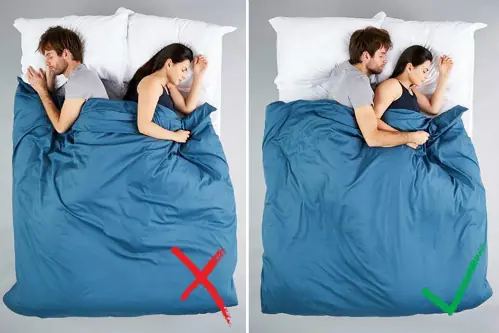
1. They Feel Completely Comfortable and Secure Around You
One of the most positive explanations is that your partner feels comfortable enough to sleep naturally without needing constant physical contact.
When a relationship is new, couples often spend much of the night facing one another, holding hands, cuddling, or staying close.
As the relationship becomes more familiar, sleeping habits may become less romantic and more practical.
Your partner may turn away simply because that is the position in which they sleep most comfortably.
This does not necessarily indicate a lack of affection. In fact, some people feel most secure in a relationship when they no longer feel the need to maintain physical closeness every moment.
They know you are beside them. They trust that the relationship is stable. They do not need to prove their affection through a particular sleeping position.
Think about what happens when you are awake.
Does your partner still hug you, kiss you, check on you, listen to your concerns, and make an effort to spend time together?
If the answer is yes, their sleeping position may simply reflect comfort rather than emotional distance.
The deeper meaning: Feeling secure in a relationship does not always require constant physical contact. Sometimes, comfort means being able to relax and sleep naturally beside someone you love.
2. They Simply Have a Preferred Sleeping Position
Not every behavior in a relationship carries a hidden emotional message.
Some people have slept in the same position for most of their lives. They may prefer sleeping on their side with their back facing the center of the bed, regardless of who is sleeping beside them.
This preference can be influenced by habit, body shape, mattress comfort, and individual sleep patterns.
For example, your partner may find it easier to breathe when sleeping on one side. They may experience shoulder discomfort, back pain, or pressure when lying in another position.
They may also prefer facing a wall because it creates a more familiar and relaxing sleeping environment.
In these situations, turning away from you has little or nothing to do with your relationship.
It is important not to interpret every physical habit as an emotional statement.
If your partner has always slept this way, there may be no meaningful change to investigate.
The deeper meaning: A familiar sleeping position is often just a personal preference, not a reflection of how much someone loves their partner.
3. They Need More Personal Space During Sleep
Being emotionally close to someone does not mean wanting physical contact throughout the entire night.
Some people enjoy cuddling before falling asleep but prefer having more space once they are ready to rest.
They may become uncomfortable when another person's body is too close, especially if they feel warm, restricted, or unable to move freely.
This is particularly common among people who are sensitive to temperature or movement during sleep.
Your partner might enjoy holding you for several minutes before turning onto their side.
They may still appreciate affection but simply need a comfortable amount of physical space to sleep well.
Personal space is not necessarily emotional distance.
Healthy relationships allow both people to maintain individual preferences without interpreting every difference as rejection.
If your partner turns away but still reaches for your hand, touches your back, or moves closer during the night, these small gestures may indicate that they enjoy connection while also needing room to sleep comfortably.
The deeper meaning: Wanting space in bed does not automatically mean wanting distance in the relationship.
4. They Are Trying to Get Better Sleep
Sleep quality can have a major influence on mood, concentration, physical health, and emotional well-being.
When people share a bed, their sleeping habits can sometimes interfere with one another.