If you’ve ever looked down at your jeans and noticed unusual lines, creases, or faded patterns—especially around the upper thigh area—you’re definitely not alone. Many people spot these marks and wonder whether they are signs of damage, poor quality, or even a manufacturing defect.
In reality, these patterns are extremely common and are often a natural result of how denim behaves over time.
What Are These Marks on Jeans?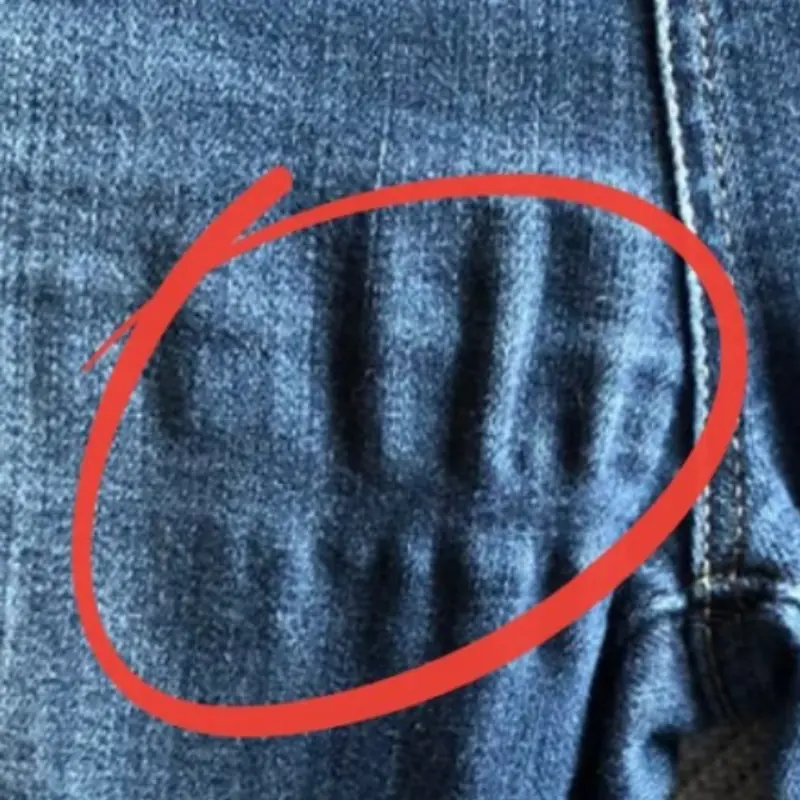
The lines and creases you see on your jeans are commonly referred to as “whiskering.”
Whiskering appears as faded streaks or crease-like patterns, usually around areas where the fabric bends frequently—such as the hips and thighs. These marks can look like wrinkles or even hand-shaped impressions, which often confuses people when they first notice them.
Why Do These Marks Appear?
There are several reasons why these patterns develop:
1. Natural Movement of Your Body
Every time you sit, walk, or bend, your jeans fold and stretch. Over time, these repeated movements create pressure points in the fabric, leading to visible creases.
2. Friction and Wear
Denim is a durable material, but constant friction—whether from sitting, walking, or rubbing against surfaces—causes certain areas to fade faster than others.
3. Fabric Structure
Denim is made using tightly woven cotton fibers. When these fibers are stressed repeatedly, they begin to show wear patterns that reflect your body’s natural movements.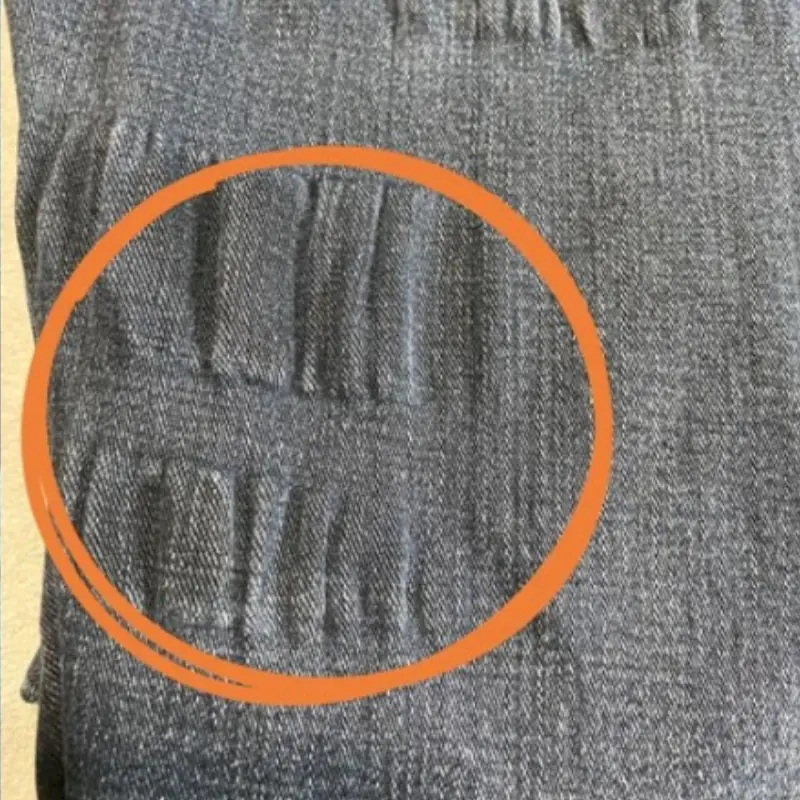
Are These Marks a Defect?
Not at all. In fact, many brands intentionally design jeans to include whiskering patterns.
Manufacturers often use special washing and treatment techniques to create a “worn-in” look even before the jeans are sold. This gives denim a stylish, lived-in appearance that many people prefer.
So if you notice these marks, it doesn’t mean your jeans are damaged—it often means they are behaving exactly as expected.
Different Types of Denim Marks
Whiskering is just one type of mark you may see. Other common denim patterns include:
- Fading: Lighter areas caused by wear and washing
- Honeycombs: Creases behind the knees
- Stacking: Bunched fabric around the ankles
- Distressing: Intentional rips or worn areas
Each of these adds character to the jeans and reflects how they’ve been worn.
Why Some Jeans Show It More Than Others
Not all jeans develop the same patterns. Several factors influence how visible these marks become:
- Fabric quality: Heavier denim often shows more defined creases
- Fit: Slim or tight jeans crease more noticeably
- Color: Darker jeans show fading more clearly
- Usage: Frequent wear accelerates the process
Your lifestyle plays a big role in how your jeans age.
Can You Prevent These Marks?
If you prefer a cleaner, more uniform look, there are ways to minimize whiskering:
- Avoid wearing the same pair every day
- Wash jeans less frequently to reduce fading
- Turn jeans inside out before washing
- Avoid excessive folding when storing
However, it’s important to note that some level of creasing is unavoidable with regular use.
Why Many People Actually Like Them
Interestingly, what some people see as flaws, others see as personality.
Denim enthusiasts often appreciate these marks because they tell a story. Each crease and fade reflects how the jeans have been worn, making every pair unique.
In fact, premium denim brands and collectors often value naturally developed whiskering more than artificial designs.
Conclusion
Those mysterious lines and creases on your jeans are not something to worry about. They are a natural and even desirable part of how denim evolves over time.
Rather than being defects, these marks are signs of wear, movement, and individuality. So the next time you notice them, remember—you’re not alone, and your jeans are simply telling their story.