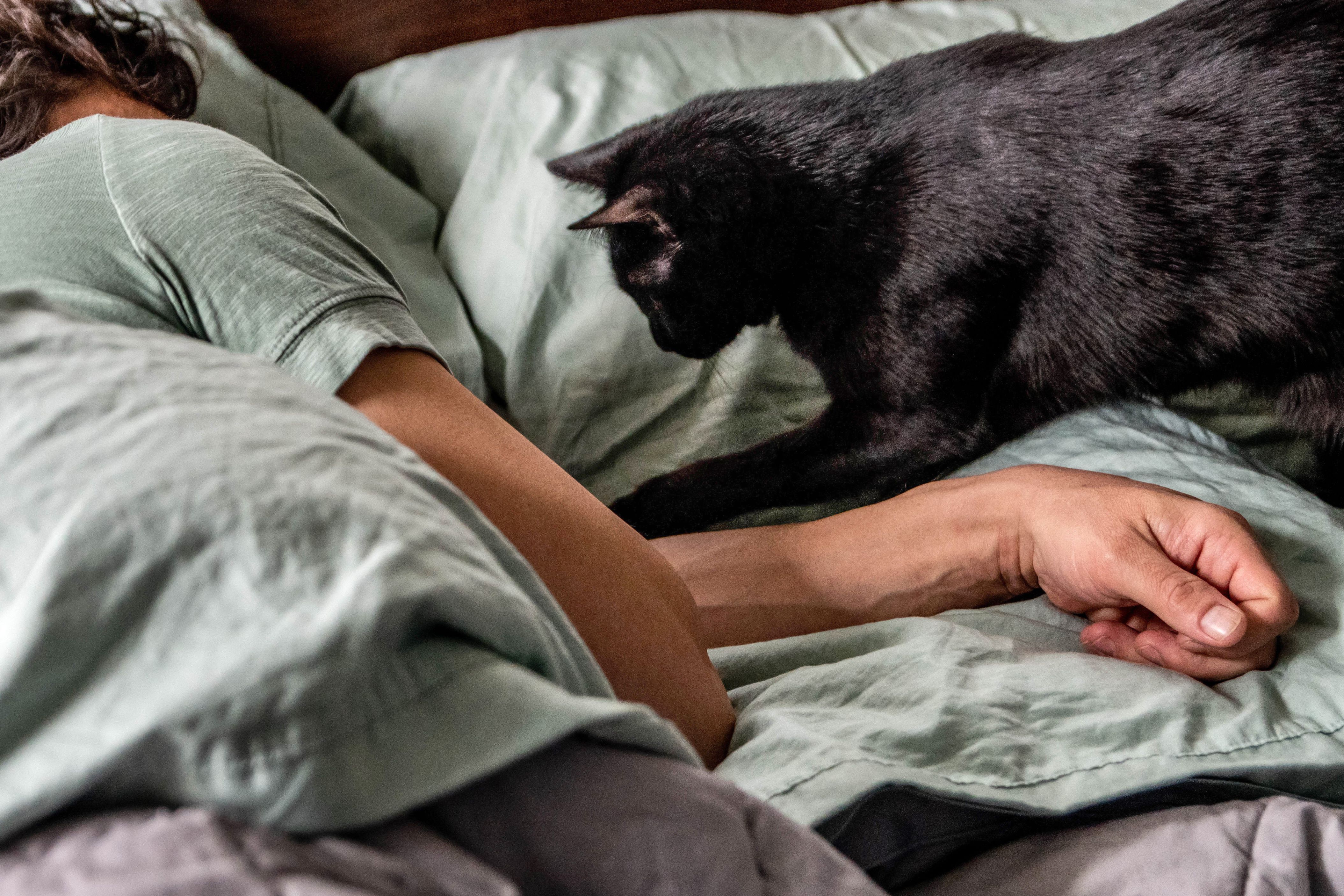
For many cat owners, bedtime is also cuddle time. Your cat curls up beside your legs, settles against your chest, or quietly takes over half the pillow. After all, sharing a bed with a beloved pet can feel comforting, familiar, and even relaxing.
But is sleeping with your cat actually safe?
For most healthy adults, sleeping with a healthy, well-cared-for cat is unlikely to cause serious health problems. However, sharing a bed does increase close contact with animal hair, dander, saliva, parasites, and microorganisms. For certain people—including those with allergies, asthma, weakened immune systems, or particular health conditions—the potential risks may be more significant.
That doesn't necessarily mean you have to ban your cat from the bedroom. Instead, it helps to understand the possible risks and know how to make nighttime cuddles safer.
1. Allergies Can Become Worse at Night
One of the most common problems associated with sleeping with a cat is allergic reactions.
Cat allergies are not simply caused by fur. Proteins found in cat skin flakes, saliva, and other secretions can trigger symptoms in sensitive people. These allergens can become attached to fur and spread throughout bedding, mattresses, carpets, and furniture.
If your cat sleeps on your bed every night, you may have prolonged exposure while you sleep.
Possible symptoms include:
-
Sneezing
-
Runny or stuffy nose
-
Itchy or watery eyes
-
Coughing
-
Wheezing
-
Skin irritation
-
Difficulty breathing in people with asthma
Sometimes people don't realize their cat is contributing to their symptoms because the reaction develops gradually.
If you frequently wake up congested, sneeze throughout the night, or experience worsening asthma symptoms, reducing your exposure may be worth discussing with a healthcare professional.
2. Your Cat Can Bring Dirt and Microorganisms Into Bed
Cats spend a considerable amount of time grooming themselves, but that doesn't mean they are completely free of microorganisms.
Their paws can come into contact with litter, floors, soil, outdoor surfaces, and other contaminants. An outdoor cat may encounter considerably more potential sources of contamination than an indoor-only cat.
When a cat jumps from the litter box or floor directly onto your pillow or blanket, some of that material can be transferred to your bedding.
This doesn't mean your cat is "dirty" or that sharing a bed is inherently dangerous. Rather, close contact creates more opportunities for exposure.
Regular cleaning and good pet hygiene can substantially reduce these concerns.
3. Fleas and Other Parasites Are Another Consideration
If your cat has fleas, sleeping together can turn a small pet problem into a much bigger household problem.
Fleas can move between animals and the surrounding environment. They may bite humans, causing itchy red bumps, while eggs and immature stages can remain in carpets, bedding, and other areas.
Cats can also acquire certain intestinal parasites, particularly if they hunt, eat raw prey, or have access to contaminated environments.
Fortunately, routine veterinary care and appropriate parasite prevention can greatly reduce these risks.
If your cat spends time outdoors, regular parasite prevention becomes particularly important.
4. Certain Infections Can Spread Between Cats and Humans
Animals can occasionally carry infections that are transmissible to people. These are known as zoonotic diseases.
The risk from a healthy, vaccinated, routinely examined household cat is generally low, but it isn't zero.
Examples include ringworm, which is actually a fungal infection rather than a worm. It can spread through contact with infected animals or contaminated surfaces and may cause an itchy, circular rash.
Cats can also carry organisms associated with diseases such as toxoplasmosis, although simply sleeping beside a cat is not considered the primary route of toxoplasma exposure. Contact with contaminated cat feces is a more relevant concern.
Good hygiene—including washing hands after handling litter and keeping the litter box clean—matters much more than simply keeping a cat out of the bed.
5. Scratches and Bites Are More Important Than They May Seem
A sleeping cat can suddenly become startled.
If your cat wakes up frightened or reacts to movement while you're sleeping, an accidental scratch or bite is possible.
Cat bites deserve particular attention because their narrow teeth can puncture deeply and introduce bacteria beneath the skin.
Seek medical advice if a cat bite breaks the skin, especially if the area becomes increasingly:
-
Red
-
Warm
-
Swollen
-
Painful
-
Draining pus
A significant scratch or bite from an unfamiliar, unvaccinated, or potentially rabid animal should also be evaluated promptly.![Giải đáp] Tại sao mèo thích ngủ với người? Có nên ngủ với mèo?](https://bmpet.vn/wp-content/uploads/2023/03/3-meo-cam-thay-an-toan-va-an-tam-khi-ngu-chung-voi-chu.jpg)
6. Sleep Quality Can Be Affected
There is another potential issue that has nothing to do with infection: your sleep itself.
Cats don't necessarily follow the same sleep schedule as humans. They can become active during the night, walk across the bed, knead blankets, meow, groom themselves, or decide that 3 a.m. is the perfect time to play.
Even small disruptions can matter if they happen repeatedly.
You may not remember waking completely, but frequent brief disturbances can contribute to:
-
Morning fatigue
-
Difficulty concentrating
-
Irritability
-
Poor sleep quality
-
Feeling tired despite spending enough hours in bed
For some people, the emotional comfort of having a cat nearby outweighs these disturbances. For others, allowing the cat to sleep elsewhere can significantly improve sleep.
7. Asthma Requires Extra Consideration
People with asthma or significant respiratory allergies should pay particular attention to nighttime symptoms.
Cat allergens can remain airborne and accumulate in bedding. Continuous exposure may contribute to nasal congestion, coughing, wheezing, or asthma symptoms in sensitive individuals.
If you notice that breathing problems consistently become worse in the bedroom, consider discussing the pattern with your doctor rather than assuming it is simply a seasonal allergy.
Keeping the cat out of the bedroom may be one strategy, although allergens can remain in the home even when the animal isn't physically present in the room.
8. Some People Should Be More Cautious
Although the risk is low for many healthy people, certain groups may need to take additional precautions.
These can include people who are:
-
Severely immunocompromised
-
Receiving certain cancer treatments
-
Pregnant
-
Very young children
-
Elderly and medically vulnerable
-
Living with poorly controlled asthma or severe allergies
The appropriate precautions depend on the individual.
For example, pregnancy does not automatically mean that someone must give up their cat or stop interacting with it. The more important issue regarding toxoplasmosis is avoiding exposure to contaminated cat feces and taking appropriate food-safety precautions.
If you're pregnant or immunocompromised, ask your healthcare professional about your specific situation rather than relying on general advice.
9. What About Cat Hair?
Cat hair itself is generally not dangerous to swallow or encounter during normal household life.
However, hair can carry dander, saliva proteins, dust, and environmental particles. For someone with allergies, the problem isn't necessarily the hair itself—it can be the allergens attached to it.
Regular vacuuming and washing bedding can help reduce accumulation.
If your cat sheds heavily, keeping a washable blanket over the part of the bed where your cat usually sleeps can also make cleaning easier.
10. Your Cat's Health Matters Too
The health of the cat is an important part of the equation.
A cat that receives regular veterinary care, parasite prevention, vaccinations as recommended, and appropriate nutrition generally presents fewer avoidable health concerns than an animal with untreated medical problems.
Pay attention to signs that your cat may need veterinary attention, such as:
-
Persistent diarrhea
-
Vomiting
-
Skin lesions
-
Excessive scratching
-
Hair loss
-
Fleas
-
Unusual discharge
-
Persistent coughing or sneezing
-
Changes in appetite or behavior
Keeping your pet healthy is not only good for the animal—it can also reduce potential risks to the household.
How to Make Sleeping With Your Cat Safer
If you love having your cat beside you at night, there are several practical ways to reduce potential problems.
Keep up with veterinary care
Routine veterinary examinations can identify parasites, infections, dental problems, and other conditions before they become bigger issues.
Use appropriate parasite prevention
Follow your veterinarian's recommendations for flea, tick, and intestinal parasite prevention, particularly if your cat goes outdoors.
Keep the litter box clean
Wash your hands after cleaning the litter box, and avoid touching your face or eating immediately afterward without washing your hands.
Pregnant people and those with weakened immune systems should discuss litter-box precautions with their healthcare provider.
Wash bedding regularly
Regularly washing sheets, pillowcases, and blankets helps remove accumulated hair, dander, dust, and other particles.
Keep your cat away from your face
You don't need to panic if your cat occasionally gets close to your face, but allowing a cat to routinely sleep directly on your pillow increases close contact with saliva, dander, and allergens.
Keep vaccinations up to date
Follow veterinary recommendations appropriate for your cat's lifestyle and geographic location.
Treat skin problems promptly
If your cat develops bald patches, scaling, excessive itching, or suspicious skin lesions, have it checked by a veterinarian rather than allowing the problem to persist.
Should You Stop Letting Your Cat Sleep With You?
For most people, there isn't a universal medical rule saying that cats must stay out of the bed.
If you're healthy, don't have significant allergies, your cat receives appropriate veterinary care, and neither you nor the animal is experiencing a problem, sharing a bed can be a reasonable personal choice.
Some people also find that interacting with a pet provides companionship and relaxation. The emotional benefits of living with animals can be meaningful, although individual experiences vary.
The decision becomes different when sleeping with your cat causes a clear problem.
If you consistently wake up congested, develop asthma symptoms, lose sleep, or experience repeated skin irritation, it's worth reconsidering the arrangement.
You might also create a comfortable cat bed next to your own bed. This allows your pet to remain nearby without necessarily sharing the same sleeping surface.
What About Letting Your Cat Sleep on Your Pillow?
This is probably one of the habits worth reconsidering if you're concerned about hygiene or allergies.
Your pillow is close to your eyes, nose, and mouth for several hours every night. Having a cat sleep directly on it means increased exposure to fur, dander, saliva proteins, and whatever particles may be on the animal's coat and paws.
A separate blanket or designated area at the foot of the bed can provide a compromise.
You can still enjoy your cat's company without necessarily giving up your entire sleeping space.
The Bigger Picture
It's easy to see headlines about pets and health risks and assume that sharing your bed with a cat is dangerous.
For most healthy people, that's an oversimplification.
Cats can carry allergens, parasites, and microorganisms, just as other animals can. But the actual risk depends heavily on the cat's health, lifestyle, veterinary care, the owner's health, and the type of exposure involved.
A well-cared-for indoor cat that receives routine veterinary attention is very different from an unvaccinated outdoor animal with untreated parasites or skin disease.
Good hygiene and preventive veterinary care can make a significant difference.
Final Thoughts
Sleeping with your cat isn't automatically unsafe.
For many cat owners, a purring companion at the end of the day is one of the most comforting parts of having a pet. The potential health risks are generally manageable, particularly when the cat is healthy and receives appropriate veterinary care.
The main concerns are usually allergies, parasites, zoonotic infections, scratches or bites, and disrupted sleep. People who are pregnant, immunocompromised, highly allergic, or living with poorly controlled asthma may need additional precautions.
So rather than asking only, "Is it safe to sleep with my cat?", a better question is:
"Is sharing my bed with this particular cat affecting my health or sleep?"
If the answer is no, there may be little reason to worry. If you're experiencing persistent allergy symptoms, breathing problems, unexplained skin changes, frequent sleep disruption, or other concerning symptoms, it's worth discussing them with a healthcare professional.
And when it comes to your cat, regular veterinary care, parasite prevention, clean bedding, and good hand hygiene are among the simplest ways to keep nighttime cuddles both enjoyable and sensible.