The decision becomes different when sleeping with your cat causes a clear problem.
If you consistently wake up congested, develop asthma symptoms, lose sleep, or experience repeated skin irritation, it's worth reconsidering the arrangement.
You might also create a comfortable cat bed next to your own bed. This allows your pet to remain nearby without necessarily sharing the same sleeping surface.
What About Letting Your Cat Sleep on Your Pillow?
This is probably one of the habits worth reconsidering if you're concerned about hygiene or allergies.
Your pillow is close to your eyes, nose, and mouth for several hours every night. Having a cat sleep directly on it means increased exposure to fur, dander, saliva proteins, and whatever particles may be on the animal's coat and paws.
A separate blanket or designated area at the foot of the bed can provide a compromise.
You can still enjoy your cat's company without necessarily giving up your entire sleeping space.
The Bigger Picture
It's easy to see headlines about pets and health risks and assume that sharing your bed with a cat is dangerous.
For most healthy people, that's an oversimplification.
Cats can carry allergens, parasites, and microorganisms, just as other animals can. But the actual risk depends heavily on the cat's health, lifestyle, veterinary care, the owner's health, and the type of exposure involved.
A well-cared-for indoor cat that receives routine veterinary attention is very different from an unvaccinated outdoor animal with untreated parasites or skin disease.
Good hygiene and preventive veterinary care can make a significant difference.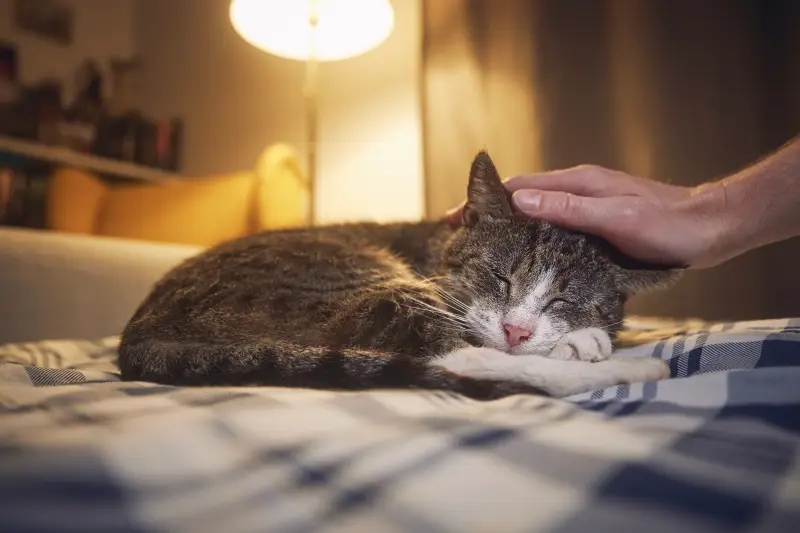
Final Thoughts
Sleeping with your cat isn't automatically unsafe.
For many cat owners, a purring companion at the end of the day is one of the most comforting parts of having a pet. The potential health risks are generally manageable, particularly when the cat is healthy and receives appropriate veterinary care.
The main concerns are usually allergies, parasites, zoonotic infections, scratches or bites, and disrupted sleep. People who are pregnant, immunocompromised, highly allergic, or living with poorly controlled asthma may need additional precautions.
So rather than asking only, "Is it safe to sleep with my cat?", a better question is:
"Is sharing my bed with this particular cat affecting my health or sleep?"
If the answer is no, there may be little reason to worry. If you're experiencing persistent allergy symptoms, breathing problems, unexplained skin changes, frequent sleep disruption, or other concerning symptoms, it's worth discussing them with a healthcare professional.
And when it comes to your cat, regular veterinary care, parasite prevention, clean bedding, and good hand hygiene are among the simplest ways to keep nighttime cuddles both enjoyable and sensible.