Maintaining an appropriate level of physical activity is therefore important for many people with knee osteoarthritis. Gentle movement, strengthening exercises, and activities selected according to the individual's ability may help maintain function.
However, a knee that suddenly becomes unable to bend or straighten, especially if it feels locked, may indicate another problem such as a meniscus injury or a mechanical issue. Sudden loss of movement should not be assumed to be ordinary osteoarthritis.
If you notice that your knee's range of motion is gradually decreasing, a medical evaluation and appropriate exercise guidance may help you identify the cause and protect your mobility.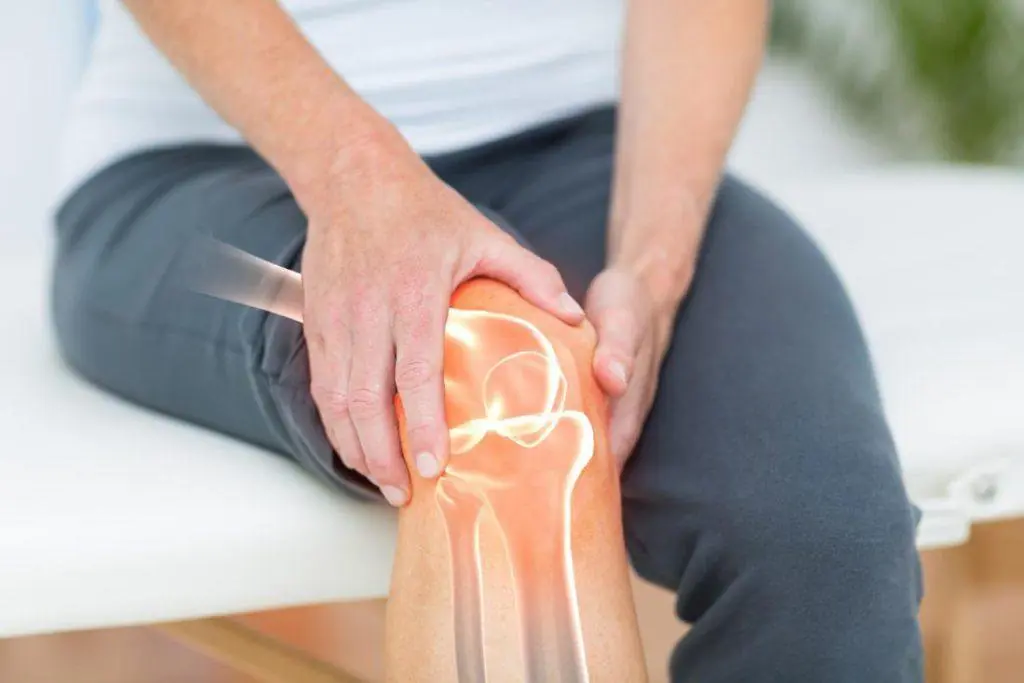
5. Grinding, Clicking, or Crackling Sensations
Some people with knee osteoarthritis notice unusual sounds or sensations when moving the joint. These may include clicking, popping, grinding, or crackling noises. The medical term often used for these sensations is crepitus.
You may hear the sound when bending or straightening your knee, standing up from a chair, walking, or climbing stairs. In some cases, the sensation is more noticeable than the sound itself. The knee may feel as though something is moving or rubbing inside the joint.
Osteoarthritis can involve changes in the cartilage, bone surfaces, and other joint structures. These changes may contribute to altered movement and sensations during bending or straightening.
However, clicking and popping sounds are very common and do not automatically mean that a person has osteoarthritis. Healthy knees can also make noises due to movement of tendons, ligaments, or gas-related changes within the joint.
The important distinction is whether the sounds are accompanied by pain, swelling, stiffness, or reduced movement. A knee that occasionally clicks without discomfort may not be a cause for concern.
On the other hand, grinding sensations that occur together with persistent pain, swelling, difficulty walking, or progressive stiffness may warrant medical evaluation.
Some people become frightened when they hear a cracking sound and assume that the joint is being damaged every time they move. In many cases, joint noises alone are not evidence of serious damage. The overall symptom pattern is much more important than the sound itself.
If clicking or grinding has recently become frequent and is accompanied by other symptoms, it is worth discussing with a healthcare professional.
What Exactly Is Knee Osteoarthritis?
To understand why these symptoms occur, it helps to know what osteoarthritis actually is. Osteoarthritis is a condition that affects the entire joint, not just the cartilage. It involves changes in the cartilage, underlying bone, joint lining, ligaments, muscles, and other tissues that work together to support movement.
The knee contains several structures that help it move smoothly. Cartilage covers the ends of the bones within the joint and helps reduce friction while distributing forces. The joint also contains fluid that helps lubricate and support movement. Surrounding muscles and ligaments provide stability and control.
In osteoarthritis, these structures may gradually change. Cartilage can become thinner or damaged, the underlying bone may undergo remodeling, and small bony growths called osteophytes may develop around the joint margins. The joint lining may sometimes become inflamed, and fluid may accumulate.
These changes can contribute to pain, stiffness, swelling, and reduced movement. However, the relationship between structural changes and symptoms is not always straightforward. Some people have significant changes visible on imaging but experience relatively little pain, while others have considerable discomfort despite less obvious imaging findings.
This is one reason medical evaluation should consider symptoms, physical examination, medical history, and imaging when appropriate rather than relying on a single finding.
Osteoarthritis can affect different parts of the knee. It may involve the inner compartment, the outer compartment, or the area beneath the kneecap. The location of pain and the movements that trigger it can sometimes provide clues, although they are not enough to confirm the diagnosis.
The condition is often described as degenerative because the joint undergoes gradual changes over time. However, osteoarthritis is not simply a matter of cartilage "wearing out" like a machine. It is a complex condition influenced by biological, mechanical, metabolic, and inflammatory factors.
Who Is More Likely to Develop Knee Osteoarthritis?
Knee osteoarthritis can affect people of different ages, although the likelihood generally increases as people get older. Several factors may contribute to the risk of developing the condition.
Age
Age is one of the most important risk factors. As people grow older, the structures within the joints may undergo changes that make osteoarthritis more likely.
However, knee osteoarthritis is not an inevitable part of aging. Many older adults remain active and have relatively healthy joints, while some younger individuals develop osteoarthritis because of injuries or other risk factors.
Previous Knee Injuries
A previous knee injury can increase the risk of osteoarthritis later in life. Injuries involving ligaments, menisci, cartilage, or the bones around the joint may alter the way the knee functions.
Even after an injury has healed, changes in joint mechanics may sometimes increase stress on certain areas of the knee. This can contribute to the development of osteoarthritis over time.