Knee pain is easy to dismiss.
You may tell yourself it is simply because you are getting older, walked too much, exercised harder than usual, or spent too long sitting in one position. Sometimes, that is exactly what it is.
But when knee discomfort keeps returning, gradually becomes more noticeable, or begins interfering with everyday activities, it may be worth paying closer attention.
One possible explanation is knee osteoarthritis, a common condition in which the tissues within and around the knee joint undergo structural changes over time. Osteoarthritis can develop gradually, which means the earliest symptoms may be subtle enough to overlook.
Recognizing common symptoms does not mean diagnosing yourself. Knee pain can have many causes, including injuries, bursitis, tendinitis, gout, inflammatory arthritis, and other joint problems.
Still, knowing what to watch for can help you decide when it is time to discuss persistent symptoms with a healthcare professional.
Here are five common symptoms that can occur with knee osteoarthritis.
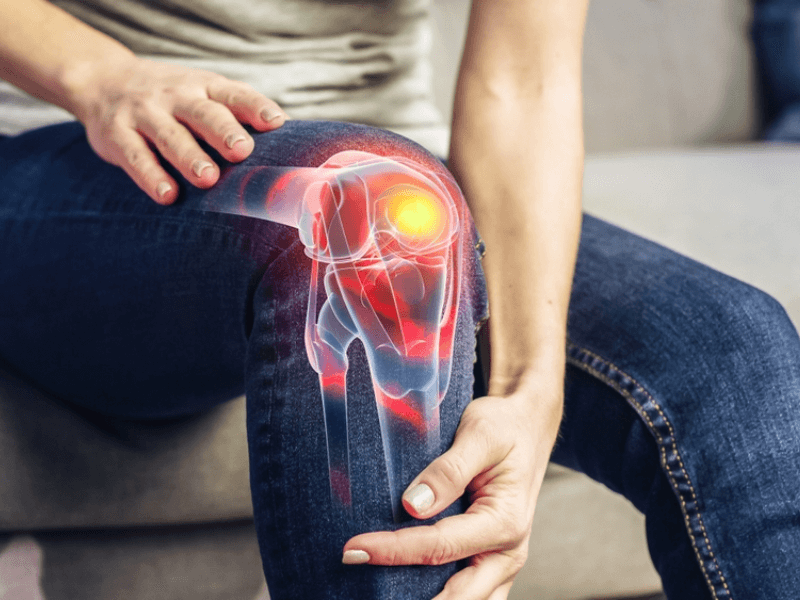
What Is Knee Osteoarthritis?
The knee is a complex joint where the thighbone, shinbone, and kneecap interact.
Healthy joints contain cartilage that helps provide a smooth, low-friction surface between bones. The joint is also supported by muscles, ligaments, tendons, and other tissues.
With osteoarthritis, the structure and function of the joint change over time.
Although osteoarthritis is sometimes described simply as “wear and tear,” the condition is more complicated than that phrase suggests. Changes can involve cartilage, bone, the joint lining, and surrounding tissues.
The result can be pain, stiffness, reduced mobility, swelling, and difficulty performing certain activities.
Osteoarthritis can affect one knee or both.
It is more common with increasing age, but it is not an inevitable part of getting older.
Previous knee injuries, excess body weight, repetitive joint stress, genetics, and certain other factors can also influence the likelihood of developing osteoarthritis.
1. Knee Pain That Gets Worse With Activity
One of the most recognizable symptoms is pain associated with using the knee.
You may notice discomfort when:
-
Walking for a longer period
-
Climbing stairs
-
Going downhill
-
Standing for extended periods
-
Squatting
-
Getting up from a chair
-
Exercising
-
Carrying heavy loads
In early osteoarthritis, pain may appear primarily during activity and improve with rest.
This can make the symptom easy to ignore.
You might think, “My knee only hurts when I do a lot of walking, so it's probably nothing.”
But if the same pattern keeps returning, it is worth paying attention to.
Over time, some people experience pain during increasingly ordinary activities.
2. Stiffness After Rest
Another common symptom is stiffness.
You may notice that your knee feels particularly stiff after:
-
Getting out of bed
-
Sitting for a long time
-
Riding in a car
-
Watching television
-
Working at a desk
-
Getting up after dinner
The knee may feel as though it needs a few minutes to “loosen up.”
Osteoarthritis-related stiffness is often more noticeable after periods of inactivity and may improve once you begin moving.
However, stiffness is not unique to osteoarthritis.
Other joint conditions can cause similar symptoms, so the pattern and duration matter.
If stiffness is persistent, severe, or accompanied by significant swelling or other symptoms, medical evaluation is appropriate.
3. Swelling Around the Knee
Have you ever noticed that one knee looks slightly larger or puffier than the other?
Swelling can occur with osteoarthritis.
Changes inside the joint can trigger inflammation and an increase in fluid within or around the joint.
The swelling may become more noticeable after activity.
Some people describe the knee as feeling:
-
Puffy
-
Full
-
Tight
-
Heavy
-
Less flexible than usual
However, swelling can have many causes.
An acute injury, infection, gout, inflammatory arthritis, or other conditions can also produce a swollen knee.
That's why a suddenly swollen, hot, or extremely painful knee should not automatically be attributed to osteoarthritis.
4. A Grinding, Cracking, or Clicking Sensation
Another symptom some people notice is an unusual sensation when moving the knee.
You may hear or feel:
-
Clicking
-
Cracking
-
Grinding
-
Popping
-
A rough or grating sensation
The medical term crepitus is sometimes used to describe certain grinding, crackling, or grating sensations.
Changes within an osteoarthritic joint can contribute to these sensations.
But there is an important distinction:
Knee noises by themselves do not necessarily mean you have osteoarthritis.
Many healthy people experience clicking or popping in their joints without having significant joint disease.
The sound becomes more relevant when it occurs alongside persistent pain, stiffness, swelling, or reduced function.
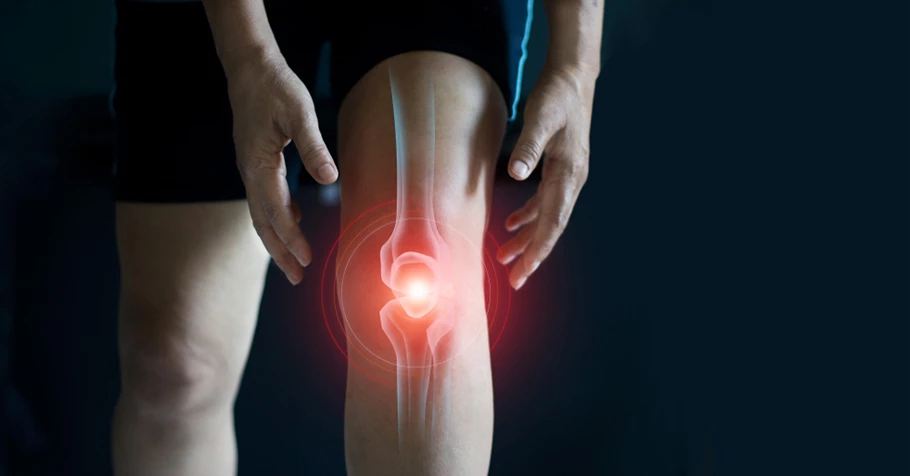
5. Reduced Range of Motion
Perhaps one of the most important changes to notice is that the knee simply doesn't move the way it used to.
You might find it increasingly difficult to:
-
Fully straighten your knee
-
Bend the knee deeply
-
Squat
-
Kneel
-
Climb stairs
-
Get in and out of a low chair
-
Perform certain exercises
At first, the change may be subtle.
You might simply notice that a movement that used to feel effortless now requires more effort.
As symptoms progress, the limitation may become more obvious.
Reduced range of motion can result from pain, stiffness, swelling, structural changes, or a combination of these factors.
Why Do These Symptoms Develop?
The knee doesn't suddenly become painful for no reason.
Osteoarthritis involves changes in multiple components of the joint.
As the condition develops, cartilage and other joint tissues may change. The underlying bone can also remodel, and the joint lining may become inflamed.
These changes can contribute to pain and stiffness.
Muscles around the knee can also become weaker when pain causes someone to reduce activity.
That can create a difficult cycle:
Pain → less movement → muscle weakness → reduced joint support → more difficulty with activity.
This is one reason maintaining appropriate physical activity can be an important part of managing knee osteoarthritis.
Knee Osteoarthritis Doesn't Always Start With Severe Pain
One of the biggest misconceptions is that arthritis must hurt constantly from the beginning.
It doesn't.
Symptoms can develop gradually.
Someone may initially experience discomfort only after a long walk.
Months later, stairs may become uncomfortable.
Eventually, standing for long periods may cause symptoms as well.
This gradual progression is one reason people sometimes wait a long time before discussing their knees with a healthcare professional.
Persistent symptoms are worth paying attention to even when they aren't severe.
What Increases the Risk of Knee Osteoarthritis?
Several factors can influence the likelihood of developing osteoarthritis.
Age
The likelihood increases as people get older.
However, younger adults can also develop osteoarthritis, particularly after certain injuries or because of other risk factors.
Previous Knee Injury
An injury involving the knee can increase the risk of developing osteoarthritis later.
This includes certain ligament injuries, meniscal injuries, and fractures involving the joint.