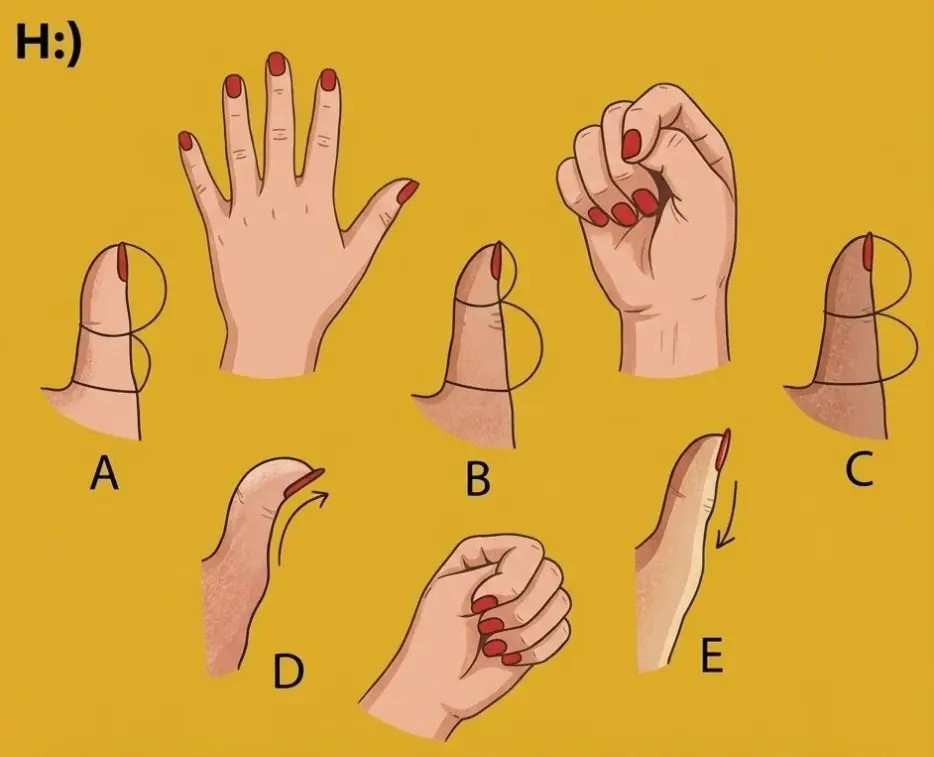
Look at Your Thumb: What You See Might Reveal More About Your Health Than You Think
The human body often gives subtle clues about overall health, and sometimes, those clues can appear in unexpected places—like your thumb. According to health-related sources, the shape, flexibility, and appearance of your thumb may reflect certain physical traits or underlying conditions.
While these signs are not meant for diagnosis, they can offer insights into how your body functions.
1. The “Straight Thumb”
If your thumb appears straight and does not bend backward easily, it may indicate a more stable joint structure.
People with this type of thumb are often believed to have:
- Stronger joint control
- Less flexibility in connective tissues
This may simply reflect natural body structure rather than any health issue.
2. The “Flexible” or “Hitchhiker’s Thumb”
Some people can bend their thumb backward at a noticeable angle.
This is often linked to:
- Higher joint flexibility
- Looser connective tissues
In some cases, it may be associated with joint hypermobility, where ligaments are more elastic than usual.
3. Thumb Length and Proportion
The length of your thumb compared to your fingers may also reveal certain traits.
For example:
- A longer thumb may be associated with stronger grip and coordination
- A shorter thumb may reflect different hand mechanics
These differences are usually genetic and vary from person to person.
4. Nail Appearance on the Thumb
The condition of your thumbnail can also provide clues about your health.
Some signs to watch for include:
- Pale or discolored nails
- Brittle or easily broken nails
- Unusual ridges or texture
These changes may be linked to nutritional deficiencies or general health conditions.
5. Swelling or Stiffness
If your thumb feels stiff, swollen, or painful, it could be related to:
- Joint inflammation
- Overuse
- Early signs of arthritis
Persistent discomfort should not be ignored and may require medical attention.
Why These Signs Matter
Although thumb features are largely influenced by genetics, noticeable changes—especially sudden ones—may reflect underlying health issues.
The body often communicates through small physical changes, and paying attention to them can help you stay aware of your overall condition.
Important Note
These observations are not a substitute for professional diagnosis. If you experience unusual symptoms such as pain, swelling, or significant changes in appearance, it is important to consult a healthcare professional.
Conclusion
Your thumb may seem like a small and insignificant part of your body, but it can reveal useful information about your physical traits and overall health. Paying attention to subtle signs can help you better understand your body and detect potential issues early.