Your tongue is something you probably don't think about very often.
You use it every day to taste food, swallow, speak, and help move food around your mouth. But because the tongue is covered with a delicate surface containing blood vessels, papillae, and taste receptors, changes in its appearance can sometimes provide useful clues about your oral or general health.
A tongue that suddenly looks different can be caused by something as simple as dehydration, irritation, or a recent change in your diet. In other situations, persistent changes may be associated with nutritional deficiencies, infections, medication effects, or other medical conditions.
The important thing is not to panic when you notice a change.
Most tongue abnormalities are not caused by something serious. However, if a change persists, keeps returning, becomes painful, or occurs alongside other symptoms, it's worth having it evaluated.
Here are five tongue changes you should know about.

1. A White Coating or White Patches
One of the most common things people notice when looking at their tongue is a white coating.
Sometimes, it's completely harmless.
The tongue naturally collects bacteria, food particles, dead cells, and other debris. If you don't clean your tongue regularly, a coating can become more noticeable.
A white tongue can also occur when your mouth becomes dry.
Common contributing factors include:
-
Dehydration
-
Mouth breathing
-
Poor oral hygiene
-
Smoking
-
Certain medications
-
Fever or illness
-
Changes in the normal microorganisms in the mouth
In some cases, however, persistent white patches can have a different cause.
Oral thrush
Oral candidiasis, commonly called thrush, is a fungal infection that can produce creamy white patches in the mouth and on the tongue.
It may occur more frequently after antibiotic use or in people with certain medical conditions or weakened immune systems.
The patches may sometimes be uncomfortable, and the underlying tissue can appear red when the coating is removed.
Leukoplakia
Another condition, called leukoplakia, can cause persistent white patches that don't simply wipe away.
Leukoplakia has several possible causes and can sometimes involve precancerous cellular changes, particularly when associated with tobacco or other irritants.
That doesn't mean every white patch is cancer.
It means that a persistent unexplained white patch deserves professional evaluation.
2. A Bright Red, Smooth, or Sore Tongue
A tongue that suddenly becomes unusually red, smooth, or tender can sometimes indicate irritation or inflammation.
One possible explanation is a nutritional deficiency.
Certain deficiencies—including iron, vitamin B12, and folate deficiency—can affect the mouth and tongue.
The tongue may become:
-
Redder than usual
-
Smooth-looking
-
Shiny
-
Tender
-
Burning or painful
Iron deficiency can also cause other symptoms such as fatigue, weakness, and reduced exercise tolerance.
However, a red tongue doesn't automatically mean you're deficient in a particular vitamin.
Other possible causes include:
-
Mouth irritation
-
Certain medications
-
Infections
-
Allergic reactions
-
Spicy or acidic foods
-
Inflammatory conditions
Rather than immediately taking supplements, it's better to determine the underlying cause.
Taking large amounts of vitamins without knowing whether you need them isn't necessarily beneficial and can sometimes cause problems.
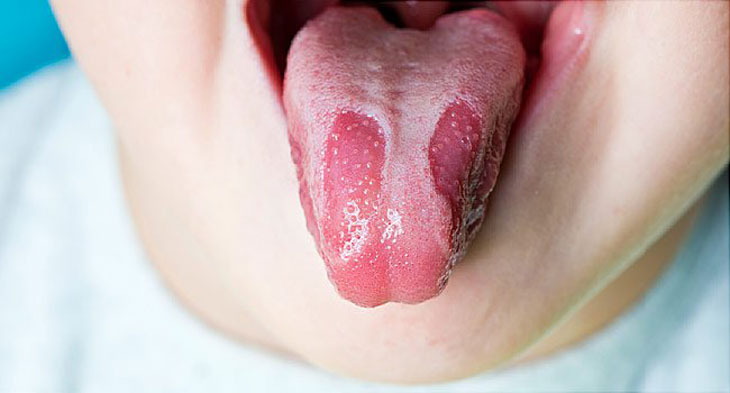
3. A Tongue That Looks Swollen
A swollen tongue can occur for many different reasons.
Sometimes the swelling is mild and temporary.
For example, you may experience swelling after accidentally biting your tongue or eating something that irritates your mouth.
But tongue swelling can occasionally be more serious.
Allergic reactions
A sudden swollen tongue can be a sign of an allergic reaction, particularly when accompanied by:
-
Swelling of the lips or throat
-
Hives
-
Difficulty breathing
-
Wheezing
-
Difficulty swallowing
-
Dizziness or fainting
Sudden tongue or throat swelling with difficulty breathing is a medical emergency.
Call emergency services immediately rather than waiting for the symptoms to improve.
Other causes
Persistent tongue enlargement can also occur with various medical conditions, infections, inflammation, or nutritional problems.
If your tongue remains swollen without an obvious explanation, it should be examined by a healthcare professional.
4. Deep Grooves or Cracks Across the Tongue
Some people have a tongue with noticeable grooves or fissures.
This is commonly known as a fissured tongue.
The grooves can look dramatic, but in many people they are simply a harmless variation in tongue anatomy.
A fissured tongue may become more noticeable with age.
The main concern is hygiene.
Food debris and bacteria can accumulate inside deeper grooves, potentially contributing to irritation or bad breath.
If you have a deeply fissured tongue, gently cleaning the surface of the tongue can help remove accumulated debris.
Avoid aggressively scraping or brushing so hard that you cause bleeding or irritation.
A fissured tongue by itself generally isn't a sign that something is seriously wrong.
However, if the cracks are accompanied by persistent pain, swelling, sores, or other unusual changes, professional evaluation is appropriate.
5. A Dark, Black, or Unusual Discoloration
A tongue that suddenly looks darker can be alarming.
But there are many possible explanations.
One relatively harmless condition is black hairy tongue.
Despite its name, the tongue isn't actually growing hair.
The tiny projections on the tongue's surface, called filiform papillae, can become elongated and trap bacteria, food particles, tobacco residue, or other substances. This can create a brown, yellow, green, or black appearance.
Factors that may contribute include:
-
Poor oral hygiene
-
Smoking
-
Certain medications
-
Excessive coffee or tea
-
Changes in oral bacteria
-
Dry mouth
Black hairy tongue is usually harmless and often improves when the contributing factor is addressed and oral hygiene is improved.
However, not every dark area on the tongue should be assumed to be black hairy tongue.
A new, persistent, enlarging, bleeding, painful, or irregularly pigmented lesion should be examined by a dentist or healthcare professional.
What About a Yellow Tongue?
Although the five changes above receive much attention, another common observation is a yellowish tongue.
A yellow coating can develop for many of the same reasons as a white coating.
Possible contributors include:
-
Poor oral hygiene
-
Dry mouth
-
Smoking
-
Certain foods or beverages
-
Buildup of bacteria
-
Mouth breathing
Sometimes the yellow appearance simply reflects a coating over the normal tongue surface.
If the discoloration persists despite good oral hygiene, particularly if it occurs with pain, sores, fever, or other symptoms, it's worth getting checked.
Your Tongue Can Also Change After What You Eat
Not every unusual tongue color represents a health problem.
Food and beverages can temporarily change the appearance of your tongue.
Strongly colored foods, candies, drinks, and artificial food coloring can leave temporary stains.
Spicy, acidic, or very hot foods can also irritate the tongue.
You may notice:
-
Burning
-
Redness
-
Tenderness
-
Temporary sensitivity
Usually, these symptoms improve once the irritant is removed.
This is why it's useful to consider what happened before the tongue changed.
Dehydration Can Change the Appearance of Your Tongue
When you're dehydrated, your mouth may produce less saliva.
This can leave the tongue feeling:
-
Dry
-
Sticky
-
Rough
-
Coated
You may also experience:
-
Increased thirst
-
Darker urine
-
Dry lips
-
Fatigue
-
Headache
Drinking an appropriate amount of fluid and addressing the cause of fluid loss can help.
However, persistent dry mouth shouldn't automatically be blamed on not drinking enough water.
Many medications and medical conditions can reduce saliva production.
Tongue Changes and Oral Hygiene
Your tongue naturally contains thousands of tiny structures that can trap microorganisms and food particles.
That's why tongue cleaning can be useful as part of normal oral hygiene.
A simple routine may include:
-
Brush your teeth twice daily with fluoride toothpaste.
-
Clean between your teeth regularly.
-
Gently clean your tongue.
-
Drink enough fluids.
-
Avoid smoking or tobacco products.
-
Visit your dentist for routine examinations.
You don't need to scrub aggressively.
The goal is to remove buildup without damaging the delicate tissue.
Don't Try to Diagnose Yourself From Your Tongue
The internet is full of charts claiming that different tongue colors correspond to specific diseases.
Some of these charts dramatically oversimplify human biology.
For example:
A white tongue does not automatically mean a fungal infection.
A red tongue does not automatically mean vitamin deficiency.
A dark tongue does not automatically mean cancer.
A cracked tongue does not automatically mean a serious disease.
The appearance of the tongue is influenced by hydration, diet, oral hygiene, medications, smoking, infections, age, and numerous other factors.
A healthcare professional can consider the appearance together with your medical history and other symptoms.
When Should You See a Dentist or Doctor?
Consider getting a tongue change evaluated if it:
-
Persists for more than a couple of weeks
-
Continues getting worse
-
Keeps coming back
-
Causes significant pain
-
Produces unexplained bleeding
-
Creates difficulty eating or swallowing
-
Causes persistent numbness
-
Appears as a persistent unexplained white or red patch
-
Forms a lump or ulcer that doesn't heal
-
Is accompanied by unexplained weight loss or swollen lymph nodes
Persistent oral lesions shouldn't simply be ignored because they aren't painful.
Some concerning oral conditions can initially produce very few symptoms.
A Mouth Sore That Doesn't Heal Deserves Attention
Most mouth ulcers heal on their own within a relatively short period.
They can be caused by:
-
Minor injuries
-
Biting the cheek or tongue
-
Stress
-
Irritation
-
Certain foods
-
Other common causes
But a sore, ulcer, lump, or patch that doesn't heal or continues to grow should be evaluated.
This is particularly important if the area bleeds easily, becomes increasingly painful, or is accompanied by difficulty swallowing or persistent numbness.
Early evaluation doesn't mean something serious is present.
It simply means the cause should be identified rather than assumed.
Your Dentist May Notice Things You Don't
Routine dental examinations aren't only about cavities.
Dentists also examine the:
-
Tongue
-
Gums
-
Cheeks
-
Roof of the mouth
-
Throat area
-
Other oral tissues
This can allow them to identify abnormalities that you may not notice yourself.
That's one reason regular dental care remains important even if your teeth don't hurt.
Five Tongue Changes to Remember
For a quick recap:
1. Persistent white patches
May be caused by coating, thrush, irritation, or other conditions and should be evaluated if they don't resolve.
2. Red, smooth, or painful tongue
Can sometimes be associated with nutritional deficiencies, inflammation, irritation, or other conditions.
3. Swollen tongue
May result from trauma or inflammation, but sudden swelling with breathing difficulty is an emergency.
4. Deep grooves
Often represent a harmless fissured tongue but require good oral hygiene to prevent debris buildup.
5. Dark or unusual discoloration
May result from harmless staining or black hairy tongue, but persistent or suspicious lesions should be examined.

The Bottom Line
Your tongue isn't a perfect "health scanner," but it can sometimes provide useful clues.
Changes in color, texture, shape, swelling, or pain can occur for many reasons, ranging from completely harmless variations to conditions that deserve medical attention.
The most important factor is often persistence.
A tongue that looks different for one day after eating strongly colored food isn't usually a reason for alarm.
A patch, ulcer, swelling, discoloration, or painful change that remains for weeks is a different story.
So the next time you brush your teeth, take a quick look.
Not because every unusual feature means disease—but because knowing what is normal for you makes it easier to notice when something genuinely changes.
And when a change doesn't go away, don't rely on an online diagnosis.
Let a dentist or healthcare professional take a closer look.