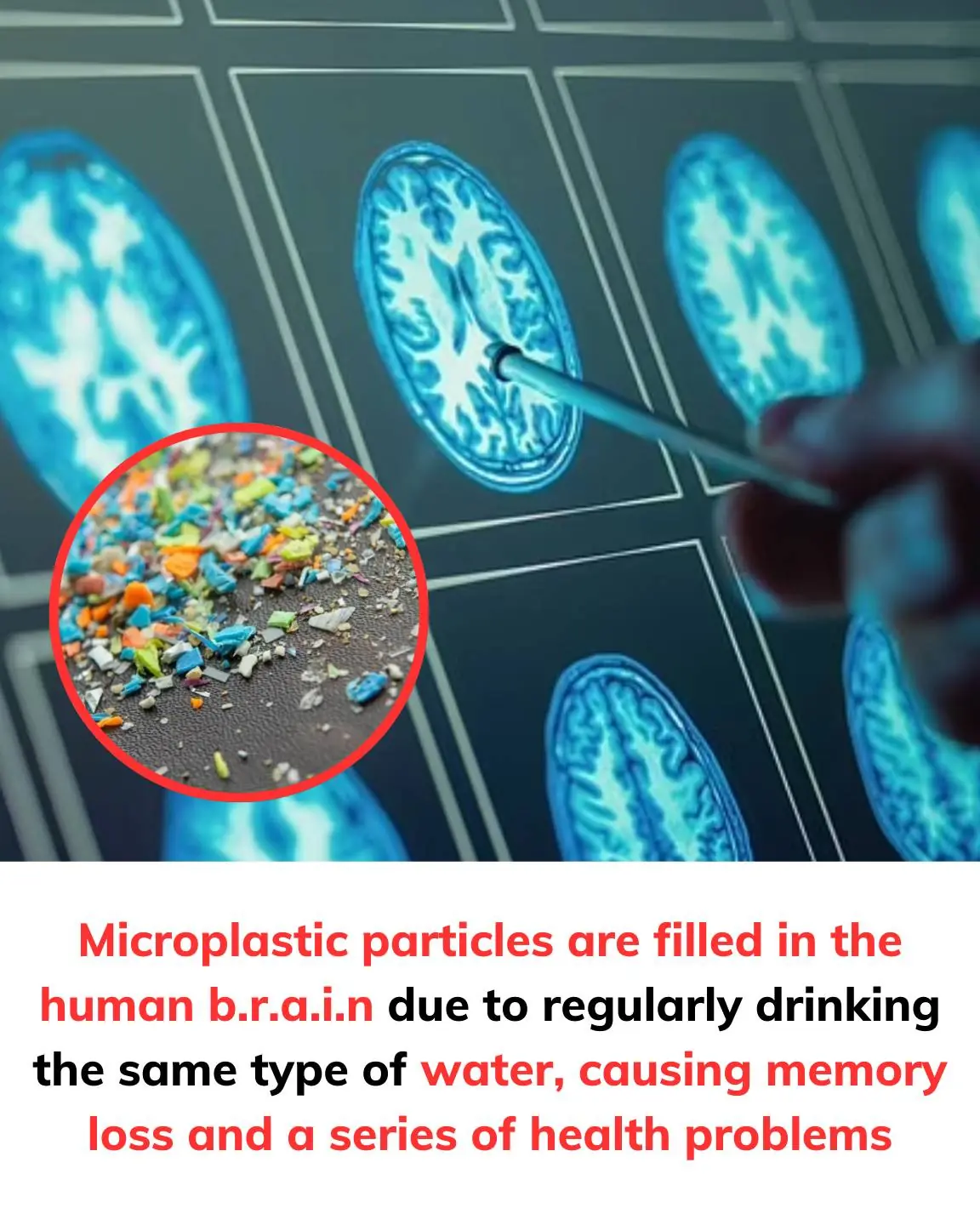
1. Study finds microplastics in human brains
Scientists recently analyzed the brains of people who died in 2024 compared to those who died in 2016. They found that the amount of plastic accumulated in the brains in 2024 was 50% higher than in the previous eight years.
They also found that the amount of tiny plastic particles in the brains of people who died from dementia was higher than those who were not diagnosed with dementia. Researchers at the University of New Mexico said their findings could be the result of "increasing concentrations of plastic in the global environment".
To enter the brain, plastic must cross the blood-brain barrier - a layer of cells surrounding the brain that acts as a filter to prevent the entry of harmful substances. The most common type of plastic found in the brain—polyethylene—is used to make single-use bags and water bottles, which are often discarded as trash. Bottled water is now widely used. Many people even reuse plastic bottles to store water for later use, increasing the chances of microplastics entering the body.
2. How was the study conducted?
Matthew Campen, a toxicologist and professor of pharmaceutical sciences at the University of New Mexico, analyzed the distribution of microplastics and nanoplastics in postmortem brains.
The authors found that liver and brain samples from 2024 had significantly higher concentrations of microplastics and plastic nanoparticles than samples from 2016. They also found higher concentrations of microplastics and plastic nanoparticles in 12 brains of individuals diagnosed with dementia, compared to those without the disease.
The authors note that these findings identify associations but do not establish a causal link between plastic particles and health impacts.
All samples were taken from individuals in New Mexico and the US East Coast. The authors state that further research is needed to determine whether plastic pollution in the brain and other organs is widespread elsewhere.
Writing in the journal Nature Medicine, the authors said: "The total mass concentration of plastic in the brain analyzed in this study has increased by about 50% over the past eight years."
The findings come after warnings from scientists at the Universitat Autònoma de Barcelona: One tea bag can release billions of dangerous microplastic particles into the body.In their experiments, the research team found that most of these microplastic particles are absorbed by cells in the intestine. However, some particles can even penetrate the cell nucleus - the part of the cell that contains genetic material.
Worryingly, the long-term effects of these microplastic particles on human health are still unclear.
The potential health impacts of microplastics and nanoplastics in the environment are increasingly worrying, the researchers said. In addition to environmental exposure, other sources such as food packaging, including herbal tea bags, can also contribute to significant plastic ingestion.
3. The study has many limitations that need to be overcome
Speaking about the new discovery, Professor Oliver Jones (Chemistry major, RMIT University) said that people should be cautious with the results. It is too early to confirm that our brains are made of plastic.
52 samples in just 2 years is not enough to confirm. Samples need to be taken from 2017 to 2023 to see if there is a "real trend or just random".
He added that the risk of plastic in the samples could come from potential contamination in the laboratory.
Dr Antonis Myridakis (Lecturer in Environmental Science at Brunel University London) added that the discovery of microplastic accumulation in the human brain is very worrying. However, it is still too early to draw conclusions about direct risks to health.
In any case, this is a study that sounds the alarm about people's plastic usage habits. It's best to limit your use of plastic as much as possible, including drinking water from plastic bottles!