A Mouth Ulcer That Wouldn’t Heal: When a Small Symptom Signals a Serious Disease
The image shows a simple oral examination: a tongue extended, a cotton swab gently touching the surface. At first glance, it looks routine. Yet the caption delivers a chilling message: “Mouth ulcers that did not heal for three months went to the hospital for examination and discovered cancer.” This is not meant to frighten, but to warn. Persistent mouth ulcers should never be ignored, because in some cases, they are not just ulcers at all.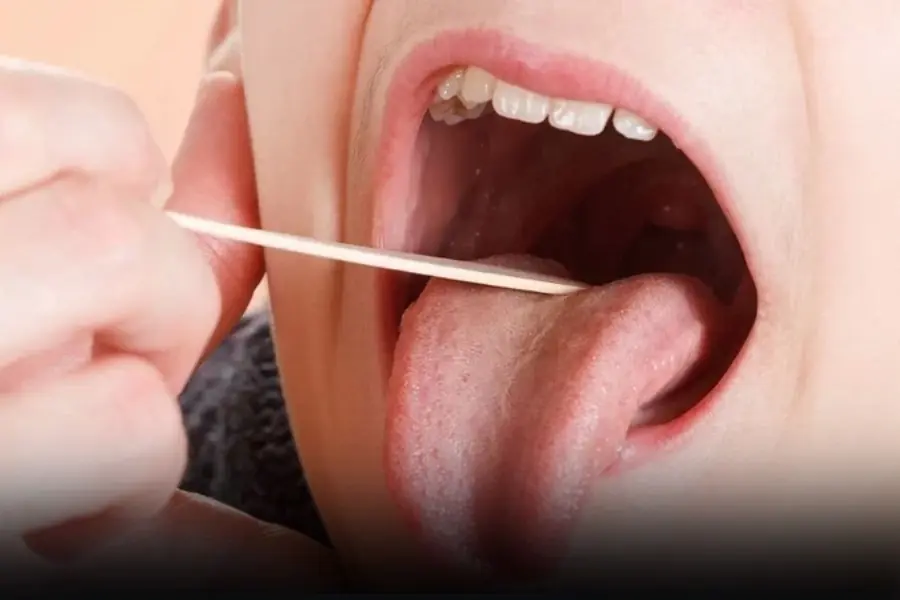
Why Mouth Ulcers Are Usually Considered Harmless
Most people experience mouth ulcers at some point in life. They are commonly caused by:
-
Minor trauma from biting the cheek or tongue
-
Stress or fatigue
-
Vitamin deficiencies
-
Hormonal changes
-
Temporary immune reactions
These ulcers are typically small, painful, and heal within 7 to 14 days without leaving scars. Because of this familiarity, many people assume all mouth ulcers are harmless.
This assumption is where danger begins.
When a Mouth Ulcer Becomes a Red Flag
A key warning sign is duration.
If a mouth ulcer:
-
Persists longer than 2–3 weeks
-
Does not shrink or improve
-
Becomes harder, thicker, or irregular
-
Bleeds easily or causes numbness
it is no longer considered a typical ulcer. An ulcer that does not heal for months requires medical evaluation, regardless of pain level.
In some cases, what appears to be an ulcer is actually oral cancer in its early stages.
Why Oral Cancer Is Often Missed
Oral cancer is particularly dangerous because it often develops silently. Early lesions may:
-
Cause little or no pain
-
Look similar to common ulcers
-
Appear small and insignificant
As a result, people delay seeing a doctor or dentist, hoping the problem will resolve on its own. By the time pain becomes severe, the disease may already be advanced.
Early detection is critical—and delay can be deadly.
Common Locations Where Warning Ulcers Appear
Persistent ulcers that require attention often occur on:
-
The side or underside of the tongue
-
The floor of the mouth
-
The inner cheeks
-
The gums
-
The back of the throat
These areas are more vulnerable because abnormal cells can grow unnoticed, especially under the tongue where visibility is limited.
Symptoms That Increase Concern
A long-lasting mouth ulcer is especially concerning if it is accompanied by:
-
Difficulty swallowing or speaking
-
A persistent sore throat
-
A feeling of something stuck in the throat
-
Ear pain without ear infection
-
Unexplained weight loss
-
Swollen lymph nodes in the neck
These signs suggest the issue may extend beyond the surface of the mouth.

Who Is at Higher Risk
While oral cancer can affect anyone, risk increases with:
-
Smoking or chewing tobacco
-
Heavy alcohol use
-
Betel nut chewing
-
Poor oral hygiene
-
Long-term irritation from sharp teeth or dentures
-
HPV infection
However, it is important to note: oral cancer can still occur without these risk factors, which is why symptoms matter more than assumptions.
Why Three Months Is a Critical Warning Period
Medical guidelines are clear: any mouth ulcer lasting more than three weeks should be examined. Waiting three months dramatically increases the risk of delayed diagnosis.
In many real cases, patients ignored non-healing ulcers for months because:
-
The pain was tolerable
-
The lesion did not look severe
-
Daily life continued normally
Unfortunately, cancer does not wait for discomfort to become unbearable.
What Happens During Medical Examination
When a patient seeks medical care, doctors may:
-
Perform a detailed oral examination
-
Use imaging if needed
-
Take a biopsy of the lesion
A biopsy is the only way to confirm whether a lesion is benign or malignant. While the word “biopsy” causes anxiety, it is a life-saving step, not a sentence.
Why Early Detection Changes Everything
When oral cancer is detected early:
-
Treatment is more effective
-
Surgery is less extensive
-
Survival rates are significantly higher
-
Quality of life is better preserved
When detected late, treatment becomes more aggressive, and outcomes worsen dramatically.
The Core Message Behind the Image
The image does not claim that every mouth ulcer is cancer. It delivers a far more important message:
Healing matters. Time matters. Ignoring persistence is the real danger.
A sore that refuses to heal is not something to “get used to.” It is the body asking for attention.\
Conclusion: Do Not Normalize What Should Heal
Mouth ulcers are common. Mouth ulcers that last for months are not.
If a lesion in the mouth does not heal, changes shape, or behaves differently than usual, seeking medical advice is not overreacting—it is responsible. Early evaluation can turn a frightening discovery into a manageable condition.
Sometimes, listening early is what saves a life.