Erythema migrans may produce a target-like appearance, but it does not always have a perfect bull's-eye pattern.
The rash typically expands over several days and may not be itchy or painful. If this pattern appears after possible tick exposure, medical evaluation is important.
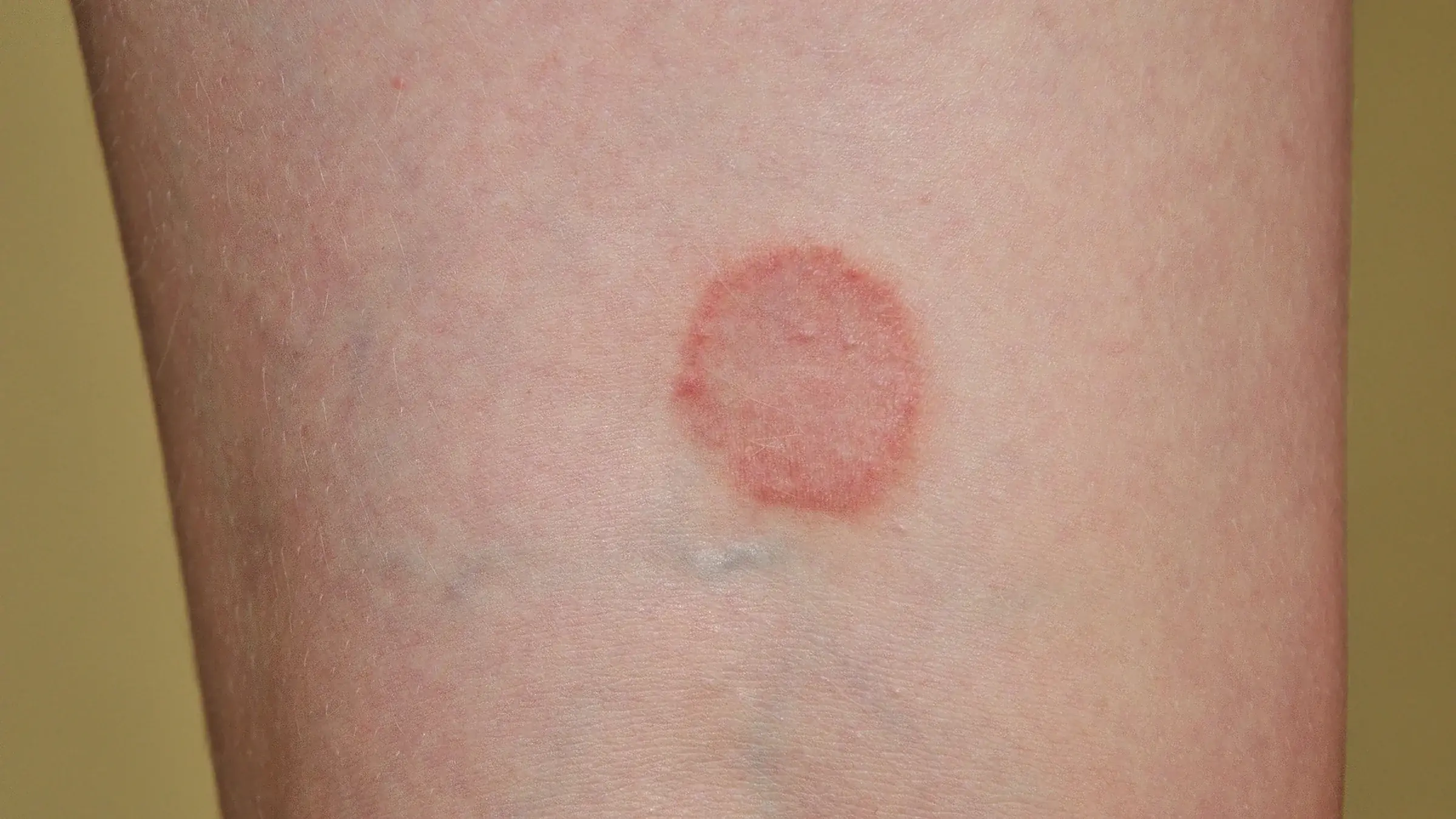
This example illustrates how a circular rash can appear on a child's skin.
A similar-looking patch could have several explanations, including fungal infection or an inflammatory condition. A clinician may need to examine the border, texture, and progression before identifying the cause.
The most useful observation for parents is whether the rash is changing and whether the child has any additional symptoms.
Chapter 5: What Happens After the Doctor Examines the Rash?
How doctors determine the cause
A doctor will usually begin by asking when the rash appeared and how it has changed.
The examination may include checking the size, shape, color, border, and texture of the affected area. The clinician may also compare the rash with photographs taken earlier.
The child's recent activities can be particularly important.
For example, a child who recently spent time hiking, camping, playing in tall grass, or visiting a wooded area may have had an opportunity to encounter ticks.
A child who recently played with an animal that has patches of missing fur may have been exposed to a fungus that causes ringworm.
The doctor may also ask whether anyone else in the household has developed a similar rash.
Depending on the findings, additional tests may be considered.
For suspected ringworm, a clinician may examine skin scrapings under a microscope or send a sample to a laboratory.
For suspected Lyme disease, the doctor may decide whether the rash and exposure history are sufficient for a clinical diagnosis or whether blood testing is appropriate.
Not every circular rash requires laboratory testing. The decision depends on the suspected condition and the child's symptoms.
Treatment depends on the cause
There is no single cream or medicine that treats every ring-shaped rash.
If the rash is caused by ringworm, antifungal medication is usually recommended. Treatment may involve a cream, gel, or other medicine depending on the location. Scalp infections often need oral medication.
If the rash is associated with Lyme disease, a clinician may prescribe antibiotics. The choice of medicine and duration depend on the child's age, symptoms, and the stage of the infection.
If the rash is caused by eczema or contact dermatitis, treatment may focus on reducing inflammation and avoiding the trigger.
A simple insect-bite reaction may require only supportive care, provided there are no concerning symptoms.
This is why parents should not assume that one treatment will work for every circular rash.
Why the rash may not disappear immediately
Parents often expect a rash to fade as soon as treatment begins.
In reality, the skin may take time to recover.
Even when the underlying cause is being treated correctly, redness or discoloration may remain visible for a while.
The important signs are whether the rash is becoming less active, whether new symptoms are appearing, and whether the child is improving overall.
If the rash continues to expand, becomes more painful, or develops new features despite treatment, the child should be reassessed.
Parents should follow the clinician's instructions and avoid stopping prescribed treatment early simply because the rash looks better.
How to reduce the risk of future rashes
A few simple habits can help reduce the risk of common skin infections and insect-related reactions.
-
Check children's skin after outdoor activities in areas where ticks are present.
-
Pay attention to the hairline, behind the ears, under the arms, and around the knees.
-
Use appropriate insect repellent according to the product instructions and the child's age.
-
Wash hands after handling animals or playing outdoors.
-
Avoid sharing towels, clothing, or personal items when someone has a suspected fungal infection.
-
Keep skin clean and dry, especially after exercise or swimming.
-
Seek veterinary advice if a pet develops unusual patches of missing fur or suspected skin infection.
These measures cannot prevent every rash, but they can reduce certain risks and make it easier to recognize a problem early.
The most important lesson from the headline
The story of a parent waking up to discover a strange red ring on a child's arm is frightening because the rash is unfamiliar and appears to be changing.
But the headline does not establish that the child has Lyme disease, ringworm, or any other particular condition. The photograph alone cannot confirm the diagnosis.
The safest response is to observe the rash carefully, consider possible exposures, and seek medical advice when it is expanding or otherwise concerning.
An isolated red ring does not automatically mean a child needs the emergency room.
However, a rapidly worsening rash, a non-fading rash, breathing difficulty, severe pain, fever with a child who appears very ill, or unusual drowsiness should never be ignored.
If the rash is expanding and Lyme disease is a possibility, contact a healthcare professional promptly—even if the child is not itching, has no fever, and seems perfectly normal.
That is the most important answer to the question raised by the headline: parents do not need to panic, but they should not dismiss a growing circular rash simply because it does not hurt.