Imagine filling your home with fresh green leaves without buying bags of potting soil, dealing with messy repotting, or worrying about dirt spilling across your floor. It sounds too simple to work, but many popular houseplants can grow surprisingly well in water.
Water-grown plants can turn ordinary glass jars, bottles, and vases into beautiful little indoor gardens. They are especially appealing for apartments, kitchens, offices, and small spaces where traditional pots may feel inconvenient.
And there is another reason these plants have become so popular: watching roots develop through clear water can be fascinating. Instead of hiding beneath the soil, the entire process becomes part of the decoration.
While growing plants in water is not completely maintenance-free, it can be an easy and attractive alternative to traditional container gardening. Here are nine plants that are particularly suitable for water culture, along with tips to help them stay healthy.
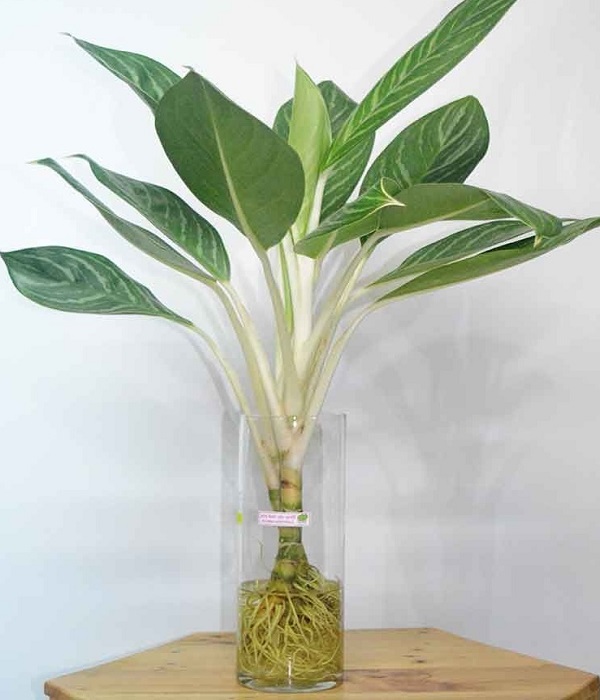
1. Pothos: One of the Easiest Plants to Grow in Water
Pothos is probably one of the best choices if you are new to water propagation.
Its trailing stems root readily in water, and once established, pothos can continue producing new leaves when provided with suitable light and nutrients.
To start, simply cut a healthy section of stem containing at least one or two nodes. The node is the small point where a leaf or aerial root emerges. Place that section in a clean container of water while keeping the leaves above the waterline.
Within a few weeks, you may begin seeing white or cream-colored roots developing.
Pothos looks particularly attractive in a clear glass bottle because the roots become part of the display.
Give it bright, indirect light, change the water regularly, and remove any leaves that become submerged.
Because pothos can be toxic if eaten by pets, keep it somewhere inaccessible to animals that like to chew plants.
2. Lucky Bamboo: A Classic Water-Grown Favorite
Lucky bamboo has been grown in water for years and is especially popular in homes and offices.
Despite its common name, lucky bamboo is actually a species of Dracaena, rather than true bamboo. It can survive in water for extended periods and is often sold already arranged in decorative glass containers.
Its upright stems and narrow leaves make it particularly useful for minimalist interiors.
Many people also associate lucky bamboo with feng shui and good fortune. Different numbers of stalks are sometimes given symbolic meanings in traditional practices.
Those meanings are cultural beliefs rather than scientifically established effects, but they can add personal significance to an otherwise simple plant.
For healthy growth, use clean water and place the plant somewhere with bright, indirect light. Avoid intense direct sunlight, which can scorch the leaves.
If you want to keep lucky bamboo in water long-term, occasional appropriate plant nutrients may be necessary because plain water does not contain everything a plant needs indefinitely.
3. Heartleaf Philodendron: Beautiful Leaves and Easy Propagation
The heartleaf philodendron is another excellent candidate for water propagation.
Its heart-shaped leaves and trailing growth make it particularly attractive in hanging containers or tall glass vases.
Like pothos, philodendron cuttings can develop roots from nodes along the stem. Once roots appear, the cutting can remain in water or eventually be transferred to soil.
For a decorative water garden, several cuttings can be placed together in one transparent container. As the roots grow, the arrangement can become increasingly interesting.
Keep the leaves above the water and provide bright, indirect light.
One important point: long-term water growth is different from simply rooting a cutting. A cutting can live on stored resources for a while, but sustained growth eventually requires access to nutrients.
Philodendrons are also toxic when ingested, so households with curious pets or young children should take appropriate precautions.
4. Spider Plant Offshoots: Turn One Plant Into Many
If you already have a healthy spider plant, you may notice tiny plantlets developing on long stems.
These little offshoots are perfect for propagation.
Instead of immediately planting them in soil, you can place the base of an offshoot in water and allow it to develop roots.
This is also a fun project for children because the roots are visible and changes can be observed from day to day.
Once the root system becomes established, you can either move the young plant into soil or continue experimenting with water culture.
Spider plants prefer bright, indirect light but can tolerate a range of indoor conditions.
They are also known for producing abundant plantlets, meaning a single mature plant can potentially provide you with many new plants over time.
5. Syngonium: Colorful Leaves for a Water Garden
Want something a little more colorful?
Syngonium, sometimes called arrowhead plant, can be propagated successfully in water and comes in varieties with green, cream, pink, or variegated foliage.
Its distinctive arrow-shaped leaves provide a different look from the classic heart-shaped leaves of pothos and philodendron.
Take a healthy stem cutting with at least one node and place the node underwater. Keep the foliage above the surface.
After roots develop, the cutting can continue growing in water if its basic needs are met.
Syngonium generally appreciates bright, indirect light. Variegated varieties often need especially good light to maintain attractive coloration, although harsh direct sunlight can damage the leaves.
Because syngonium can be harmful if ingested, it should be kept away from pets and children who may chew on foliage.
6. Tradescantia: Fast Growth and Eye-Catching Foliage
Tradescantia is another plant that can be remarkably easy to propagate in water.
Its stems often produce roots quickly, making it satisfying for anyone who enjoys seeing visible progress.
Depending on the variety, tradescantia may have green, purple, silver, pink, or striped leaves.
Place several cuttings into a narrow glass vase, and you can create a simple living centerpiece without a traditional planter.
Tradescantia generally prefers bright light. Good lighting can help maintain stronger coloration and compact growth.
As with other water-grown plants, make sure the leaves themselves aren't sitting underwater. Only the appropriate stem or root area should remain submerged.
If the water becomes cloudy, smells unpleasant, or develops significant algae, clean the container and replace the water.
7. English Ivy: A Graceful Trailing Display
English ivy can also be propagated from cuttings in water.
Its trailing stems make it particularly attractive when placed in a tall bottle or hanging glass container, allowing the vines to cascade downward.
Choose a healthy stem and cut it just below a node. Remove lower leaves so that no foliage remains submerged.
Place the node in water and provide bright, indirect light.
Once roots develop, you have a new plant ready for further growth.
However, English ivy is another plant that should be handled thoughtfully around pets because ingestion can cause problems. It is also important to distinguish between rooting a cutting in water and maintaining vigorous long-term growth entirely in water.
For the latter, nutrients become increasingly important.

8. Coleus: Bright Colors Without a Traditional Pot
If you love colorful foliage, coleus is worth trying.
Coleus cuttings can root readily in water, and their leaves can display combinations of green, red, burgundy, pink, yellow, and purple.
A few colorful cuttings in a clear glass container can create a surprisingly dramatic indoor decoration.
To propagate coleus, take a healthy stem cutting and remove the lower leaves. Place the lower portion of the stem in water while keeping the remaining leaves above the surface.
Roots can develop relatively quickly under suitable conditions.
Coleus generally appreciates plenty of bright light, although extremely intense direct sunlight can be problematic depending on the environment.
Because coleus can become leggy in insufficient light, rotate the container occasionally so growth remains balanced.
9. Mint: A Fresh Herb You Can Grow in Water
Not every water-grown plant needs to be purely decorative.
Mint is one of the herbs that can be propagated from stem cuttings in water.
A fresh mint stem placed in a glass of water can often begin developing roots, allowing you to create a small kitchen herb display.
Place it near a bright window with plenty of indirect light.
Once established, mint can provide fragrant leaves for drinks, salads, desserts, and other recipes.
However, long-term production of healthy edible growth requires more than water alone. If you intend to grow mint hydroponically rather than simply root a cutting, it will need an appropriate nutrient solution.
Also, always begin with plant material that is clean and intended for edible use.
How to Grow Plants in Water Successfully
Growing plants in water may look as simple as placing a cutting into a glass, but a few basic practices make a major difference.
Start with a Healthy Cutting
Choose stems that are free from disease, rot, and severe damage.
A cutting with at least one healthy node is usually much more useful than simply placing a leaf in water.
Keep Leaves Above the Water
This is one of the most important rules.
Leaves that remain submerged can deteriorate and contribute to bacterial growth or unpleasant odors.
Ideally, the roots and lower stem are in the water while most foliage remains above it.
Change the Water Regularly
Fresh water helps keep the growing environment cleaner and reduces the buildup of debris.
If you notice cloudiness, slime, algae, or an unpleasant smell, clean the container and replace the water immediately.
Give the Plant Enough Light
Water does not replace light.
Plants still need adequate light for photosynthesis and healthy growth. In most homes, bright indirect light is a good starting point.
Avoid placing a clear container of water in extremely hot direct sunlight, particularly against a window, because the water and roots can become excessively warm.
Remember That Water Is Not Fertilizer
This is where many beginners become confused.
A plant can survive in water for quite some time because cuttings initially rely on stored energy. But sustained growth requires mineral nutrients.
For long-term water culture, use a properly formulated hydroponic or water-growing nutrient according to its instructions rather than randomly adding household fertilizers.
Too much fertilizer can damage roots.
Why Clear Glass Containers Are So Popular
One of the biggest attractions of water-grown plants is the container itself.
A simple glass jar can become a miniature botanical display.
You can use:
-
Glass bottles
-
Small vases
-
Mason jars
-
Decorative propagation tubes
-
Laboratory-style glass vessels
-
Repurposed clear containers
Transparent containers allow you to watch roots develop, which makes the growing process visually interesting.
For a cleaner appearance, choose containers that are large enough to support the plant without allowing the foliage to fall completely into the water.
Do Water-Grown Plants Really Purify the Air?
You may see claims that filling your home with houseplants can dramatically remove indoor pollutants from the air.
The science is more complicated.
Plants can interact with the air around them, and laboratory research has demonstrated that some plants can remove certain compounds under controlled conditions. However, those experiments do not necessarily translate into a large air-cleaning effect in an ordinary home filled with normal ventilation.
In real-world indoor environments, ventilation, filtration, humidity control, and reducing pollution sources generally have a much larger practical impact on indoor air quality.
So these plants are best appreciated primarily for their beauty, greenery, and connection to nature—not as a replacement for an air purifier or proper ventilation.
Can Growing Plants in Water Really Bring Good Fortune?
For centuries, plants have carried symbolic meanings across different cultures.
Lucky bamboo, for example, is widely associated with prosperity, harmony, resilience, and good fortune in feng shui traditions.
Other plants may also be given symbolic meanings depending on cultural traditions and personal beliefs.
These associations can make plants feel more meaningful in a home, but they should be understood as cultural or symbolic traditions rather than scientific guarantees.
There is, however, something undeniably positive about bringing living greenery into your surroundings. Plants can make a room feel more welcoming, and caring for them can become a calming daily ritual.
Common Mistakes to Avoid
Even easy plants can struggle if their growing conditions are poor.
Avoid placing too much of the stem underwater, allowing the container to become dirty, or leaving plants in stagnant water for long periods.
Don't assume that because a plant survives in water, it will automatically thrive indefinitely without nutrients.
You should also watch for signs of trouble.
Brown, mushy, or black roots may indicate rot. Yellowing leaves can have multiple causes, including poor lighting, nutrient problems, or root stress. Algae may appear when light reaches nutrient-rich water.
When something goes wrong, clean the container, remove damaged plant material, refresh the water, and reassess the plant's lighting and nutrient conditions.
The Simple Appeal of a Soil-Free Indoor Garden
Perhaps the best thing about growing plants in water is how accessible it can be.
You don't need a large backyard, expensive equipment, or shelves filled with gardening supplies. A healthy cutting, a clean container, some water, and the right lighting can be enough to get started.
A single pothos vine can become several new plants. A spider plant can produce numerous babies. A handful of mint stems can become a small kitchen display.
And unlike traditional gardening, water propagation lets you see something that normally remains hidden: the roots themselves.
That makes these plants more than simple decorations. They turn the process of growing into something you can actually watch.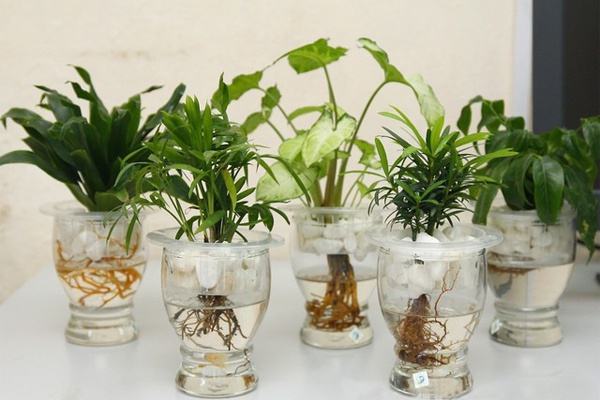
Final Thoughts
Growing plants in water is an easy and beautiful way to bring more greenery into your home without immediately reaching for a bag of soil. Pothos, lucky bamboo, heartleaf philodendron, spider plant offshoots, syngonium, tradescantia, English ivy, coleus, and mint are all interesting choices for getting started.
Just remember that “no soil” does not necessarily mean “no maintenance.” Clean water, suitable light, healthy roots, and—especially for long-term growth—appropriate nutrients still matter.
Whether you choose a single cutting in a small glass jar or create an entire windowsill filled with water-grown greenery, the result can be surprisingly beautiful.
Sometimes, all you need to create a little indoor garden is a glass container, a healthy cutting, and a place where it can grow.