People with diabetes can be more susceptible to certain infections, but recurrent athlete's foot alone is not enough to diagnose diabetes.
Keeping feet clean and dry, changing socks regularly, and wearing breathable footwear can help reduce the risk.
11. Loss of Hair on the Feet or Lower Legs
Reduced hair growth on the toes, feet, or lower legs can sometimes occur when blood flow to the area is reduced.
Peripheral arterial disease can cause symptoms such as:
-
Leg or foot pain during walking
-
Cold feet
-
Weak pulses
-
Skin color changes
-
Slow-healing wounds
-
Reduced hair growth
Diabetes is one of several major risk factors for peripheral arterial disease.
However, hair loss can also occur for many other reasons.
If you notice several circulation-related changes together, particularly wounds that heal slowly or pain while walking, a medical evaluation is important.
12. Changes in the Shape of the Foot
A less familiar but important problem is a significant change in the structure or shape of the foot.
In people with diabetes and significant neuropathy, Charcot foot can develop. This condition involves damage to bones and joints and can cause swelling, warmth, redness, or changes in the shape of the foot.
Because nerve damage can reduce pain sensation, the condition may initially be less painful than expected.
A foot that suddenly becomes swollen, warm, red, or visibly changes shape—especially in someone with diabetes or neuropathy—should be evaluated promptly.
Continuing to walk on an affected foot without medical assessment can potentially worsen the damage.
Why High Blood Sugar Can Affect the Feet
Understanding the connection helps explain why these symptoms matter.
When blood glucose remains elevated over long periods, it can contribute to damage involving nerves and blood vessels.
Nerve damage
Peripheral neuropathy can reduce the ability to feel pain, temperature, pressure, and injury.
A person might step on something sharp without realizing it.
Circulation problems
Diabetes is associated with an increased risk of peripheral arterial disease, which can reduce blood flow to the legs and feet.
Poor circulation can make it more difficult for injured tissue to receive the oxygen and nutrients needed for healing.
Infection risk
High blood sugar can also affect the body's ability to respond effectively to certain infections.
When reduced sensation, impaired circulation, and an untreated wound occur together, a seemingly minor foot problem can become much more serious.
Why Regular Foot Checks Matter
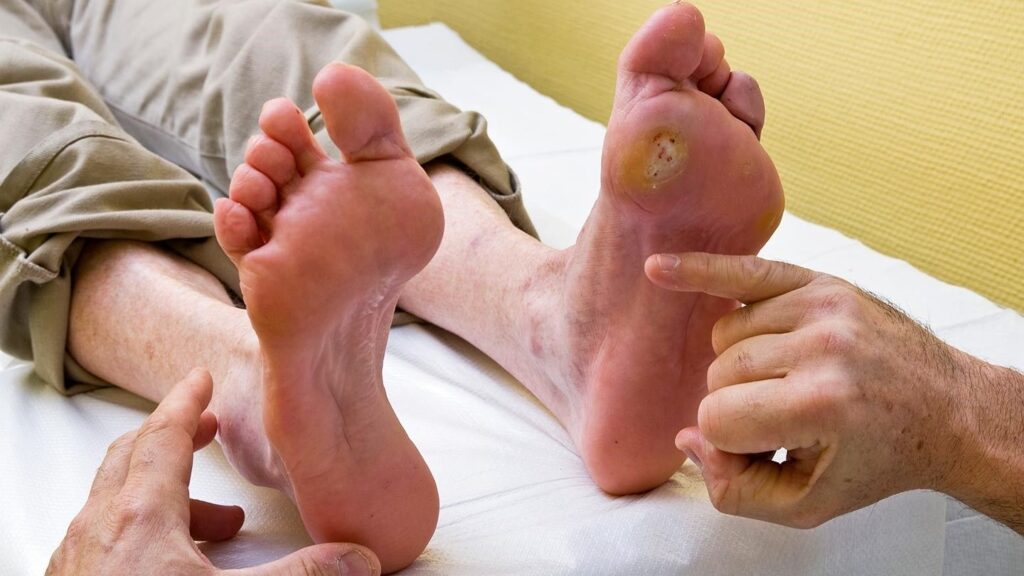
If you have diabetes, examining your feet regularly is a simple habit that can help identify problems early.
Look for:
-
Cuts
-
Blisters
-
Redness
-
Swelling
-
Cracks
-
Discoloration
-
Drainage
-
Changes in nail appearance
-
Areas of unusual warmth
-
New pressure spots
Don't forget the soles of your feet and the spaces between your toes.
If you cannot see the bottoms of your feet easily, use a mirror or ask someone you trust to help.
The goal isn't to become anxious about every tiny change.
It is to notice problems before they have time to become larger problems.
What You Can Do to Protect Your Feet
Good foot care is particularly important for people with diabetes.
Choose properly fitting shoes
Shoes should provide enough room for your toes and should not create persistent pressure points.
Avoid walking barefoot
Going barefoot increases the chance of stepping on something sharp or developing an unnoticed injury.
Keep feet clean and dry
Wash your feet regularly and dry them carefully, especially between the toes.
Moisturize dry skin
Use an appropriate moisturizer for dry areas, but avoid creating excessive moisture between the toes.
Check your feet regularly
A quick daily inspection can help you catch changes early.
Be careful with nail care
Trim toenails carefully and avoid cutting into the surrounding skin.
If you have neuropathy, poor circulation, or a history of foot ulcers, ask your healthcare professional about the safest approach to foot and nail care.
When Should You Seek Medical Attention?
Some foot problems should not wait for a routine appointment.
Seek prompt medical care if you have diabetes and develop:
-
A new open sore
-
A wound that is not healing
-
Increasing redness or warmth
-
Pus or drainage
-
Significant swelling
-
Fever associated with a foot problem
-
Black or severely discolored tissue
-
A sudden change in foot shape
-
A new cold or pale foot
-
Severe or rapidly worsening pain
A suddenly cold, pale, blue, or severely painful foot can represent a circulation emergency and requires immediate medical attention.
Likewise, a serious infection can progress quickly, particularly when sensation is reduced.
Your Feet Cannot Diagnose Diabetes
This is perhaps the most important point.
Foot symptoms can provide clues, but they cannot tell you by themselves whether you have diabetes.
Many of the symptoms discussed above have numerous possible causes.
If you are concerned about diabetes, the appropriate way to investigate is through medical evaluation and blood glucose testing.
Common tests include:
-
A1C
-
Fasting blood glucose
-
Oral glucose tolerance testing
-
Random blood glucose in appropriate circumstances
Your healthcare professional can determine which test is appropriate based on your symptoms and risk factors.
If you already have diabetes, regular monitoring and follow-up can help reduce the risk of complications.
The Bottom Line
Your feet are not literally a “blood sugar meter,” but they can sometimes reveal complications associated with diabetes or other circulation and nerve problems.
Persistent numbness, tingling, burning pain, slow-healing wounds, recurrent pressure injuries, skin changes, swelling, nail problems, infections, circulation changes, or changes in foot shape should not automatically be blamed on high blood sugar - but they should not always be ignored either.
The most important lesson is simple:
Don't wait for a small foot problem to become a major one.
If you have diabetes, check your feet regularly. If you notice a persistent or unusual change, especially a wound, infection, significant swelling, or sudden change in color or temperature, contact a healthcare professional.
And if you have several symptoms that concern you but have never been tested for diabetes, consider discussing blood glucose testing with your doctor.
Sometimes a small change is nothing serious.
But sometimes, paying attention early can make a meaningful difference.