Diet can be part of the wider picture. Research has linked certain dietary patterns and specific foods with the risk of particular cancers. For example, there is strong evidence that consuming processed meat increases colorectal cancer risk, while whole grains and foods containing dietary fiber are associated with a lower risk of colorectal cancer.
However, these findings do not mean that eating the same meal every night directly causes cancer. A meal could be repeated while containing a variety of nutritious ingredients. Another person could eat different dishes every day but still consume a diet high in processed meat, sugary drinks, and highly processed foods.
The important issue is the nutritional and dietary pattern—not repetition by itself.
The viral headline may describe a real person's experience, but the supplied material does not provide enough evidence to verify the case or identify a cause. The most accurate conclusion is that the story cannot be used as proof that eating one meal repeatedly causes terminal cancer.
Chapter 4: What Research Actually Says About Diet and Cancer Risk
Research into diet and cancer generally examines patterns of eating over time, rather than treating one dinner as an isolated cause.
Researchers study large groups of people, compare their dietary habits, and examine whether certain patterns are associated with higher or lower rates of particular cancers. They also consider other factors, including smoking, alcohol, physical activity, body weight, age, family history, and socioeconomic conditions.
This is difficult work because people do not eat in isolation. Someone who eats more vegetables may also exercise more, smoke less, or have better access to healthcare. Researchers must account for these differences before drawing conclusions.
The World Cancer Research Fund evaluates evidence on diet, physical activity, and body weight through systematic reviews and expert assessment. Its recommendations include eating a diet rich in whole grains, vegetables, fruit, and beans; limiting processed meat; maintaining a healthy weight; and being physically active.
The American Cancer Society also emphasizes an overall healthy eating pattern rather than a single miracle food or a strict list of forbidden ingredients. Its guidance encourages a pattern that includes vegetables, fruits, whole grains, and healthy protein sources while limiting processed and red meat and highly processed foods.
These recommendations are based on evidence about patterns associated with cancer risk. They do not promise that a particular diet can prevent every cancer, and they do not mean that someone who develops cancer must have eaten incorrectly.
That last point is especially important. People diagnosed with cancer should not be blamed for their illness. Cancer can occur even in people who follow healthy habits, and many risk factors are outside an individual's control.
Diet is one part of prevention, not a guarantee.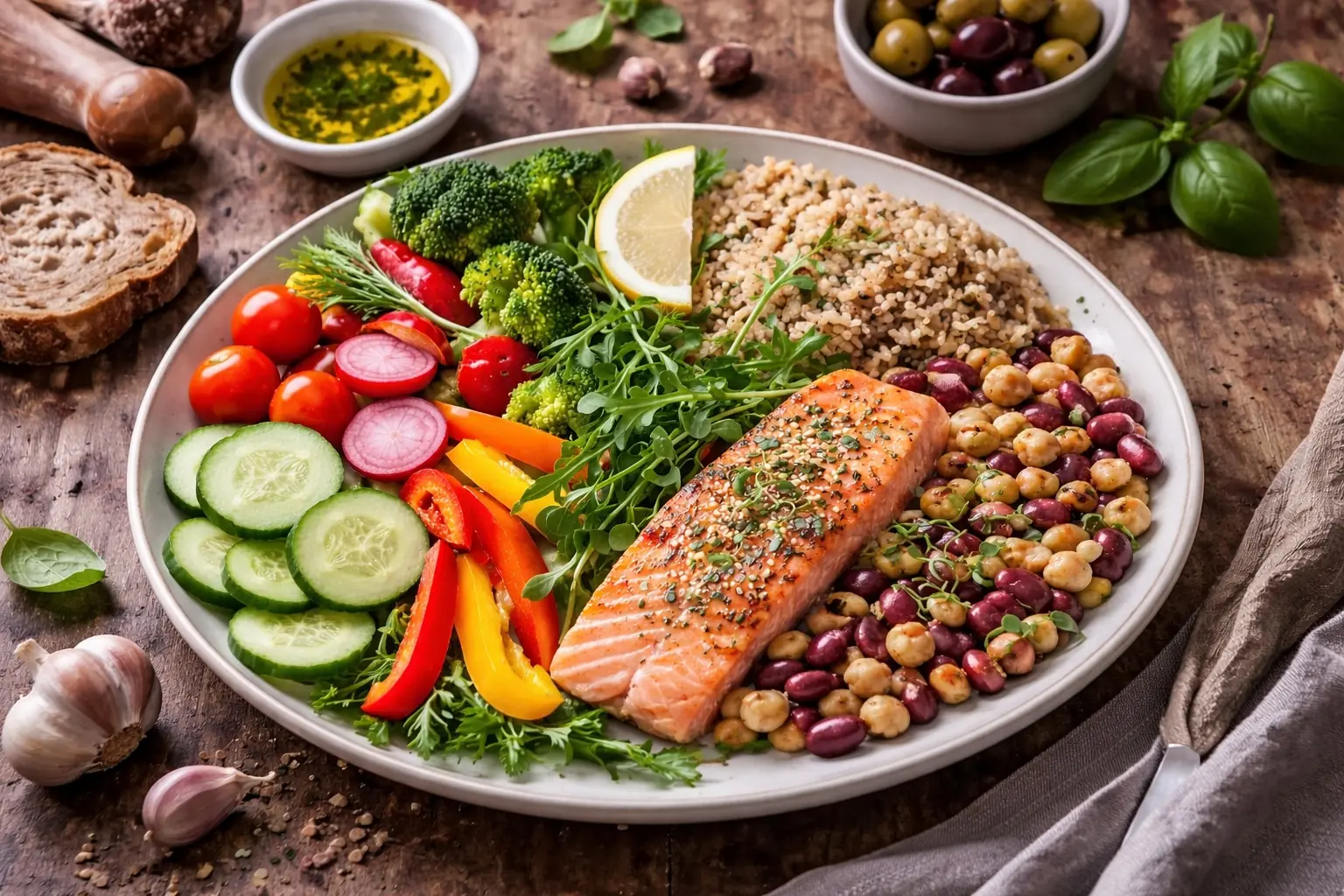
Chapter 5: The Importance of Fiber—and Why Repetitive Diets Can Miss It
Fiber is one of the nutrients most easily overlooked in a diet built around a narrow selection of foods.
It is found in plant foods such as vegetables, fruit, beans, lentils, nuts, seeds, and whole grains. Different types of fiber have different effects, but adequate intake supports normal bowel function and contributes to a healthy digestive system.
Some fibers help increase stool bulk and support regular bowel movements. Others are fermented by bacteria in the large intestine, producing substances that contribute to the environment of the gut.
A diet containing very little fruit, vegetables, legumes, and whole grains may therefore provide less fiber than the body needs.
This can happen even when a person eats enough calories. For example, someone who relies heavily on white bread, refined noodles, processed meat, and packaged snacks may consume substantial energy while receiving relatively little fiber.
The issue is not that one food is automatically harmful. It is that the overall pattern may leave little room for foods that supply fiber.
The World Cancer Research Fund recommends obtaining at least 30 grams of dietary fiber per day from food sources as part of its cancer-prevention guidance. It also recommends making whole grains, vegetables, fruit, and legumes regular parts of meals.
Individual needs can vary, and people with certain digestive conditions may require tailored advice. But for most adults, gradually including more fiber-rich foods is a practical way to improve diet quality.
Examples include replacing some refined grains with oats or brown rice, adding beans to soups, eating whole fruit instead of relying only on juice, and including vegetables in meals that previously contained mostly starch and protein.
The changes do not need to happen all at once. A gradual increase, accompanied by adequate fluid intake, can be easier to tolerate than a sudden major change.
Chapter 6: Fruits and Vegetables Provide More Than Vitamins
Fruits and vegetables are often discussed in terms of vitamins, but their value extends beyond a few familiar nutrients.
They contain fiber, minerals, and many naturally occurring plant compounds. These include carotenoids, flavonoids, and other substances that contribute to the color, taste, and chemical characteristics of plant foods.
Different plants contain different combinations of these compounds. Dark green vegetables, orange vegetables, berries, citrus fruits, and cruciferous vegetables do not all provide identical nutritional profiles.
This is one reason variety matters. Eating several kinds of plant foods gives people access to a wider range of nutrients and plant compounds than relying on one or two familiar vegetables.
For example, carrots and sweet potatoes provide carotenoids. Citrus fruits are known for vitamin C. Leafy greens can contribute folate and vitamin K. Beans and lentils provide fiber, protein, and minerals.
No single fruit or vegetable is a cure for cancer. Nor should people believe that eating a particular berry or vegetable can guarantee protection from disease.
The evidence supports an overall pattern that includes a wide range of plant foods. The World Cancer Research Fund recommends at least five portions of a variety of non-starchy vegetables and fruits each day, with a combined target of at least 400 grams.
For someone who currently eats very few vegetables, the goal can begin with one extra serving a day. Adding a piece of fruit to breakfast or a vegetable side dish to dinner may be more sustainable than trying to change every meal overnight.
Chapter 7: Protein Is Important, but It Should Not Be the Only Priority
Protein is essential for building and maintaining muscles, supporting tissue repair, and producing enzymes and other substances involved in normal body function.
People can obtain protein from animal foods such as fish, poultry, eggs, dairy products, and meat. Plant sources include beans, lentils, peas, soy foods, nuts, and seeds.
A repetitive meal based on one protein source is not automatically unhealthy. But if a person's entire diet relies heavily on a narrow selection of protein foods, other nutritional needs may be overlooked.
For example, a diet centered on processed meat may provide protein but also increase exposure to ingredients and compounds that are a concern when consumed frequently. Processed meat includes products that have been cured, salted, smoked, fermented, or otherwise processed to preserve or enhance flavor.
The World Cancer Research Fund reports convincing evidence that processed meat consumption causes colorectal cancer and recommends consuming very little, if any. It also recommends limiting red meat to moderate amounts.
World Cancer Research Fund
This does not mean that one serving of processed meat will cause cancer. Risk is related to overall exposure and dietary patterns over time.
A practical approach is to rotate protein sources. A person might eat fish on one day, beans on another, eggs on another, and poultry on a different day. This can add variety without requiring complicated recipes.
Plant proteins are particularly useful because many also provide fiber. Combining beans or lentils with whole grains and vegetables can create a filling meal with a broad nutritional profile.
Chapter 8: Healthy Fats Are Part of a Balanced Diet
Some people respond to health warnings by trying to remove nearly all fat from their meals. But dietary fat is essential.