Chapter 1: The Hidden Danger That May Be Lurking on Fresh Green Vegetables
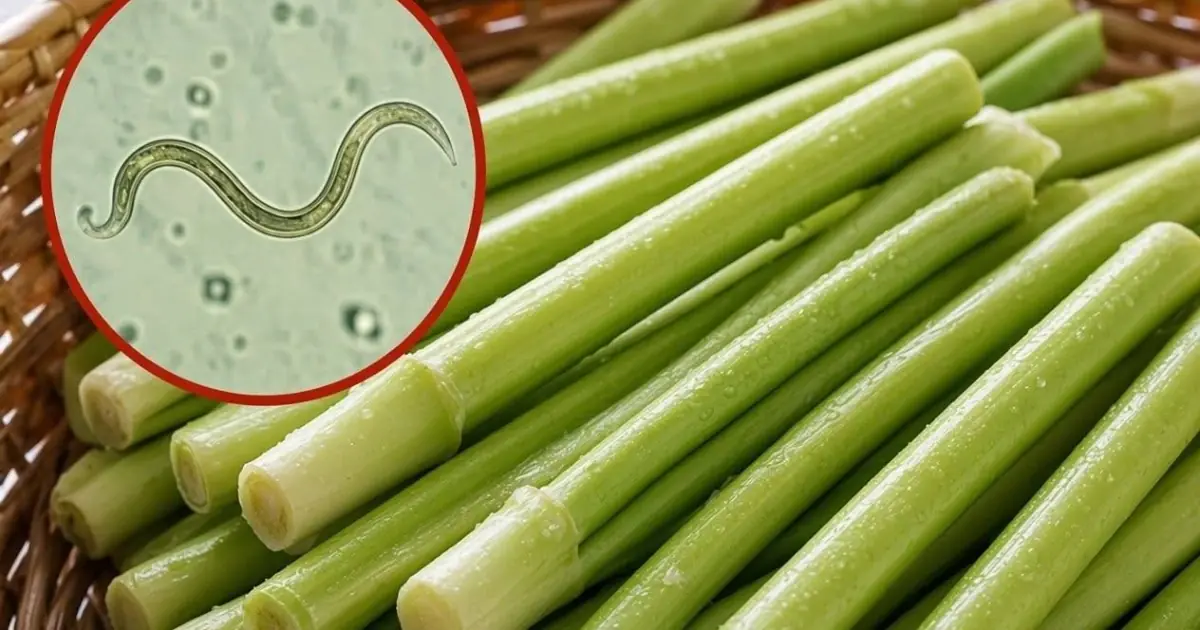
A basket filled with fresh green vegetables is usually associated with healthy eating. Their bright color, crisp texture and natural appearance make them popular ingredients in kitchens around the world.
But beneath that fresh appearance, there may be something consumers cannot easily see.
Vegetables grown in wet soil, near rivers or in areas exposed to contaminated irrigation water can sometimes carry microorganisms and parasites. These contaminants may remain attached to leaves, stems or other edible surfaces even after harvesting.
The concern becomes particularly important when vegetables are eaten raw.
The photograph accompanying this story appears to show a long-stemmed green vegetable, possibly water spinach, also known as morning glory or kangkong. This vegetable is widely consumed throughout Southeast Asia and is commonly prepared in soups, stir-fries and salads.
It is nutritious and can be part of a balanced diet. However, like other aquatic and freshwater-grown vegetables, its safety depends partly on where and how it is cultivated.
Why aquatic vegetables deserve particular attention
Some vegetables grow in environments where water plays an important role in their development.
Water spinach, for example, can grow in moist soil and shallow freshwater environments. Its stems and leaves may come into contact with water, mud and surrounding organic material.
If the growing environment is contaminated, harmful organisms may reach the edible parts of the plant.
This does not mean every bunch contains parasites. It means that the quality of the growing water and the hygiene of agricultural practices matter.
The Food and Agriculture Organization of the United Nations (FAO) has documented several parasites that can be transmitted through contaminated vegetables, water and the environment.
One important example is Fasciola, a group of parasitic flatworms commonly known as liver flukes.
Certain species can infect humans after contaminated freshwater plants are eaten raw. Watercress and other freshwater-grown plants are recognized potential sources of exposure.
How parasites reach vegetables
The contamination process can involve several stages.
First, infected livestock or other animals may release parasite eggs into the environment through their feces.
Under suitable environmental conditions, these eggs develop through different stages of the parasite's life cycle.
For certain liver flukes, freshwater snails serve as intermediate hosts.
The developing parasites eventually leave the snails and attach themselves to aquatic plants.
At this stage, they can form protective structures that allow them to survive on vegetation.
When a person or suitable animal consumes an infected plant without adequate cooking, the parasite may enter the digestive system.
The FAO explains that certain Fasciola stages can survive on aquatic plants for extended periods, making contaminated freshwater vegetation a genuine food-safety concern.
Why ordinary washing may not be enough
Many people believe that rinsing vegetables briefly under water removes every possible contaminant.
Unfortunately, this assumption is not always correct.
Washing can remove soil, insects, debris and some microorganisms. However, it cannot guarantee the removal of every parasite or microscopic contaminant.
Some organisms attach firmly to irregular surfaces, while others may remain in small crevices or damaged areas.
The FAO specifically warns that rinsing alone is insufficient protection against certain parasites associated with raw aquatic vegetables.
This is particularly important for people who enjoy eating fresh vegetables without cooking them.
A vegetable may look clean, smell fresh and have no visible signs of damage while still carrying microscopic contamination.
Should people stop eating these vegetables?
Absolutely not.
Vegetables provide fiber, vitamins, minerals and other beneficial nutrients.
Avoiding all green vegetables because of potential contamination would be an unnecessary reaction.
The better approach is to understand the risks and prepare food correctly.
Fresh vegetables from reliable suppliers, grown under appropriate agricultural conditions and handled hygienically, can remain part of a healthy diet.
The important distinction is between a nutritious vegetable and an unsafe preparation method.
A vegetable is not automatically dangerous simply because it grows in water.
The real concern is exposure to contaminated water, soil, animal waste or poor handling practices.
And understanding this difference is the first step toward protecting the entire family.
Chapter 2: The Parasites That Can Enter the Body Through Contaminated Vegetables
The thought of consuming microscopic parasites through food can be unsettling.
However, understanding how these organisms spread makes it easier to recognize genuine risks and take appropriate precautions.
Not all parasites are transmitted in the same way.
Some are associated with freshwater plants, while others can reach vegetables through contaminated soil, irrigation water or human and animal waste.
Several groups are particularly relevant to food safety.
1. Liver flukes: A parasite associated with freshwater plants
One of the best-known examples is Fasciola hepatica and its closely related species, Fasciola gigantica.
These flatworms primarily affect the liver and bile ducts of animals such as cattle, sheep and goats.
Humans can occasionally become infected through the consumption of contaminated freshwater plants or water.
The parasite has a complicated life cycle.
It begins when eggs from infected animals enter the environment through feces.
Under suitable conditions, the eggs hatch and release microscopic organisms that eventually infect certain freshwater snails.
After developing inside the snail, the immature parasites leave their host and attach themselves to aquatic plants.
They form protective cyst-like structures known as metacercariae.
When contaminated vegetation is eaten raw, these structures may release the parasites inside the digestive system.
The immature parasites then migrate through the body toward the liver.
The FAO describes this transmission route and identifies uncooked freshwater plants as an important risk factor.
2. What happens after infection?
The symptoms of fascioliasis depend on the stage of infection and the number of parasites involved.
During the early phase, the parasites migrate through tissues toward the liver.