The reported total weight was approximately 1,096.76 grams, equivalent to slightly more than one kilogram.
This was not a small personal quantity of jewelry.
It was a substantial amount of valuable material being transported through an international airport without the appropriate declaration.
The estimated value was reported to be approximately ₹69.16 lakh.
The discovery demonstrated how concealed-cargo investigations can involve methods that are very different from ordinary baggage inspections.
4. Why Concealed Gold Creates Serious Security Concerns
Gold is a valuable commodity that can be transported in different forms.
International travelers may legally carry gold under applicable customs rules, provided they meet the relevant declaration, duty, and eligibility requirements.
Problems arise when individuals attempt to avoid those requirements by concealing gold or misrepresenting what they are carrying.
Body concealment is particularly concerning because it can create medical risks for the individual involved.
Foreign objects or improperly contained materials inside the body can cause injury, obstruction, infection, or other complications.
This is one reason authorities must handle such cases carefully.
The priority is not simply recovering valuable property. It is also ensuring that the person receives appropriate medical attention when necessary.
5. The Value Behind the Attempt
The reported valuation of approximately ₹69 lakh helps explain why the case attracted attention.
Gold has long been an important commodity in India.
It plays a significant role in jewelry purchases, weddings, family savings, cultural traditions, and investment decisions.
Because gold has substantial economic value, differences in taxation and import regulations can create incentives for illegal transportation.
Customs authorities therefore monitor international arrivals for attempts to bring undeclared gold into the country.
The financial value involved in this particular case was substantial enough to make the discovery significant.
However, the reported value should not be confused with the amount of money the passenger would necessarily have earned.
The available reports do not establish the identity of the intended buyer, the source of the gold, or the complete financial arrangement behind the alleged attempt.
6. What Happened to the Passenger?
Following the discovery, the passenger was reportedly arrested under relevant provisions of India's Customs Act.
The seizure and arrest were part of the authorities' response to the suspected smuggling attempt.
An investigation was also initiated.
Arrest does not mean that every question about the wider operation has automatically been answered.
Investigators may need to establish where the gold originated, who arranged its transportation, whether other individuals were involved, and whether the passenger had previously participated in similar activities.
These questions can be important in determining whether an incident represents an isolated attempt or part of a larger smuggling network.
7. A Discovery That Started With a Simple Observation
Perhaps the most striking aspect of the incident is the sequence of events.
A flight attendant noticed a repeated pattern.
She communicated her concern to the captain.
The captain contacted security agencies.
Customs officials prepared for the aircraft's arrival.
And the subsequent investigation reportedly resulted in the recovery of more than one kilogram of gold.
The incident illustrates how communication between airline personnel and airport authorities can contribute to security investigations.
It also demonstrates why seemingly small observations may become relevant when combined with other information.
Nevertheless, the important distinction remains that refusing food or water is not proof of wrongdoing.
The discovery in this case followed questioning and an investigation, not an automatic assumption based on a passenger's eating habits.
Chapter 3: How Airport Customs Detect Gold-Smuggling Attempts
Airport security screening equipment
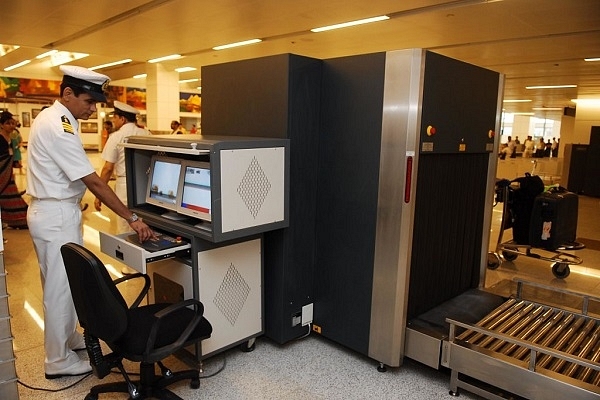
The Delhi incident highlights a broader challenge faced by international airports: detecting goods that passengers attempt to transport without proper declaration.
Gold-smuggling attempts can involve conventional luggage, clothing, personal belongings, or more unusual forms of concealment.
For customs officers, the challenge is to identify potential violations while allowing legitimate travelers to complete their journeys without unnecessary delays.
1. Why Airports Need Customs Intelligence
Modern international airports process thousands of passengers every day.
Each traveler may have a different destination, travel history, purpose, and reason for carrying particular belongings.
Inspecting every passenger in the same way would create enormous delays.
Instead, customs agencies use a combination of intelligence, passenger information, risk assessment, screening technology, and physical inspection.
These systems help officers identify situations that may require additional attention.
In India, the Customs Department and Directorate of Revenue Intelligence use intelligence-led operations to investigate suspected smuggling activities.
The Ministry of Finance has also described the use of passenger profiling, risk-based targeting, baggage scanning, and coordination between agencies as part of efforts to prevent illegal gold transportation.
Digital Sansad+1
2. The Role of Airline Cabin Crew
Flight attendants spend several hours observing the passenger cabin.
Their responsibilities include serving refreshments, checking safety requirements, assisting passengers, and responding to unexpected situations.
They are also among the first airline employees who may notice behavior that appears unusual.
In the July 2024 incident, the flight attendant reportedly noticed that one passenger repeatedly declined all refreshments.
She did not conduct a customs investigation herself.
Instead, she communicated the concern to the captain.
This distinction is important.
Cabin crew members are not customs investigators, and they should not attempt to conduct searches or interrogations beyond their responsibilities.
Their role is to report relevant concerns through established procedures.
3. Communication Between the Captain and Authorities
Once the captain received the information, the concern was reportedly passed to security agencies through air traffic control.
This communication allowed airport personnel to prepare before the aircraft arrived.
Such coordination can be useful because aircraft cannot simply stop in the middle of an international journey for a routine customs investigation.
Information must be communicated through the appropriate aviation channels.
The destination airport can then determine whether further attention is necessary after landing.
This process also helps avoid unnecessary disruption to other passengers.
4. What Happens at the Customs Green Channel?
The Green Channel is designed for eligible travelers who have no goods requiring declaration under the applicable customs rules.
It is not a guarantee that a passenger will never be questioned.
Customs authorities retain the ability to stop and inspect travelers when circumstances justify further examination.
A passenger who is selected for additional screening may be asked about luggage, personal belongings, or goods being transported.
If officials identify reasonable grounds for concern, they may conduct further checks according to the law.
In the reported incident, the passenger was reportedly stopped after attempting to use the Green Channel.
This allowed officials to investigate the concern raised during the flight.
5. The Importance of Screening Technology
Airport security relies on several forms of technology.
Baggage X-ray machines allow officers to examine luggage without immediately opening every bag.
Metal detectors help identify certain metallic objects carried by passengers.
Other specialized screening methods may be used when the circumstances require them.
However, no single machine can detect every type of concealed contraband.
Some materials may require additional investigation, laboratory examination, or medical imaging.
Customs officers therefore combine technology with intelligence and physical inspection.
The objective is to establish whether a suspected item is present and whether its transportation violates applicable regulations.
6. Why Gold Smuggling Remains a Challenge
Gold is relatively compact compared with many other valuable commodities.
Its high value makes it attractive to criminal networks seeking to transport wealth across borders.