It may begin with something so small that you barely notice it.
Perhaps you are washing your face one morning when your fingers brush against a tiny bump beneath your jaw. Maybe you feel a little swelling on one side of your neck while adjusting your collar, or you notice a firm area near your ear that was not there before.
At first, you may assume it is nothing serious. You might have recently experienced a sore throat, a cold, or a dental problem. You tell yourself the swelling will disappear once your body recovers.
And often, that is exactly what happens.
However, when a lump remains for weeks, gradually changes, or appears without an obvious explanation, it deserves closer attention.
Doctors frequently encounter patients who have ignored a persistent neck lump because it does not hurt. Others become frightened immediately, assuming that any unusual swelling must indicate cancer. Neither reaction is particularly helpful. A neck lump can have many causes, ranging from ordinary infections to conditions that require more extensive medical investigation.
The important question is not simply whether a lump exists. It is how long it has been present, where it is located, how it feels, whether it is changing, and whether other symptoms are occurring at the same time.
Why Do Neck Lumps Develop?
The neck contains numerous structures, including lymph nodes, salivary glands, muscles, blood vessels, nerves, and parts of the thyroid gland.
A swelling in this area can originate from any of these structures.
One of the most common explanations is an enlarged lymph node. Lymph nodes are small, bean-shaped structures that form part of the immune system. They help filter lymphatic fluid and support the body's response to infections.
When your immune system detects an infection, nearby lymph nodes may become enlarged as immune cells become more active. This can happen during a common cold, tonsillitis, an ear infection, or a dental infection.
For example, swollen lymph nodes beneath the jaw may appear when you have a throat infection. Nodes along the sides of the neck may become noticeable during respiratory illnesses.
These swellings are often temporary. They may feel tender or slightly painful and gradually become smaller as the underlying infection improves.
However, not every neck lump is a lymph node.
A lump near the front of the neck may involve the thyroid gland. A swelling beneath the jaw could originate from a salivary gland. Some lumps are caused by cysts, benign growths, or congenital conditions that have existed for years without being noticed.
Less commonly, a persistent neck lump can be associated with lymphoma or cancers involving the head, neck, thyroid, or other areas of the body.
Why Persistence Matters
A lump that appears during an infection and gradually disappears is generally less concerning than one that continues growing without an identifiable cause.
That does not mean every persistent lump is dangerous. Some benign cysts and other noncancerous conditions can remain unchanged for long periods.
Nevertheless, duration is an important part of the medical assessment.
In adults, a neck mass that has been present for two weeks or longer without significant fluctuation, or whose duration is uncertain, generally warrants prompt medical evaluation, particularly when there is no clear explanation such as a recent infection.
Doctors also pay attention to whether a lump feels unusually firm, appears fixed to surrounding tissue, or is accompanied by unexplained symptoms.
A painless lump should not automatically be dismissed. Some conditions, including certain cancers, can initially produce little or no discomfort.
The goal is not to assume the worst. It is to avoid overlooking something that deserves investigation.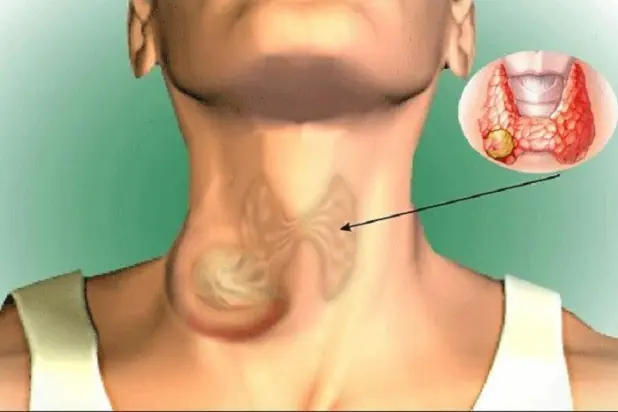
Chapter 2: Eight Warning Signs Doctors Want You to Notice
Although the appearance of a neck lump alone cannot establish a diagnosis, certain characteristics can help doctors decide how urgently it should be evaluated.
The following signs are particularly important.
1. The Lump Does Not Disappear
One of the most important warning signs is persistence.
Lymph nodes enlarged because of an infection often become smaller as the infection resolves. This process may take several weeks, and some nodes can remain slightly noticeable even after recovery.
However, a lump that remains unchanged, continues enlarging, or develops without a clear infectious cause should be assessed.