Adults should seek prompt evaluation when a neck mass persists for two weeks or longer without meaningful improvement, especially if its duration is uncertain.
Do not repeatedly postpone an appointment simply because the lump is not painful.
2. The Lump Is Growing
A lump that gradually becomes larger deserves attention.
Growth does not automatically indicate cancer. Infections, cysts, inflammatory conditions, and other benign problems can also cause swelling.
Nevertheless, an enlarging mass suggests that something is continuing to affect the tissue.
Pay attention if a small bump becomes noticeably larger over days or weeks, particularly when there has been no recent illness.
Rapidly increasing swelling, especially when accompanied by difficulty breathing or swallowing, requires urgent medical attention.
3. It Feels Firm or Hard
The texture of a neck lump can provide useful information.
Lymph nodes enlarged during infections are often soft or rubbery and may be tender. Some suspicious masses, however, can feel unusually firm or hard.
A lump that feels fixed in place rather than moving slightly beneath the skin may also require closer investigation.
It is important to understand that these characteristics are not diagnostic. Some harmless lumps feel firm, while certain serious conditions can produce softer swellings.
A person cannot reliably determine whether a lump is cancerous simply by pressing it.
4. It Is Painless
Pain is often associated with inflammation or infection, but the absence of pain does not guarantee that a lump is harmless.
Some people with enlarged lymph nodes caused by ordinary infections experience tenderness. Others do not.
Likewise, certain lymphomas and head-and-neck cancers may initially produce painless swelling.
This is one reason doctors recommend evaluating unexplained persistent lumps even when they do not interfere with daily activities.
5. You Experience Difficulty Swallowing
A neck mass may sometimes be associated with difficulty swallowing, especially if it affects structures around the throat or esophagus.
You might notice that food feels as though it becomes stuck, swallowing requires additional effort, or discomfort develops when eating.
There are many possible explanations, including throat inflammation, thyroid enlargement, neurological conditions, and structural abnormalities.
However, persistent or progressive swallowing difficulties should not be ignored, particularly when they occur alongside a neck lump.
If swallowing becomes severely difficult or you cannot swallow saliva, seek urgent medical care.
6. Your Voice Becomes Hoarse
A persistent change in voice is another symptom worth discussing with a doctor.
Hoarseness may result from common problems such as viral laryngitis, vocal strain, acid reflux, or irritation caused by smoking.
In some cases, however, changes in the voice can be associated with conditions affecting the vocal cords, larynx, thyroid, or nerves involved in voice production.
If hoarseness continues for more than a few weeks, especially when accompanied by an unexplained neck lump, medical assessment is important.
7. You Experience Unexplained Weight Loss or Night Sweats
Some systemic symptoms can provide additional clues.
Unintentional weight loss means losing weight without deliberately changing your diet, increasing physical activity, or following a weight-loss program.
Night sweats can also occur for many reasons, including hormonal changes, infections, medications, and environmental factors.
However, persistent unexplained weight loss, recurrent fever, and drenching night sweats can sometimes accompany lymphoma and other serious illnesses.
These symptoms become particularly important when they occur together with persistent lymph node enlargement.
8. You Notice Other Unusual Symptoms
Doctors consider the entire clinical picture rather than focusing exclusively on the lump.
Other symptoms that deserve attention include:
-
Persistent sore throat.
-
One-sided ear pain without an obvious ear infection.
-
Unexplained mouth sores or a lesion that does not heal.
-
Persistent cough.
-
Blood in saliva.
-
Changes in breathing.
-
A growing swelling near the collarbone.
None of these symptoms proves that cancer is present. Many have common, treatable explanations.
However, persistent or unexplained symptoms should be evaluated rather than repeatedly attributed to minor illnesses.
Chapter 3: Four Common Causes of Neck Lumps That Are Not Cancer
Hearing that a persistent neck lump requires medical evaluation can be frightening. Many people immediately begin imagining the worst possible diagnosis.
Fortunately, numerous neck lumps have benign explanations.
Understanding these conditions can help put the situation into perspective while reinforcing the importance of obtaining an accurate diagnosis.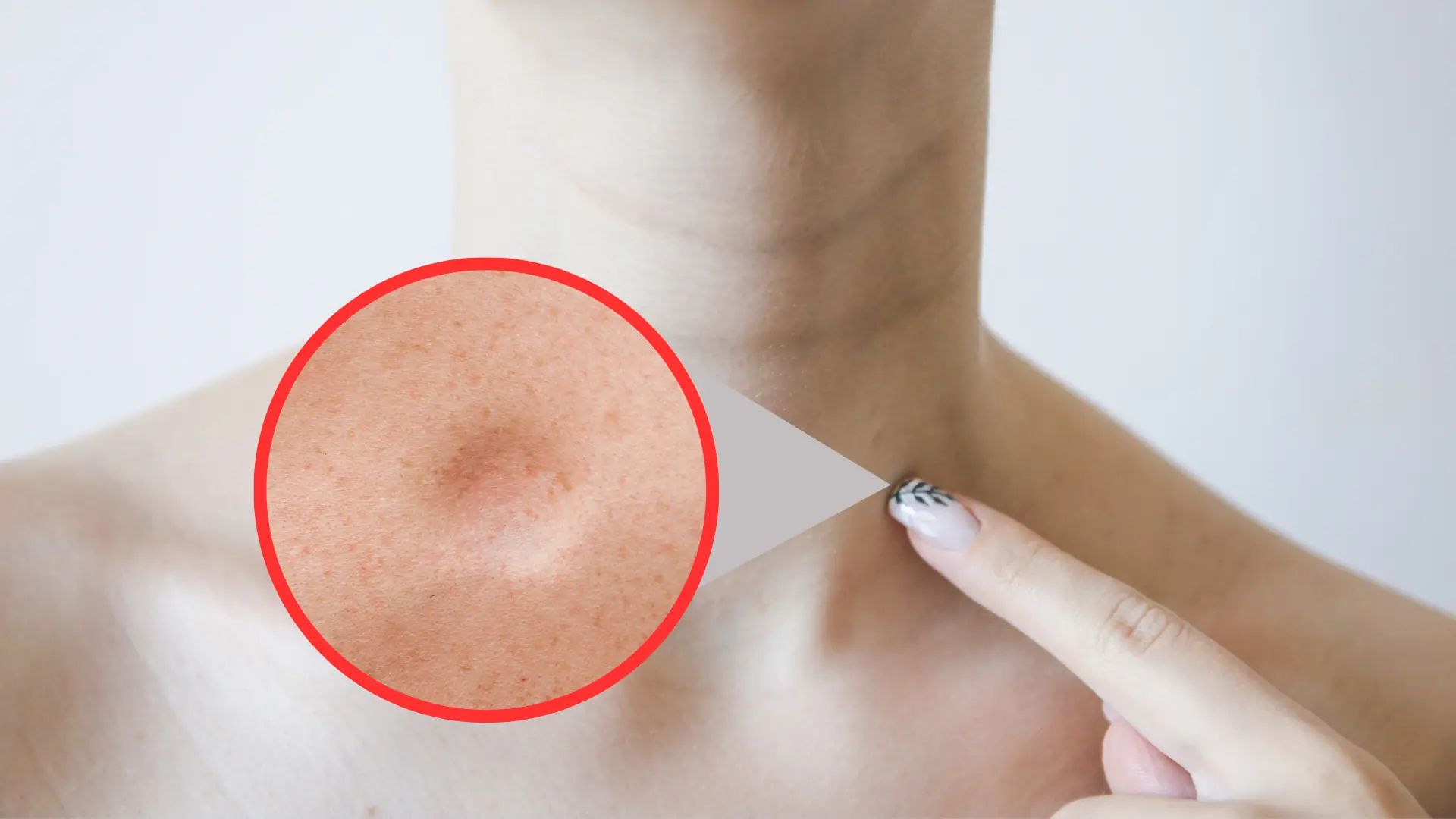
1. Enlarged Lymph Nodes From Infection
This is among the most common reasons for swelling in the neck.
Lymph nodes become enlarged when the immune system responds to infections caused by viruses or bacteria.
Common triggers include: