Imagine having several pots near the kitchen window.
You get fresh herbs for meals, attractive greenery, and a plant with a strong natural aroma.
How to keep basil healthy
Basil generally prefers:
-
Warm temperatures
-
Plenty of sunlight
-
Regular watering
-
Nutrient-rich soil
-
Good drainage
Harvesting the leaves regularly can also encourage bushier growth.
Remove flowers if you want to keep the plant focused on producing leaves.
5. Lemongrass
Lemongrass is especially interesting when discussing mosquitoes because it contains citronellal and related aromatic compounds.
Citronella is commonly associated with mosquito-repelling products, although it is important to distinguish citronella oil from ordinary lemongrass plants and from citronella grass species.
Simply growing lemongrass in your garden is not equivalent to applying a tested mosquito repellent to your skin.
Still, lemongrass is a useful and attractive plant to have around.
It can grow into a relatively substantial clump and is also widely used in cooking.
Its fresh citrus-like aroma makes it particularly pleasant around patios and outdoor seating areas.
Growing lemongrass
It generally likes:
-
Warm weather
-
Sunlight
-
Regular watering
-
Fertile soil
-
Adequate drainage
In tropical and subtropical climates, lemongrass can grow vigorously.
6. Catnip
Catnip may look like an innocent little herb, but it contains a compound called nepetalactone that has attracted scientific interest because of its effects on certain insects.
Research has found that nepetalactone can have repellent effects against mosquitoes and some other insects under experimental conditions.
Interestingly, the same compound is famous for its effect on many cats.
If you have a cat, however, don't be surprised if your carefully positioned insect-repellent plant becomes your pet's favorite attraction.
Catnip can be grown in containers and is relatively easy to maintain.
A practical consideration
Catnip can spread, so containers may be preferable if you want to keep it under control.
And because its insect-repelling effect depends on the release and concentration of aromatic compounds, simply having one small plant several meters away from your patio won't necessarily make a noticeable difference.
7. Lemon Balm
Lemon balm belongs to the mint family and produces a fresh lemon-like aroma.
It contains aromatic compounds, including citronellal, that contribute to its distinctive smell.
The plant is relatively easy to grow and can work well in containers.
Like mint, however, lemon balm can spread quickly under favorable conditions.
Its attractive green leaves also make it useful for people who want an herb garden rather than a collection of purely decorative plants.
Growing lemon balm
It generally prefers:
-
Sun or partial shade
-
Moist, well-drained soil
-
Regular watering
-
Moderate temperatures
Its leaves can also be used in teas and culinary preparations.
8. Marigolds
Marigolds are another plant frequently recommended as a natural pest deterrent.
They are colorful, relatively easy to grow, and popular in vegetable gardens.
Some marigold species contain aromatic compounds that have demonstrated insect-related effects.
However, the common claim that simply planting marigolds creates a powerful mosquito barrier is much stronger than the available evidence supports.
Their value may be greater as part of an overall garden strategy.
They can add biodiversity, attract beneficial insects depending on the species and environment, and contribute to a healthy-looking garden.
Where to plant them
Try placing marigolds:
-
Around vegetable beds
-
Along garden borders
-
In containers near patios
-
Around outdoor seating areas
They also provide a simple way to add color without requiring a large amount of space.
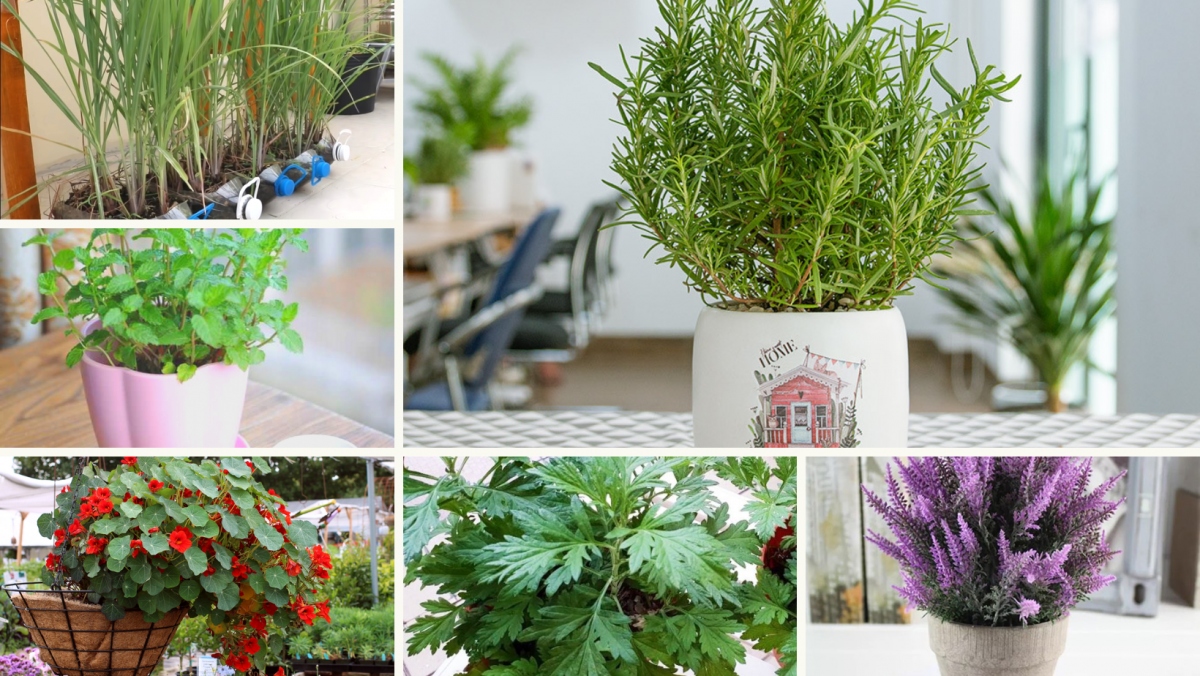
9. Scented Geraniums
Some scented geraniums produce strong citrus-like fragrances and are sometimes marketed as mosquito-repelling plants.
Their aromatic leaves can release noticeable scents, especially when touched or crushed.
However, the presence of a scented geranium does not guarantee that mosquitoes will avoid your yard.
The plant can still be useful as part of a balcony or patio garden because it combines attractive foliage with fragrance.
Choose a sunny location and provide good drainage.
Why Do Some Plants Repel Insects?
This is where the science gets interesting.
Plants produce a wide variety of chemical compounds.
Some are involved in defense.