On July 16, 1988, the Wembley crowd included Diana and Charles. The royal couple watched from their designated area as Jackson performed before the audience.
Reports of the evening described Diana enjoying the music, clapping and moving along to the songs. The story of “Dirty Diana” became particularly memorable because the princess reportedly encouraged Jackson to keep it in the set. Contemporary accounts also described her enthusiasm during the performance.
The contrast between Diana and Charles became part of the anecdotal coverage. Diana was associated with a more visibly enthusiastic response to the music, while Charles was portrayed as more reserved. Such descriptions should not be mistaken for a complete account of their private feelings, but they helped create the popular image of the evening.
The concert also illustrated the extraordinary reach of Jackson's music. The audience was not made up only of young fans. It included public figures, families, and people from different generations. His songs had become part of popular culture, and even the British royal couple were familiar with them.
For Jackson, performing in front of the Princess of Wales was a special occasion. He later spoke about being excited to meet the royal couple. The contemporary footage description also records him telling reporters that he was happy to be there and very excited about meeting royalty.
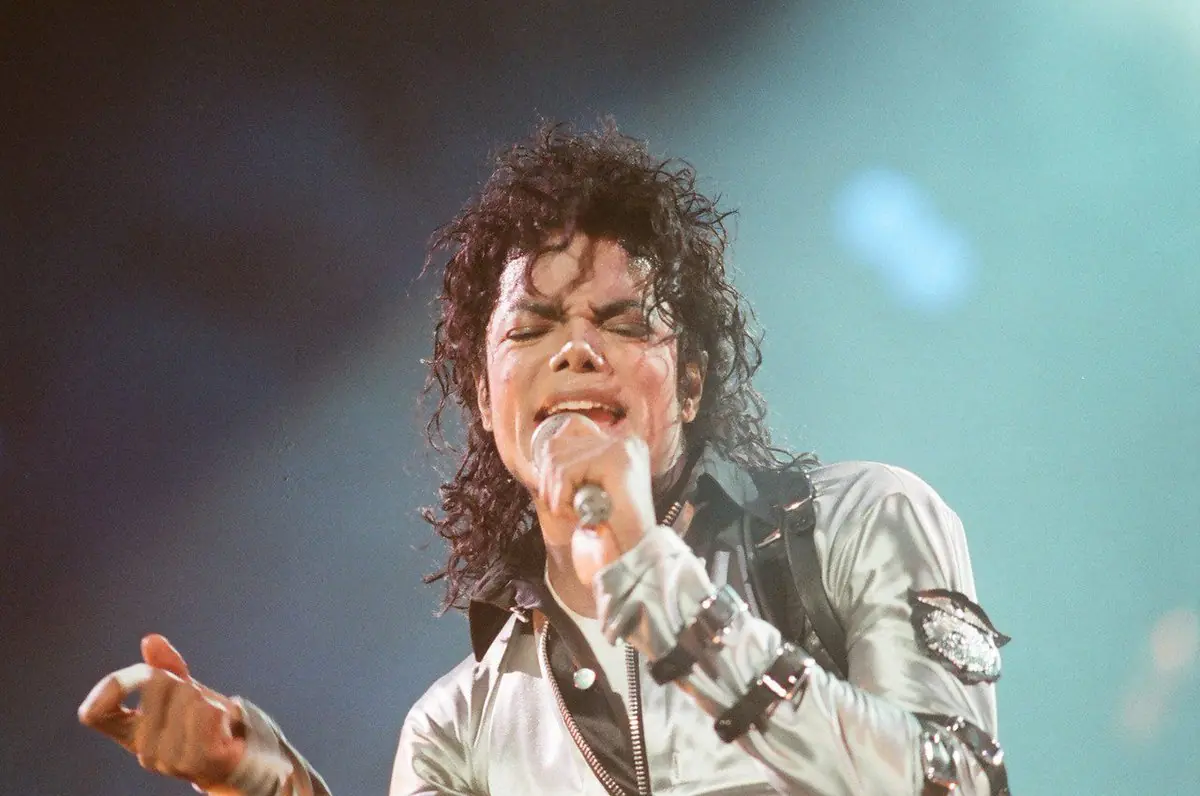
The evening therefore had two distinct but connected parts: a personal meeting backstage and a public performance in front of a vast crowd. The photograph belongs to the first part, while the stories about Diana dancing and the audience's reaction belong to the second.
Why the Photograph Feels More Personal Than an Official Royal Portrait
Royal photographs are often carefully arranged. A member of the royal family may stand beside a visiting dignitary, pose for a photographer, or take part in a ceremony where every movement follows a familiar pattern.
The image of Diana and Jackson is different. It captures a moment of direct interaction. Diana's expression is open and friendly, and Jackson is standing close enough for the exchange to feel conversational. Their clothing is distinctive, but neither appears to be addressing a crowd.
This is one reason the photograph continues to attract attention. It offers a glimpse of Diana outside the familiar settings of palace ceremonies, official visits, and formal portraits. She is not simply being photographed as a princess. She is meeting an artist whose music she reportedly enjoyed.
It also offers a glimpse of Jackson outside the stage environment. His clothes still carry the unmistakable style of the Bad era, but he is not performing for thousands of people. He is standing in a room, meeting someone whose public life was almost as intensely watched as his own.
The image creates an impression of a shared human moment between two individuals who were normally surrounded by large teams, security arrangements, photographers, and public expectations.
But it is important not to read too much into a single expression. A photograph can show a smile, a posture, and the distance between two people. It cannot establish the full nature of their relationship or reveal the exact emotions they experienced.
The historical context makes the image more meaningful than speculation about what either person might have been thinking. They met at a documented event, exchanged greetings, and took part in a charity-related occasion. The warmth visible in the photograph is consistent with accounts of the meeting, but the image should not be treated as proof of every later story about their friendship.
That balance between visual emotion and historical evidence is part of what makes the photograph worth revisiting.
Did Princess Diana and Michael Jackson Become Close Friends?
The story did not end when the concert was over. In later years, Jackson spoke about Diana with considerable affection, describing a connection that developed despite the fact that they reportedly met face to face only once.
This is one of the most fascinating parts of their story. Two people who lived in very different worlds apparently found common ground in experiences that were surprisingly similar.
Diana was one of the most photographed women in the world. Her marriage, family life, fashion choices, public appearances, and personal struggles were constantly discussed in newspapers and magazines. Even ordinary activities could become major stories, and photographers frequently followed her wherever she went.
Jackson experienced a different but equally intense form of public attention. His music made him a global celebrity, but his private life was also examined relentlessly. His appearance, relationships, family, and behaviour became subjects of constant media speculation.
The two were not simply famous. They were famous in a way that made privacy difficult to protect.
According to Jackson's later interviews, they spoke on the telephone after their meeting. In a 1999 interview, he described Diana as someone who would call him late at night and talk about their children and the pressures of the press. He said they had become close through these conversations.
Those recollections have contributed to the idea that the pair developed a friendship based on mutual understanding. Both knew what it was like to have strangers discuss their private lives. Both had experienced the feeling of being watched even when they were not performing an official duty.
For Diana, the pressure was tied to the monarchy, her marriage, and her role as a mother. For Jackson, it was connected to fame, the demands of the music industry, and the extraordinary attention surrounding his career.
Their circumstances were not identical, and it would be too simple to say they understood every aspect of each other's lives. Yet the common experience of intense media scrutiny may have given them something to discuss beyond music and royal protocol.
Jackson's accounts suggest that their conversations sometimes lasted for a long time. He described Diana as someone with whom he could speak openly about the difficulties of public life. These comments were made years after their Wembley meeting, and they are part of his personal recollections rather than a complete record of every conversation.
There is also an important limitation: because they reportedly met in person only once, much of what is known about the friendship comes from Jackson's own statements and later accounts by people close to him. The exact frequency and content of their calls cannot be independently reconstructed in full.
Nevertheless, the story has remained compelling because it reveals a different side of both figures. The photograph shows a famous singer meeting a princess. The later recollections describe two people who may have found comfort in speaking to someone who understood the unusual pressures of their lives.
A Princess Who Was Also a Music Fan
Diana's interest in popular music is an important part of the story. Her public image was often associated with royal engagements, charity work, fashion, and family responsibilities. Yet she also had personal interests that made her seem familiar to people outside the royal world.
Her reported admiration for Jackson's music was particularly striking because it showed her enthusiasm for a global pop artist at the height of his fame. The story about “Dirty Diana” is remembered precisely because it revealed that she knew the music well enough to have a favourite song.