It is an appealing detail because it adds mystery to an already fascinating photograph. It encourages viewers to imagine that the photographer had accidentally captured a moment whose significance would only become clear with time.
However, there is an important distinction between the documented history of the photograph and the dramatic wording used in the social media caption.
The available archival descriptions identify the image as a photograph of Diana meeting Michael Jackson backstage at Wembley Stadium in July 1988. Getty Images attributes the photograph to the Princess Diana Archive and identifies the occasion as Jackson's concert in aid of the Prince's Trust. Other archival records also preserve photographs and footage from the same meeting.
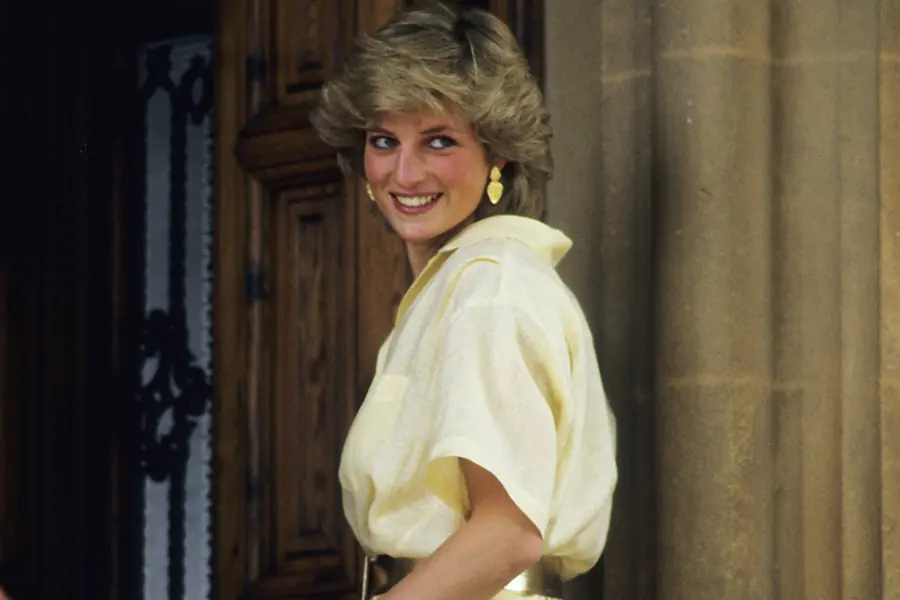
What these records do not establish is that the photographer made a specific statement about recognizing something strange only after taking the picture. There is no confirmed account in the sources reviewed here that explains such a realization or identifies a hidden detail that the photographer supposedly discovered later.
That does not mean the image lacks historical significance. It means that its importance is better understood through what can actually be established.
The photograph documents a rare meeting between two major cultural figures. It preserves Diana's appearance at a particular stage of her life, Jackson's distinctive Bad-era style, and an event connected to charitable fundraising. It also sits within a larger story about the friendship Jackson later described.
Sometimes the real history behind a photograph is more interesting than an invented mystery. The encounter did not need to be secret or accidental to become memorable. Its significance came from the people involved and the unusual connection that developed after they met.
The Historical Importance of the 1988 Meeting
Looking back, the Wembley encounter represents a moment when the boundaries between entertainment, public service, and celebrity culture were becoming increasingly visible.
By 1988, Michael Jackson had reached a level of fame that few musicians could match. His albums had sold across continents, his music videos were widely watched, and his concert tours attracted enormous crowds. He had become more than a successful singer: he was a global cultural figure whose appearance could generate headlines almost anywhere.
Diana was experiencing a similar level of public attention from a very different position. As Princess of Wales, she was expected to represent the monarchy while carrying out official engagements and supporting charitable causes. Her clothing, expressions, relationships, and family life were all followed by the media.
The meeting showed how these two kinds of influence could work together. Jackson brought the attention of music fans, while the royal couple brought the visibility of the monarchy and the Prince's Trust. The charity benefited from the association, and the event generated international interest.
The importance of the occasion was not limited to the photograph. It was also part of a wider effort to connect public figures with charitable work. Jackson's donations and the involvement of the Prince's Trust gave the evening a purpose beyond entertainment.
The fact that the encounter was preserved through both photography and video makes it especially valuable to historians of popular culture. It allows later generations to see how the two figures interacted rather than relying entirely on written descriptions.
The image also offers a reminder that famous people can share ordinary social moments even when their public lives appear extraordinary. Diana and Jackson were not standing on opposite sides of a stage or speaking to an audience. They were simply meeting backstage before a concert.
What the Photograph Tells Us—and What It Cannot Tell Us
A powerful photograph can make a story feel complete, even when it captures only a fraction of what happened.
In this case, the image tells us that Diana and Jackson met in person. It shows their clothing, their expressions, and the setting in which the exchange took place. The archival record identifies the event as the July 1988 Wembley concert connected to the Prince's Trust.
Other sources help fill in the wider picture. Contemporary reporting describes the charitable donations and gifts for William and Harry. Later interviews provide Jackson's recollections of Diana's enthusiasm for his music and the telephone conversations he said they shared. These different sources allow us to build a fuller account of the meeting.
But the photograph alone cannot tell us what Diana was thinking, whether Jackson felt nervous at that precise moment, or what words passed between them. It cannot prove the exact depth of their later friendship. Nor can it establish the social media claim about the photographer's reaction.
That is why the image should be viewed alongside the historical record. The most reliable interpretation is not necessarily the most dramatic one. It is the one that respects the evidence while still recognizing the human interest of the moment.
The photograph is compelling because it shows two people who were rarely seen together. The historical context makes it even more meaningful: they met at a charity concert, shared a friendly exchange, and later became connected through a friendship that Jackson remembered with affection.
A Moment That Outlived the Concert
When the lights went down at Wembley and the audience left the stadium, the immediate excitement of the evening gradually became history. The concert was one event in Jackson's long Bad World Tour, and Diana continued with the many responsibilities and challenges of her public life.
Yet the photograph survived.
It continued to circulate through archives, magazines, documentaries, and online discussions. Each new generation could look at the image and discover the story behind it: the princess who reportedly loved Jackson's music, the singer who worried about performing a song with her name, the charity donations, and the jackets intended for two young princes.
The photograph has also taken on a different meaning because both figures are now part of history. Diana died in 1997, and Jackson died in 2009. Neither can explain the encounter in person today. Their own words and the records preserved from the time have therefore become especially important.
For fans of Diana, the image offers a glimpse of her personality outside the traditional royal setting. For Jackson's fans, it reveals the singer in a quieter moment before a major performance. For anyone interested in the cultural history of the 1980s, it captures an unusual meeting between two people who shaped the public imagination in very different ways.
Perhaps that is why the photograph continues to be shared. It does not show a dramatic confrontation, a royal announcement, or a spectacular stage performance. Instead, it shows a brief exchange that connects music, royalty, charity, and personal memory.
And that may be the most remarkable thing about it.
The photographer did not need to capture a secret revelation for the image to become special. The historical record already gives the photograph a story worth remembering: on July 16, 1988, at Wembley Stadium, Princess Diana met Michael Jackson backstage before his charity concert. They exchanged a friendly greeting, and the evening became one of the most memorable intersections between the royal family and popular music.
The picture captures only a few seconds. The story behind it has lasted for decades.