Chapter 1: What Do Purple Veins on Your Legs Actually Mean?
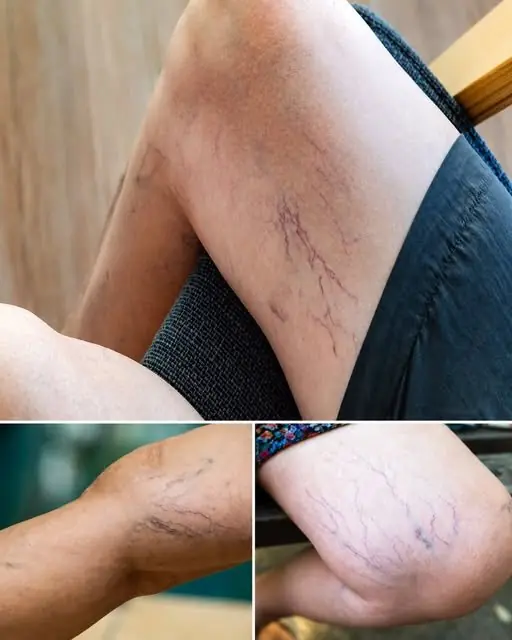
Noticing purple lines beneath the skin can be surprising, especially when they appear gradually or become more visible over time. Some people first notice them around their thighs, behind their knees, or along their calves. Others see thin, branching patterns that resemble tiny trees or spider webs.
These visible blood vessels are commonly called spider veins.
Spider veins are small, widened blood vessels close to the skin's surface. They can appear red, blue, or purple and are particularly common on the legs. Their branching appearance is the reason they are often compared to spider webs.
In many cases, spider veins are primarily a cosmetic concern. They usually do not cause pain or lead to serious complications by themselves. However, they can sometimes appear alongside other vein conditions, including chronic venous insufficiency.
It is important to distinguish spider veins from varicose veins because the two conditions do not look exactly the same.
Spider veins are generally thin, flat, and close to the surface. They may form delicate networks of red, blue, or purple lines.
Varicose veins, by contrast, are usually larger, swollen, twisted, and sometimes raised above the surrounding skin. They often appear as dark blue or purple cords beneath the skin, especially around the lower legs and ankles.
Why do these differences matter?
Because the appearance of a vein can provide clues about what is happening beneath the skin. Small superficial vessels may be harmless, while larger bulging veins can indicate that blood is not returning toward the heart as efficiently as it should.
Nevertheless, color alone cannot determine whether someone has a circulation problem. A purple line does not automatically mean that blood is dangerously trapped in the leg, nor does it prove that a blood clot is present.
Doctors consider several details when assessing visible veins. These include whether the vessels are flat or raised, whether they are spreading, whether the leg feels heavy or painful, and whether swelling or skin changes are present.
A person with a few small spider veins and no other symptoms may not need treatment. Someone with painful, swollen legs and prominent twisted veins may need a more detailed examination.
The most useful lesson is not to panic when purple veins appear. Instead, pay attention to changes and symptoms rather than relying on color alone.
If the veins are new, becoming more noticeable, or accompanied by discomfort, a healthcare professional can help determine whether they are simply superficial spider veins or part of a wider venous condition.
Chapter 2: Why Do These Veins Become More Visible?
The appearance of purple veins is influenced by several factors. Some are related to inherited characteristics, while others involve age, hormones, body weight, pregnancy, and daily habits.
One important factor is the way blood travels through the veins.
Veins carry blood from the body's tissues back toward the heart. In the legs, this process requires blood to move upward against gravity. Small one-way valves inside the veins help prevent blood from flowing backward.
When these valves work properly, they open to allow blood to move toward the heart and close to prevent it from flowing in the opposite direction.
However, when the valves become weakened or damaged, blood can flow backward and collect inside the veins. This increases pressure within the affected vessels, causing them to stretch, enlarge, and sometimes become twisted.
This process is known as venous reflux and is an important mechanism behind varicose veins.
Age is another contributing factor.
As people get older, vein walls and valves can gradually lose some of their strength and elasticity. This can make visible veins and varicose veins more likely to develop.
Family history also matters. If close relatives have varicose veins or prominent spider veins, a person may have a greater likelihood of experiencing similar changes.
Pregnancy can increase pressure on the veins.
During pregnancy, the body experiences changes in blood volume and hormone levels. The growing uterus can also place additional pressure on pelvic veins, making it harder for blood to return from the legs.
Some women notice new varicose veins during pregnancy. In certain cases, these improve after childbirth, although they may not disappear completely.
Prolonged sitting or standing can contribute as well.
People who spend many hours in one position may notice that their legs feel tired or heavy. When the calf muscles remain inactive, they do not assist blood circulation as effectively as they do during walking.