Discovering small red dots on your skin can be surprising and sometimes concerning. Whether they appear suddenly or gradually over time, many people wonder if these spots are harmless or a sign of an underlying health issue.
The truth is that red dots on the skin can develop for many different reasons. Some are completely benign and simply reflect normal changes in blood vessels or skin structure. Others may be linked to allergies, infections, irritation, or medical conditions that deserve attention.
Because skin is the body's largest organ, it often provides visible clues about what is happening internally. Understanding the possible causes of red dots can help you determine when simple observation is appropriate and when professional medical advice may be beneficial.
Why Do Red Dots Appear on the Skin?
Red spots develop when changes occur within the skin or blood vessels beneath its surface.
These Changes May Involve
-
Blood vessels
-
Inflammation
-
Immune reactions
-
Infections
-
Irritation
-
Skin growths
The appearance, size, texture, and location of the spots often provide clues about their cause.
Are All Red Dots a Cause for Concern?
Fortunately, most red spots on the skin are not serious.
Many Common Causes Are
-
Harmless
-
Temporary
-
Easily treated
-
Related to normal aging
However, certain patterns and accompanying symptoms may warrant medical evaluation.
Common Cause #1: Cherry Angiomas
One of the most common reasons adults develop small red dots is cherry angiomas.
What Are Cherry Angiomas?
Cherry angiomas are small clusters of blood vessels that form near the surface of the skin.
They Often Appear As
-
Bright red dots
-
Smooth, round spots
-
Small raised bumps
Common Locations
-
Chest
-
Abdomen
-
Back
-
Arms
Are They Dangerous?
In most cases, no.
Cherry angiomas are generally considered benign and become more common with age.
Common Cause #2: Heat Rash
Heat rash occurs when sweat becomes trapped beneath the skin.
It Often Develops During
-
Hot weather
-
High humidity
-
Intense exercise
Symptoms May Include
-
Tiny red bumps
-
Itching
-
Mild discomfort
-
Clusters of spots
Heat rash often improves when the skin cools and remains dry.
Common Cause #3: Allergic Reactions
Allergies can affect the skin in many ways.
Possible Triggers Include
-
Foods
-
Medications
-
Cosmetics
-
Soaps
-
Laundry detergents
-
Environmental allergens
Symptoms May Include
-
Red spots
-
Itching
-
Swelling
-
Hives
Identifying and avoiding triggers often helps reduce symptoms.
Common Cause #4: Contact Dermatitis
Contact dermatitis occurs when the skin reacts to a substance that touches it.
Common Triggers
-
Fragrances
-
Cleaning products
-
Metals
-
Certain plants
Symptoms
-
Red patches
-
Small red bumps
-
Burning sensation
-
Itching
Symptoms typically appear in areas that directly contacted the irritant.
Common Cause #5: Insect Bites
Mosquitoes, fleas, bed bugs, and other insects frequently cause red skin spots.
Signs May Include
-
Localized redness
-
Swelling
-
Itching
-
Small raised bumps
The pattern of bites often helps identify the source.
Common Cause #6: Folliculitis
Hair follicles can sometimes become inflamed.
This Condition Is Called
Folliculitis.
It May Result From
-
Friction
-
Shaving
-
Bacteria
-
Sweat
Appearance
Small red bumps often develop around hair follicles.
Sometimes they resemble acne.
Common Cause #7: Petechiae
Petechiae are tiny red or purple spots that result from small amounts of bleeding beneath the skin.
Characteristics Include
-
Very small size
-
Flat appearance
-
No blanching when pressed
Petechiae can occur after intense coughing, vomiting, or physical strain.
However
They may occasionally indicate an underlying medical condition and should be evaluated if they appear suddenly or extensively.
Common Cause #8: Eczema
Eczema is a common skin condition characterized by inflammation.
Symptoms May Include
-
Redness
-
Dryness
-
Itching
-
Small bumps
The condition often fluctuates over time.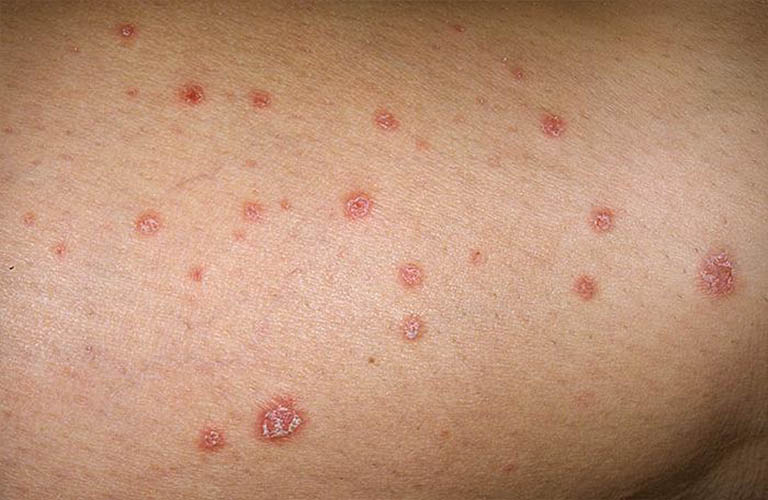
Common Cause #9: Psoriasis
Psoriasis is a chronic inflammatory skin condition.
Typical Features
-
Red patches
-
Silvery scales
-
Thickened skin
While psoriasis often appears as larger plaques, small red spots may occur in certain forms of the condition.
Common Cause #10: Viral Infections
Some viral illnesses can cause skin rashes.
Examples May Include
-
Certain childhood infections
-
Viral respiratory illnesses
-
Other viral conditions
Symptoms May Include
-
Red spots
-
Fever
-
Fatigue
-
General illness
Medical evaluation may be appropriate when systemic symptoms accompany a rash.
What Can the Location Tell You?
The location of red spots sometimes provides useful clues.
On the Arms and Legs
May be associated with:
-
Insect bites
-
Folliculitis
-
Allergies
On the Chest and Abdomen
Often associated with:
-
Cherry angiomas
-
Heat rash
-
Viral rashes
Around Hair Follicles
May suggest folliculitis.
In Skin Folds
Could be related to irritation, moisture, or fungal overgrowth.
Symptoms That Deserve Attention
Most red spots are harmless, but certain symptoms should not be ignored.
Seek Medical Advice If You Notice
-
Rapid spread of the rash
-
Severe itching
-
Pain
-
Fever
-
Swelling
-
Difficulty breathing
-
Unexplained bruising
-
Bleeding
-
Persistent changes
These symptoms may indicate a more significant issue.
How Doctors Evaluate Red Skin Spots
Healthcare professionals often consider:
Medical History
Questions about:
-
Allergies
-
Medications
-
Recent illnesses
-
Exposure history
Physical Examination
Examining:
-
Size
-
Color
-
Distribution
-
Texture
Additional Testing
In some cases:
-
Blood tests
-
Skin biopsies
-
Allergy testing
may be recommended.
Can Lifestyle Affect Skin Health?
Absolutely.
Healthy habits support overall skin function.
Important Factors Include
Hydration
Proper hydration helps maintain healthy skin.
Nutrition
A balanced diet provides nutrients needed for skin repair and maintenance.
Sleep
Adequate sleep supports normal immune and skin function.
Sun Protection
Excessive ultraviolet exposure can affect skin health.
Common Myths About Red Skin Spots
Myth 1: Every Red Spot Is Serious
Many causes are harmless.
Myth 2: Red Dots Always Mean Infection
Numerous non-infectious conditions can cause red spots.
Myth 3: Skin Changes Only Affect Older Adults
People of all ages may develop skin changes.
Myth 4: If It Doesn't Hurt, It Doesn't Matter
Some conditions produce little or no discomfort.
Preventing Some Common Causes
While not all skin conditions can be prevented, certain habits may help.
Consider
-
Maintaining good hygiene
-
Avoiding known allergens
-
Wearing breathable clothing
-
Protecting skin from excessive heat
-
Using gentle skincare products
These measures may reduce irritation and inflammation.
When to See a Dermatologist
Consider professional evaluation if:
Red Spots
-
Persist for several weeks
-
Continue increasing
-
Frequently recur
-
Change in appearance
-
Cause concern
A dermatologist can help determine the cause and recommend appropriate treatment.:format(webp)/da_noi_cham_do_nhu_not_ruoi_son_khong_ngua_co_nguy_hiem_khong_1_eef47c4d80.png)
Final Thoughts
Red dots on the skin can arise from a wide variety of causes, ranging from harmless cherry angiomas and heat rash to allergic reactions, infections, and inflammatory skin conditions. In many cases, these spots are not a cause for alarm and may resolve on their own or with simple treatment.
However, paying attention to accompanying symptoms, changes in appearance, and overall health is important. Skin often reflects what is happening within the body, and unusual or persistent changes deserve attention. If red spots spread rapidly, cause significant discomfort, or are accompanied by other symptoms such as fever or unexplained bruising, seeking medical evaluation is the safest approach. Understanding the possible causes is the first step toward protecting both skin health and overall well-being.