However, your nails can sometimes provide useful clues about your general health. Changes in their color, texture, thickness, or growth pattern may reflect ordinary aging, minor injuries, nutritional problems, skin conditions, or, in some cases, an underlying medical condition that needs attention.
That does not mean every line on a fingernail is a warning sign of serious disease. In fact, vertical ridges are common, particularly as people get older, and many nail changes have harmless explanations. The challenge is learning which changes are usually normal, which deserve monitoring, and which should be examined by a healthcare professional.
The most important principle is this: nail lines are clues, not diagnoses. Their direction, color, number, speed of appearance, and associated symptoms can help determine whether further evaluation is necessary.
Some changes may be linked to repeated minor trauma or normal aging. Others may occur after a significant illness, during certain medical treatments, or as a result of conditions affecting the skin, blood vessels, or nail-producing tissues.
In this article, we explore the most common types of nail lines, what may cause them, when they deserve medical attention, and how you can care for your nails without falling for misleading health claims.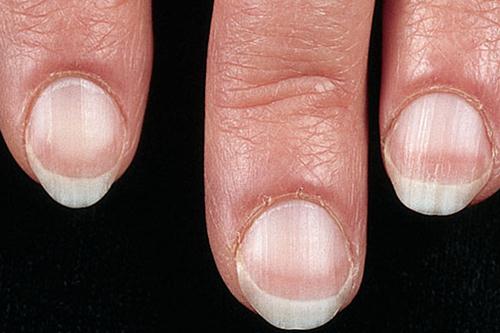
1. Vertical Lines on Your Nails: Are They Normal?
Vertical lines, sometimes called longitudinal ridges, run from the cuticle toward the tip of the fingernail. They may appear as faint lines that are noticeable only in certain lighting, or as deeper ridges that make the nail surface look uneven.
For many people, these ridges are a normal feature of nail growth.
As people age, nail texture can change. The nail plate may develop more pronounced ridges, become more brittle, or grow at a different rate. Similar changes can also be influenced by repeated exposure to water, household cleaning products, nail cosmetics, and minor injuries.
If the lines have appeared gradually over several years, affect multiple nails in a similar way, and are not accompanied by other symptoms, they are often not a cause for concern.
However, appearance alone cannot establish the cause. More pronounced ridges or sudden changes may sometimes be associated with conditions affecting the nail matrix, the tissue beneath the nail base that produces the nail plate.
What causes vertical ridges?
Several factors may contribute:
Normal aging: Vertical ridges often become more visible with age. They may occur alongside dry or brittle nails without indicating a serious illness.
Dryness and repeated exposure to water: Frequent handwashing, prolonged contact with water, detergents, and cleaning products can weaken the nail plate and surrounding skin. Changes in moisture can make existing ridges more noticeable.
Repeated minor trauma: Manicures, nail biting, picking at the cuticles, and repeated pressure on the fingertips may affect nail growth and texture.
Skin conditions: Some inflammatory skin disorders, including psoriasis and certain forms of eczema or lichen planus, can change the nail surface.
Other medical conditions: Occasionally, nail texture changes occur alongside broader health problems. The significance depends on the pattern of changes and the person's other symptoms.
Should you worry about every vertical line?
No. There is no reliable rule that says vertical ridges automatically indicate a vitamin deficiency, poor circulation, kidney disease, or another serious condition.
A common online claim is that vertical lines mean the body lacks a particular nutrient. Although nutritional deficiencies can affect nail growth, ridges alone cannot identify which nutrient—if any—is missing.
Avoid taking high-dose supplements simply because you notice ridges. Unnecessary supplementation can cause side effects and may delay the diagnosis of the actual problem.
If your nails have become increasingly brittle, if the ridges have developed rapidly, or if you also experience persistent fatigue, unexplained weight changes, skin changes, or other symptoms, speak with a healthcare professional.
The pattern matters far more than the mere presence of a line.
2. Horizontal Grooves: When Nail Growth Has Been Interrupted
Unlike vertical ridges, horizontal grooves cross the nail from one side to the other. Some are shallow and barely noticeable, while others form deep indentations that can be seen or felt easily.
These grooves are sometimes called Beau's lines.
They develop when nail growth temporarily slows or is interrupted. Because fingernails grow gradually from tissue beneath the cuticle, an event affecting nail production may leave a visible mark as the nail continues to grow.
The groove generally moves toward the fingertip over time as the nail grows.
What can cause Beau's lines?
Several circumstances can temporarily affect nail growth:
-
A significant illness accompanied by fever.
-
Major physical stress, surgery, or hospitalization.
-
Certain infections.
-
Serious nutritional or metabolic disturbances.
-
Some cancer treatments and other medications.
-
Local injury or inflammation affecting the nail-producing tissue.
For example, a person recovering from a substantial illness may notice a horizontal groove on several fingernails weeks later. The line may represent a period when nail growth slowed during the illness.
The groove does not necessarily mean that the disease is still active. It can be a visible reminder of something that happened earlier.
The position of the groove may offer a rough indication of timing, because nails grow gradually, but it cannot establish the exact date or cause by itself.
What if several nails have horizontal grooves?
When similar grooves appear across several nails, a healthcare professional may ask about recent illnesses, procedures, medication changes, and other significant events.
Multiple nails showing similar changes can suggest that something affected nail growth more generally rather than just one fingertip.
However, horizontal grooves can also result from repeated local trauma, and not every groove requires extensive testing.
If you notice deep grooves appearing suddenly, recurring lines without an obvious explanation, or nail changes accompanied by other symptoms, arrange a medical assessment.
Do not attempt to diagnose the underlying illness based only on the direction of the groove. A clinician may consider the nail appearance alongside your medical history and, when indicated, further examination or tests.
3. Dark Vertical Stripes: A Nail Change That Deserves Special Attention
A dark brown or black stripe running lengthwise along a nail may have several possible explanations. This pattern is sometimes called longitudinal melanonychia.
It occurs when pigment becomes visible within the nail plate. The stripe can be light brown, dark brown, gray, or nearly black, and its width and appearance may vary.
In many cases, the cause is benign.
For example, pigmentation may be associated with a person's natural skin pigmentation, certain medications, previous trauma, or benign activity of pigment-producing cells in the nail unit.
However, a new or changing dark stripe can occasionally be a sign of nail-unit melanoma, a type of melanoma that develops in the tissues responsible for producing or supporting the nail.
Although nail-unit melanoma is uncommon, missing it can have serious consequences. That makes unexplained pigment changes worth taking seriously.
What features should you watch for?
Arrange prompt medical assessment if you notice any of the following: