-
A new brown or black stripe affecting one nail without a clear explanation.
-
A stripe that gradually becomes wider, darker, or more irregular.
-
Pigmentation that varies considerably in color or width.
-
Pigment extending from the nail onto the surrounding skin, especially near the cuticle or sides of the nail.
-
Splitting, distortion, persistent bleeding, or a mass developing beneath or around the nail.
-
A dark stripe that changes noticeably over time.
These features do not prove that the stripe is melanoma. Trauma, benign pigmentation, and other conditions can produce similar appearances. However, they are reasons to obtain a professional examination rather than wait indefinitely.
The absence of these features also does not completely rule out a serious problem.
Melanoma can occur in people of different skin tones. It may appear on a fingernail or toenail, and it does not always resemble the familiar dark skin mole that many people associate with melanoma.
Can you tell whether a dark stripe is harmless at home?
Not reliably.
Photographs can help document changes, but lighting, nail polish, and camera quality can make pigmentation look different. A dermatologist may examine the nail using specialized magnification and determine whether further assessment or a biopsy is appropriate.
Do not try to scrape, cut, or remove a dark stripe yourself.
If the stripe is new, unexplained, or changing, arrange an appointment with a healthcare professional, preferably a dermatologist.
The goal is not to assume the worst. It is to avoid overlooking an uncommon but important possibility.
4. Tiny Red or Brown Lines Beneath the Nail
Have you ever noticed a thin reddish-brown line that appears to be trapped beneath a fingernail?
It may resemble a tiny splinter running lengthwise under the nail. These marks are commonly known as splinter hemorrhages because they can result from small amounts of blood leaking from tiny vessels beneath the nail plate.
They often appear as narrow red, reddish-brown, or dark lines.
In many cases, they are caused by minor trauma. You may have bumped your finger, injured the nail during a manicure, or applied pressure without remembering the exact event.
The mark can then move toward the nail tip as the nail grows.
When are splinter hemorrhages harmless?
An isolated mark on a nail after an obvious injury is often not a sign of a serious problem.
For example, a person who catches a finger in a drawer or repeatedly presses the nail against a hard surface may develop a small hemorrhage beneath it.
However, unexplained or recurrent splinter hemorrhages deserve attention, particularly if they affect several nails or appear alongside other symptoms.
In some circumstances, they can occur in association with conditions affecting blood vessels, the skin, the blood, or the heart.
Infective endocarditis, a serious infection involving the inner lining of the heart or its valves, is one condition that may occasionally be associated with splinter hemorrhages. However, this is not a common explanation for an isolated nail mark, and most individual marks should not be interpreted as evidence of a heart infection.
Other possible causes include inflammatory diseases, certain medications, and disorders affecting blood clotting.
When should you seek medical advice?
Arrange an assessment if the lines repeatedly appear without an obvious injury, if several nails are affected, or if you experience additional symptoms such as persistent fever, unusual fatigue, unexplained bruising, or feeling generally unwell.
Seek urgent medical attention if nail changes occur alongside serious symptoms such as difficulty breathing, fainting, confusion, or a high fever with severe illness.
Do not rely on the shape of one line to identify a specific disease. Splinter hemorrhages are a physical finding with multiple possible causes, and their meaning depends on the overall clinical picture.
5. White Spots and White Lines: Do They Mean You Need More Calcium?
White marks on fingernails are extremely common.
They may appear as small dots, cloudy patches, or narrow white lines. The medical term for certain forms of white discoloration of the nail is leukonychia.
In many people, small white spots develop after minor trauma to the nail matrix, particularly following pressure, an unnoticed bump, or manipulation of the cuticle.
They often grow outward with the nail and gradually disappear as the affected portion is trimmed away.
Are white spots caused by calcium deficiency?
Usually, that claim is misleading.
Small white spots on the nails are not a reliable indicator that someone needs more calcium. They are commonly associated with minor trauma rather than a specific nutrient deficiency.
Taking calcium supplements solely because you see white nail spots is therefore unlikely to address the cause.
Nutrition can influence nail health overall, and significant deficiencies may affect growth or texture. However, a white spot alone cannot identify a nutritional deficiency.
Other causes of white nail changes include certain infections, medication effects, and less common medical conditions.
If the white area affects much of the nail, appears across multiple nails, persists in an unusual pattern, or is accompanied by thickening, crumbling, or separation from the nail bed, seek medical advice.
A fungal nail infection may cause discoloration, thickening, brittleness, or debris beneath the nail, although its appearance varies.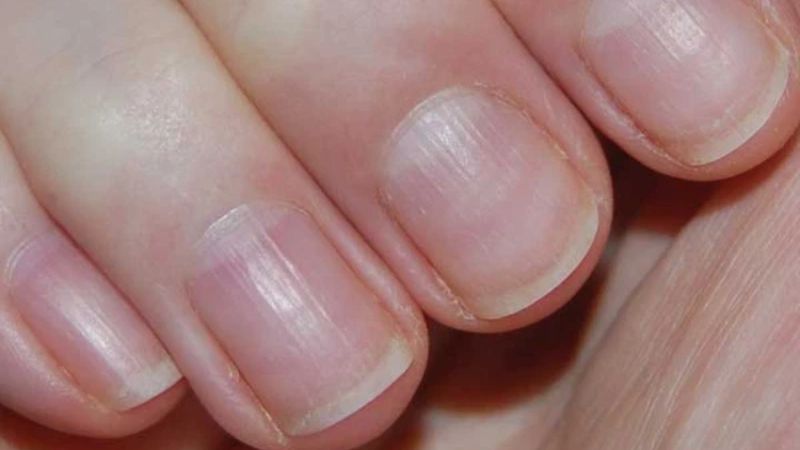
What can you do?
Avoid repeatedly pushing back or cutting the cuticles, and take care when filing or trimming your nails.
If you notice a small white spot after minor trauma and the nail otherwise looks healthy, it can often be monitored as it grows out.
If the changes are extensive, recurring, or unexplained, a healthcare professional can help determine whether further evaluation is needed.
The main lesson is that white marks are common and usually not an emergency, but persistent or unusual changes should not automatically be attributed to a lack of calcium.
6. Pale or White Nails: Could There Be an Underlying Health Problem?
A nail that looks unusually pale is different from a small white spot.
The nail bed normally has a pinkish appearance in many people because of the blood circulating beneath the nail plate. When several nails appear markedly paler than usual, there can be several explanations.
One possible cause is anemia, a condition in which the blood has a reduced capacity to carry oxygen, often because the number of healthy red blood cells or the amount of hemoglobin is too low.
Iron deficiency is a common cause of anemia, but other conditions can also contribute.
Some people with anemia experience fatigue, weakness, dizziness, headaches, or shortness of breath during ordinary activities. However, nail color alone cannot establish whether anemia is present.
Pale nails may also occur because of natural variation, lighting, nail polish, or changes unrelated to anemia.
Certain chronic illnesses can affect nail appearance, but no single color change reliably identifies a specific disorder.
What should you do if your nails appear pale?
If several nails have become noticeably pale and you also feel persistently tired, weak, dizzy, or short of breath, arrange a medical evaluation.
A healthcare professional may assess your overall symptoms and decide whether a blood test is appropriate.
Do not start iron supplements simply because your nails look pale. Iron is useful when deficiency is present, but taking it unnecessarily can cause side effects and may be harmful in certain circumstances.
If you have severe breathlessness, chest pain, fainting, or other concerning symptoms, seek urgent medical attention rather than relying on a nail examination.