If the condition is not properly managed, wounds known as venous ulcers may eventually develop.
These ulcers frequently occur near the inner ankle.
This is why dark patches should not simply be covered with cosmetic products when they are accompanied by swelling, itching, or skin breakdown.
Recognizing the condition early gives healthcare professionals an opportunity to address the underlying circulation problem and protect the skin from further damage.
Other Possible Causes of Dark Ankle Spots
Venous insufficiency is not the only explanation for ankle discoloration.
Other possibilities include:
Post-inflammatory hyperpigmentation: This occurs after inflammation or injury. Eczema, insect bites, scratches, and repeated irritation can leave darker patches after the original problem improves.
Contact dermatitis: Reactions to soaps, detergents, fragrances, footwear materials, or topical products may cause irritation followed by discoloration.
Diabetes-related skin changes: Diabetes can be associated with several skin conditions, including changes in pigmentation and circulation.
Bruising: Minor injuries can produce dark patches that gradually change color as the body breaks down and reabsorbs blood.
Other vascular conditions: Problems affecting blood vessels or circulation can produce changes in skin color that require individual assessment.
Because these conditions can look similar, it is not always possible to identify the cause from a photograph.
A proper examination becomes especially important when discoloration is spreading, painful, swollen, or associated with an open wound.
3. The One Simple Solution You Can Apply: A Gentle, Fragrance-Free Moisturizer
Now comes the question behind the headline: what should you actually rub onto your ankles?
For people experiencing dry, irritated skin, one of the safest starting points is a gentle, fragrance-free moisturizer containing ingredients that support the skin barrier.
This is not a vein-removal treatment.
It will not dissolve spider veins, repair damaged venous valves, or remove established hemosiderin staining.
However, it can help address one important part of the problem: dryness and irritation.
A simple moisturizer can make the skin feel more comfortable, reduce roughness, and help protect the outer skin barrier.
For someone whose ankles are dry and itchy, this may be a useful part of a broader care routine.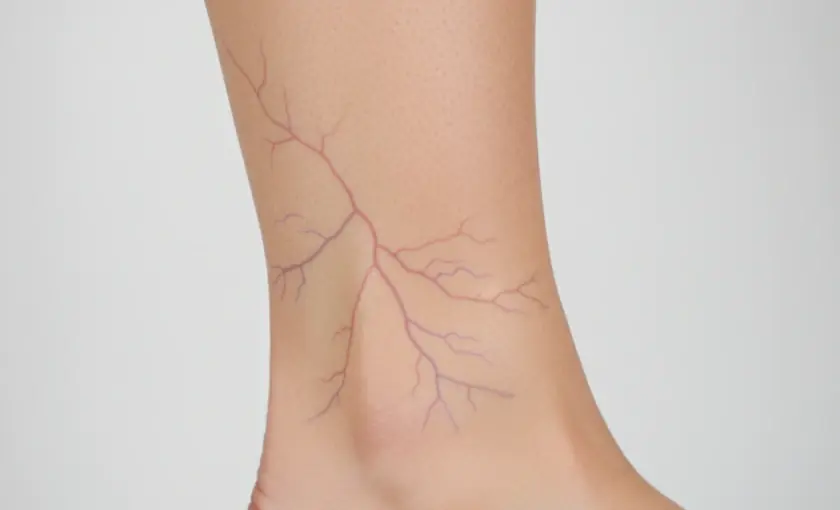
Why a Moisturizer Can Help
The outermost layer of the skin acts as a protective barrier.
It helps prevent excessive water loss and protects underlying tissues from environmental irritants.
When the skin becomes dry, this barrier can become less effective.
The result may include:
-
Tightness.
-
Flaking.
-
Roughness.
-
Itching.
-
Small cracks.
-
Increased sensitivity.
A suitable moisturizer helps replenish water and reduce moisture loss.
Some ingredients attract water into the outer skin layers.
Others create a protective layer that slows evaporation.
Together, these effects can improve skin comfort.
This is particularly relevant for people with stasis dermatitis because inflamed skin can become dry and sensitive.
Which Ingredients Are Worth Looking For?
Rather than purchasing an expensive product with a long list of unfamiliar ingredients, consider a simple formulation.
1. Glycerin
Glycerin is a humectant.
It attracts water and helps maintain moisture in the outer skin layers.
It is commonly included in lotions and creams designed for dry or sensitive skin.
2. Ceramides
Ceramides are lipids naturally found in the skin barrier.
Moisturizers containing ceramides can help support the barrier and reduce moisture loss.
They are particularly useful for skin that becomes dry, rough, or irritated.
3. Petrolatum
Petrolatum creates a protective layer that reduces water loss.
It is especially useful for very dry areas.
A small amount can be applied to intact skin after bathing or washing.
4. Hyaluronic Acid
Hyaluronic acid is another humectant used in skincare.
It helps attract and retain moisture in the outer skin layers.
It may improve the feeling of dryness when included in a suitable moisturizer.
5. Colloidal Oatmeal
Colloidal oatmeal is commonly used in products designed for dry or itchy skin.
It can help soothe irritation and support skin comfort.
People with allergies to particular ingredients should always check product labels before use.
How to Apply the Moisturizer Correctly
A gentle routine is usually more beneficial than aggressive rubbing.
Start by washing the ankles with lukewarm water.
Avoid very hot water because it can worsen dryness.
Pat the skin dry with a soft towel rather than rubbing vigorously.
While the skin is still slightly damp, apply a thin layer of fragrance-free moisturizer.
Spread it gently across the dry areas.
There is no need to massage deeply or apply strong pressure over visible veins.
If the skin is particularly dry, the moisturizer can be reapplied according to the product instructions.
People with sensitive skin may want to test a small amount on a limited area first.
If burning, redness, or itching develops, stop using the product.
What Results Can You Realistically Expect?
A moisturizer may improve dryness within several days of regular use.
Roughness and mild irritation may also become less noticeable.
However, the results depend on the underlying skin condition.
It is important to distinguish between three different outcomes:
-
Improved skin hydration.
-
Reduced irritation and itching.
-
Removal of visible veins or deep pigmentation.
The first two may improve with appropriate skincare.
The third generally requires different treatment.
If the dark patches are caused by hemosiderin deposits associated with chronic venous insufficiency, moisturizing alone will not remove them.
If the visible spider veins are caused by enlarged superficial blood vessels, applying cream will not make those vessels disappear.
This is the most important reason to be cautious about advertisements promising dramatic before-and-after transformations from a single homemade mixture.
A simple moisturizer can be useful, but it should never be presented as a cure for vascular disease.
4. Why Lemon Juice, Apple Cider Vinegar, and Baking Soda Are Not Good Vein Treatments
When people search for ways to remove dark spots around their ankles, they often encounter homemade recipes involving ingredients already found in the kitchen.
Lemon juice, apple cider vinegar, baking soda, toothpaste, and essential oils are frequently promoted as inexpensive solutions.
The attraction is understandable.
These ingredients are familiar, affordable, and easy to obtain.
However, there is a major difference between a substance that changes the appearance of the skin temporarily and a treatment that addresses the underlying cause of visible veins.
Spider veins are enlarged blood vessels beneath the skin.
Brown ankle discoloration may involve pigment deposited in the skin because of chronic venous pressure.
Neither problem can be reliably corrected by applying acidic or alkaline kitchen ingredients.
Lemon Juice: Why Natural Does Not Always Mean Gentle
Lemon juice contains citric acid and other naturally occurring compounds.
It is sometimes promoted as a natural ingredient for brightening dark spots.
However, applying lemon juice directly to the skin can cause irritation.
Citrus substances may also increase sensitivity to sunlight and contribute to a reaction known as phytophotodermatitis.
This reaction can produce redness, burning, blisters, and subsequent dark pigmentation.
For someone already dealing with discolored ankle skin, creating additional irritation may make the appearance worse.
Lemon juice also cannot reach or remove the enlarged blood vessels responsible for spider veins.
It is therefore not a reliable treatment for either condition.
Apple Cider Vinegar: No Proven Ability to Remove Spider Veins
Apple cider vinegar is another popular ingredient in homemade skincare recipes.
Some people believe that its acidity can improve circulation or dissolve visible veins.
There is no reliable clinical evidence that applying apple cider vinegar to the ankles removes spider veins or repairs venous valves.
Undiluted vinegar can irritate the skin and, in some circumstances, cause chemical burns.
The risk may be greater when it is applied repeatedly or covered with a dressing.
People with eczema, sensitive skin, or existing wounds should be particularly careful.
Baking Soda: A Poor Choice for Sensitive Ankles
Baking soda is alkaline, while healthy skin normally maintains a slightly acidic surface environment.
Applying baking soda repeatedly can interfere with the skin barrier.
Some people experience dryness, redness, itching, or irritation after using it.
It does not improve venous circulation and cannot eliminate spider veins.
Essential Oils and Strong Herbal Mixtures
Essential oils are sometimes promoted as natural circulation boosters.
Some contain aromatic compounds that can produce a cooling or warming sensation.
However, a sensation of warmth does not mean that blood flow through damaged veins has improved.
Certain essential oils can also cause allergic contact dermatitis.
This is particularly concerning for people with stasis dermatitis, because their skin may already be inflamed and vulnerable.
If a person wants to use a scented skincare product, it is better to discuss its suitability with a healthcare professional rather than assuming that a natural ingredient is automatically safe.