In some patients, a healthcare professional may also recommend an ankle-brachial index test.
This helps assess whether arterial blood flow to the legs is adequate.
The information can be particularly important before prescribing stronger compression stockings.
People with significant arterial disease may not be suitable candidates for certain compression levels.
This is why buying the strongest compression garment available is not a sensible approach.
The correct treatment should be based on the actual circulation problem.
11. A Simple Daily Routine for Ankles With Spider Veins and Dry, Discolored Skin
People often assume that improving the appearance of their ankles requires an expensive collection of products.
In reality, a simple routine may be more practical.
The following approach focuses on gentle skin care and habits that support venous health.
It is intended for people with intact skin and mild dryness, not for treating unexplained wounds, severe swelling, or an undiagnosed vascular condition.
Morning
Begin by washing the lower legs with lukewarm water.
Avoid harsh cleansers and heavily fragranced soaps.
Pat the skin dry.
Apply a fragrance-free moisturizer containing ingredients such as glycerin or ceramides.
If a healthcare professional has recommended compression stockings, put them on according to the instructions.
Choose comfortable footwear that does not rub against the ankles.
Try to include some walking or gentle movement during the morning.
During the Day
Avoid remaining in one position for several hours.
If your work involves sitting, take regular opportunities to stand and walk.
If you must stand for long periods, shift your weight and activate your calf muscles periodically.
Pay attention to swelling.
If the ankles become increasingly swollen or uncomfortable, discuss the pattern with a healthcare professional.
Do not assume that persistent swelling is simply a normal consequence of being busy.
Evening
After completing daily activities, take time to inspect the skin around the ankles.
Look for new discoloration, irritation, small wounds, or changes in the visible veins.
If appropriate, elevate the legs comfortably while resting.
Apply another layer of moisturizer if the skin remains dry.
Avoid vigorous massage over visible veins, painful areas, or swollen legs.
Massage should not be used to treat suspected blood clots.
If one leg suddenly becomes painful and swollen, seek urgent medical assessment instead.
Weekly
Look at both legs and compare their appearance.
Changes can be easier to recognize when you are familiar with the usual condition of your skin.
You may also take photographs in similar lighting to document gradual changes.
This can be useful during a medical appointment.
However, photographs should never replace an examination when concerning symptoms develop.
12. Common Mistakes That Can Make Ankle Discoloration Worse
Even when people are trying to improve their skin, certain habits can unintentionally create additional problems.
Understanding these mistakes can help protect sensitive skin.
Mistake 1: Expecting a Cream to Repair Damaged Veins
A cream can improve dryness and sometimes help with superficial pigmentation.
But it cannot repair a damaged venous valve.
It cannot reverse significant venous reflux.
It cannot remove an enlarged blood vessel.
People who expect these results may spend money on products that cannot deliver what they promise.
A more realistic approach is to use skincare for skin comfort and medical treatment for the underlying vein condition.
Mistake 2: Applying Too Many Products at Once
Using several creams, oils, exfoliants, and homemade mixtures simultaneously can increase the risk of irritation.
If the skin reacts, it may become difficult to identify which product caused the problem.
A simple routine with a gentle cleanser and moisturizer is often a better starting point.
New products should be introduced one at a time.
Mistake 3: Scratching Itchy Skin
Stasis dermatitis can cause persistent itching.
Scratching may damage the skin and create small openings.
These injuries can become infected, especially when the skin is already inflamed.
Keeping the skin moisturized and receiving appropriate treatment can help reduce the urge to scratch.
Mistake 4: Ignoring Swelling Because It Is Not Painful
Some people assume that swelling is harmless if it does not hurt.
However, persistent ankle swelling can be associated with venous insufficiency, heart failure, kidney problems, or other medical conditions.
New or unexplained swelling deserves attention even when it is painless.
Mistake 5: Wearing Compression Stockings Without Checking Whether They Are Appropriate
Compression garments can be helpful, but they are not suitable for every patient.
People with significant arterial circulation problems may need a different approach.
A medical assessment is particularly important when someone has diabetes, reduced sensation, cold feet, or known arterial disease.
Mistake 6: Waiting Until an Ulcer Develops
Dark ankle discoloration accompanied by swelling and itching may represent an early sign of venous skin disease.
Waiting until the skin breaks down can make treatment more difficult.
Recognizing persistent changes early gives patients a better opportunity to receive appropriate care.
13. Can Spider Veins and Dark Ankle Spots Be Prevented?
Not every case of spider veins or venous discoloration can be prevented.
Age, genetics, pregnancy, hormonal changes, and existing vein conditions can all influence their development.
However, certain habits may help reduce symptoms and support healthier legs.
Keep Your Legs Moving
Regular walking activates the calf muscles and supports venous return.
People who sit for long periods should make an effort to move regularly.
Even short walking breaks can be useful.
Avoid Unnecessary Pressure on the Legs
Comfortable clothing and footwear can make everyday movement easier.
Avoid garments that create excessive pressure around the waist, groin, or legs.
Maintain a Healthy Lifestyle
A balanced diet, regular physical activity, and avoiding smoking support overall cardiovascular health.
These habits cannot guarantee that spider veins will never develop, but they can help manage several factors associated with vascular disease.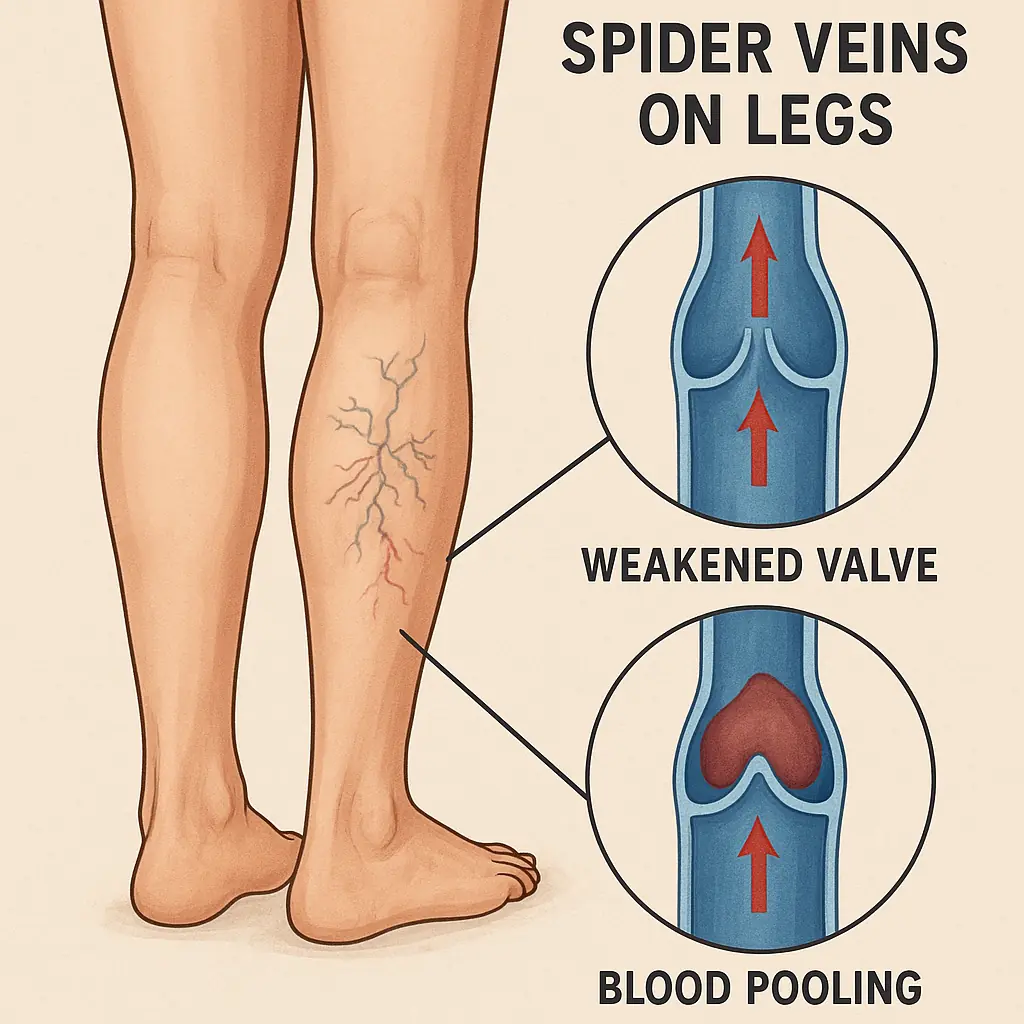
Pay Attention to Changes During Pregnancy
Pregnancy increases blood volume and changes hormone levels.
The growing uterus can also place pressure on veins that return blood from the legs.
Consequently, some women develop spider veins, varicose veins, or ankle swelling during pregnancy.
Many changes improve after delivery, although some veins remain visible.
Pregnant women experiencing significant swelling, pain, or sudden changes in one leg should seek medical advice rather than assuming everything is pregnancy-related.
Do Not Ignore Family History
People with close relatives who have experienced significant varicose veins or venous insufficiency may have a greater likelihood of developing similar problems.
If symptoms appear, early assessment can help determine whether additional care is needed.
The Truth About the One Solution: What Should You Actually Rub on Your Ankles?
The comparison photograph accompanying the headline suggests that a single application can transform an ankle covered in visible veins and dark discoloration into smooth, clear-looking skin.
It is an attractive promise.
But real medical treatment is more complicated.
If your main problem is dry, irritated skin, a gentle fragrance-free moisturizer containing glycerin, ceramides, or petrolatum is a sensible starting point.
If you have itchy or inflamed skin caused by venous stasis dermatitis, you may need medical treatment in addition to moisturization.
If you have spider veins, procedures such as sclerotherapy or laser treatment may offer more meaningful cosmetic improvement.
If you have brown discoloration caused by chronic venous insufficiency, the underlying circulation problem needs to be addressed before expecting substantial improvement in the skin.
There is no universal cream that can accomplish all these things.
The difference between a realistic skincare routine and a misleading home remedy is understanding what each treatment can actually do.
A moisturizer can make dry skin softer.
It cannot dissolve visible veins.
A cosmetic brightening product may improve certain superficial dark marks.
It cannot reliably remove iron-containing pigment associated with chronic venous disease.
Compression can help manage venous swelling when medically appropriate.
It does not guarantee that existing spider veins will disappear.
And professional vein treatment can reduce visible vessels, but it does not eliminate every risk factor that contributed to their development.
The most effective approach is therefore a combination of appropriate skincare, regular movement, assessment of circulation, and targeted treatment when necessary.
If your ankles have recently developed new brown patches, persistent swelling, or increasingly visible veins, consider arranging a medical examination.
Do not wait until the skin becomes painful or develops an open sore.
The earlier the underlying problem is recognized, the more opportunities there may be to protect the skin and manage the symptoms.
Your ankles deserve more than a cosmetic quick fix. A simple moisturizer may improve comfort, but understanding why the veins and dark spots appeared is the real first step toward healthier-looking legs.