This can produce redness, tenderness, swelling, and pain that resemble an infection.
Bacterial infection is also possible, particularly when the skin is damaged or the cyst has been squeezed or punctured.
Because several conditions can produce similar symptoms, appearance alone may not be enough to establish a diagnosis.
A rapidly growing lump, a hard or fixed mass, an unusual skin lesion, or a lump that repeatedly bleeds should be assessed by a healthcare professional rather than automatically treated as a harmless cyst.
4. Can You Treat a Sebaceous Cyst at Home?
Home care can sometimes help an uncomplicated cyst remain comfortable, particularly if it is mildly irritated.
However, it is important to understand the limits of home treatment.
Warm compresses may ease discomfort, but they do not reliably eliminate the cyst or remove its sac. A cyst may shrink temporarily, remain unchanged, or eventually become inflamed despite home care.
If you have a small lump that has not been diagnosed, consider getting it checked before assuming it is an epidermoid cyst.
For a previously diagnosed, uncomplicated cyst, the following measures may help.
Apply a warm, moist compress
A warm compress is one of the simplest ways to soothe a mildly uncomfortable cyst.
The warmth may help reduce discomfort and encourage natural drainage if the cyst opens on its own. However, it does not guarantee drainage and should not be used as a way to force the cyst to burst.
To apply a compress:
-
Wash your hands with soap and water.
-
Soak a clean washcloth in comfortably warm water.
-
Wring out excess water so the cloth is damp rather than dripping.
-
Place it gently over the area for approximately 10–15 minutes.
-
Repeat a few times a day if it feels soothing, using a clean cloth each time.
Avoid water that is hot enough to burn the skin. Do not press hard or massage the lump aggressively.
If the area becomes increasingly painful, red, or swollen, stop relying on home care and seek medical advice.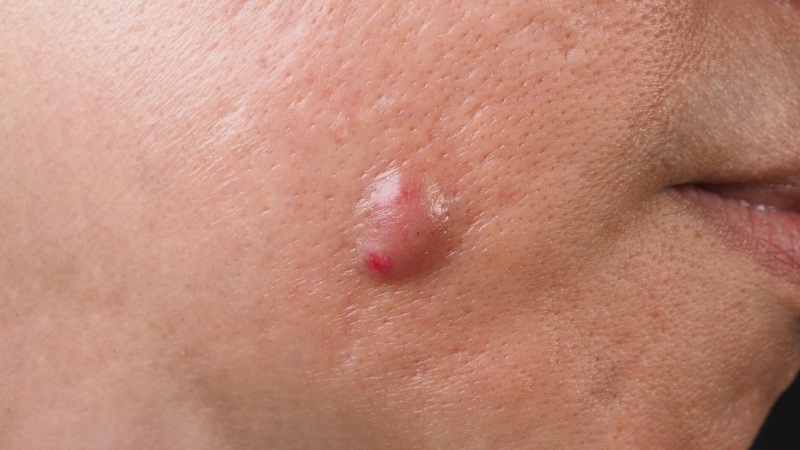
Keep the area clean
Gentle skin care can help protect the surface of the cyst and surrounding skin.
Wash the area with lukewarm water and a mild cleanser. Pat it dry rather than rubbing it vigorously.
Avoid harsh scrubs, abrasive brushes, and strong chemical products directly on the lump. These products can irritate the skin without removing the underlying cyst.
If the cyst is in an area that experiences friction, choose comfortable clothing and avoid repeated rubbing.
Good hygiene is useful for skin health, but it is not a guaranteed method of preventing or curing epidermoid cysts.
Protect a cyst that opens on its own
Sometimes a cyst ruptures or begins draining without intervention.
If this happens, wash your hands before touching the area. Gently clean the surrounding skin with clean water and mild soap, then cover the opening with a clean, non-stick dressing if needed.
Change the dressing whenever it becomes wet or dirty.
Do not squeeze the remaining lump to force out more material. The cyst wall may remain beneath the skin, and pressure can push its contents into surrounding tissue or worsen inflammation.
Seek medical advice if drainage continues, the area becomes increasingly painful, redness spreads, or you develop a fever.
Reduce friction and irritation
Repeated rubbing can aggravate a cyst, particularly when it is located beneath a bra strap, waistband, backpack strap, or another area exposed to pressure.
If possible, adjust clothing or equipment to avoid placing pressure directly over the lump.
Do not repeatedly touch, scratch, or check the cyst throughout the day. This can irritate the area and increase the risk of damaging the skin.
If the cyst interferes with daily activities, becomes repeatedly inflamed, or causes discomfort, a clinician can discuss treatment options.
5. Home Remedies You Should Avoid
Many online suggestions claim that household ingredients can dissolve cysts naturally. Unfortunately, there is little reliable evidence that these remedies remove the cyst sac, and some can cause additional skin problems.
Do not squeeze or pop the cyst
Squeezing may release some material, but it rarely removes the entire cyst wall.
As a result, the lump may return. Pressure can also rupture the cyst beneath the skin, trigger inflammation, and increase the risk of infection.
Even if material comes out easily, that does not mean the underlying problem has been resolved.