A tattoo featuring three dots arranged in a triangle may look simple, but it can carry a variety of meanings depending on the person, culture, location, and context.
Because of its association with certain groups and subcultures, the symbol has developed a somewhat mysterious reputation. Some people immediately associate it with criminal activity, while others use it for completely personal or symbolic reasons.
So, should you be concerned if you see someone with a three-point tattoo?
Not necessarily.
A tattoo alone cannot tell you who someone is, what they've done, or whether they pose any danger. Understanding the history and different interpretations of the symbol is much more useful than relying on stereotypes.
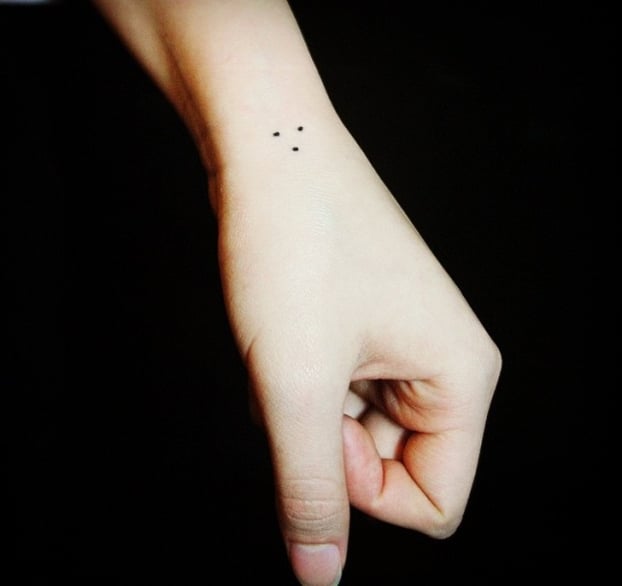
What Does a Three-Dot Tattoo Look Like?
The traditional design consists of three small dots arranged in a triangular pattern.
It is usually simple and doesn't contain elaborate artwork.
The dots may appear:
-
On the hand
-
Between the fingers
-
Near the wrist
-
On the face
-
On the arm
-
Near the eye
-
On other visible areas of the body
The location can sometimes provide additional context, but it still doesn't establish a definite meaning.
Two people can have nearly identical three-dot tattoos while using them for completely different reasons.
One Common Association: "Mi Vida Loca"
One of the best-known interpretations of the three-dot tattoo is the Spanish phrase "mi vida loca," meaning "my crazy life."
This interpretation has been associated with certain Latino and Chicano communities and, in some contexts, with gang or prison culture.
The three dots can represent a lifestyle characterized by unpredictability, rebellion, or life outside conventional expectations.
However, the meaning isn't universal.
Someone with this tattoo may be referencing the phrase without being involved in criminal activity.
They may simply identify with the idea of living an unconventional life.
The Prison and Gang Connection
The three-dot symbol has also been associated with prison culture and gangs in some regions.
This is one reason the tattoo has developed such a dramatic reputation.
Historically, tattoos in prison environments could communicate identity, affiliation, beliefs, experiences, or personal philosophy.
A three-dot tattoo may therefore have been used in certain environments to signal a particular attitude or connection.
But here's the important part:
There is no universal tattoo dictionary that applies to everyone.
Tattoo meanings can vary considerably between countries, cities, prison systems, gangs, generations, and individuals.
A symbol associated with one group in one location may have a completely different meaning somewhere else.
A Tattoo Doesn't Automatically Mean Someone Is Dangerous
This point is especially important.
It can be tempting to see a three-dot tattoo and immediately assume that the person is involved in crime.
That's not a reliable conclusion.
People get tattoos for countless reasons.
Some choose symbols because they like the design.
Others choose them because of personal experiences.
Some use tattoos to represent family, friendship, independence, spirituality, or important periods of their lives.
A three-dot tattoo could therefore reflect a person's personal story rather than membership in any organization.
You cannot determine someone's character from a tattoo alone.
Why Context Matters
If you're genuinely trying to understand the meaning behind a tattoo, context is far more informative than the symbol itself.
Consider the overall design.
Are the three dots accompanied by other symbols?
Are there words or numbers nearby?
Where is the tattoo located?
Is it part of a larger piece?
Does the person have other tattoos that provide context?
Even then, interpretation remains uncertain unless the person explains its meaning.
The safest assumption is that the tattoo belongs to the person who chose it, and they are the best source for its personal significance.
Three Dots Can Also Have Completely Personal Meanings
Not every three-dot tattoo has a historical or criminal association.
Someone might use three dots to represent:
-
Three important people
-
Family members
-
Past, present, and future
-
Mind, body, and spirit
-
A personal life philosophy
-
A significant period in their life
-
A reminder of a difficult experience
-
Three values they consider important
The possibilities are almost endless.
Minimalist tattoos are particularly open to personal interpretation because the design itself contains very little information.
The Symbol Can Mean Different Things in Different Places
Cultural context is extremely important.
A tattoo that carries one meaning in the United States may not carry the same meaning in Mexico, Europe, Asia, or elsewhere.
Even within the same country, interpretations can vary between communities.
This is common with tattoo symbolism generally.
A spiderweb, crown, dagger, rose, number, or set of dots can have completely different associations depending on who wears it and where they are.
That's why assuming that every person with the same tattoo belongs to the same group is unreliable.

What About the Three Dots Around the Eye?
Three dots tattooed near the eye can attract particular attention because the placement makes the symbol highly visible.
Some people may associate this placement with gang or prison culture.
However, placement alone still doesn't provide enough information to determine someone's background.
People choose facial tattoos for many different reasons, including aesthetics, cultural identity, personal expression, or simply because they want a highly visible design.
It is better to avoid making assumptions based solely on appearance.
Why Tattoos Were Historically Used as Identity Markers
Tattoos have been used for centuries to communicate identity.
Depending on the culture, tattoos have represented:
-
Family
-
Social status
-
Religion
-
Military service
-
Personal achievements
-
Prison experiences
-
Group membership
-
Cultural heritage
-
Individual beliefs
In environments where written records or formal identification systems were limited, body markings could become powerful forms of communication.
This history helps explain why some tattoo designs eventually developed strong cultural associations.
The three-dot tattoo is one example of a symbol whose meaning has evolved through different communities.
Should You "Run" If You See One?
Probably not.
The dramatic idea that anyone with a three-point tattoo is automatically dangerous is an oversimplification.
If you're in an unfamiliar situation and someone is behaving aggressively or threateningly, the behavior itself is what matters—not whether they have a tattoo.
A tattoo isn't a reliable indicator of someone's intentions.
If you feel genuinely unsafe around someone, create distance and seek help based on their actions and the circumstances.
But there's no sensible reason to assume that a stranger is dangerous simply because they have three dots tattooed somewhere on their body.
The Difference Between Symbolism and Reality
A symbol can have a documented association with a particular group without meaning that every person who uses it belongs to that group.
This distinction matters.
For example, someone might choose a tattoo because they saw it online, liked its minimalist appearance, or connected with one interpretation of the design.
They may have no knowledge of its historical associations at all.
This is especially common in the modern tattoo world, where designs spread rapidly through social media and popular culture.
Symbols can travel far beyond their original communities.
What If You're Considering Getting One?
If you're thinking about getting a three-dot tattoo yourself, it's worth researching its cultural associations before committing.
A tattoo may remain on your body for decades, and a design that seems harmless to you could carry a very different meaning to someone familiar with a particular subculture.
This doesn't mean you can't get it.
It simply means you should understand the possible interpretations.
Ask yourself:
What does the symbol mean to me?
Do I understand its cultural associations?
Could its placement change how people interpret it?
Am I comfortable with those possible interpretations?
Taking a little time to research can prevent misunderstandings later.
Why Simple Tattoos Can Have Complicated Histories
One fascinating thing about tattoos is that complexity doesn't always come from the design itself.
Three tiny dots may look almost meaningless.
Yet those three marks can carry decades of cultural history.
They can represent rebellion to one person, friendship to another, and simply an attractive minimalist design to someone else.
This is why tattoos are more than decoration.
They can become visual shorthand for stories, beliefs, identities, and experiences.
But shorthand only works when both people understand the same language.
And with tattoos, that language isn't universal.
Don't Judge a Person by a Symbol
Perhaps the biggest lesson behind the three-dot tattoo is broader than the tattoo itself.
Humans naturally look for shortcuts when evaluating strangers.
We notice clothing.
Haircuts.
Piercings.
Tattoos.
Body language.
And we quickly form assumptions.
Sometimes those assumptions are useful.
But sometimes they're completely wrong.
A tattoo can tell you that someone chose a particular design.
It cannot tell you their entire personality.
It cannot tell you whether they're kind or cruel.
It cannot tell you whether they're trustworthy.
And it certainly cannot tell you whether you should automatically be afraid of them.
Behavior and circumstances matter far more than a symbol.
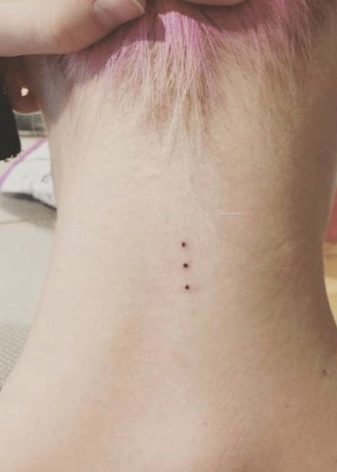
Final Thoughts
A three-point or three-dot tattoo is one of those designs surrounded by mystery because it has been associated with several different cultures and subcultures.
In some contexts, it has been connected with "mi vida loca" and certain elements of prison or gang culture.
In other cases, it may represent something entirely personal.
It can symbolize family, important life experiences, personal beliefs, or simply a person's preferred aesthetic.
That's why seeing someone with a three-dot tattoo shouldn't automatically trigger fear.
Don't judge the person based on the tattoo alone.
If you're curious about its meaning, the only reliable way to know is to understand the context—or, when appropriate, ask the person themselves.
A few tiny dots can carry a surprisingly complicated history.
But they don't tell the whole story of the person wearing them.