Folliculitis
Inflammation around hair follicles can produce small red bumps or pustules and may sometimes resemble acne.
Contact dermatitis
A reaction to a skincare product, detergent, fragrance, cosmetic, or another substance can cause redness, itching, burning, or bumps.
Perioral dermatitis
This condition can cause small inflammatory bumps around the mouth and sometimes the nose or eyes.
Rosacea
Rosacea can cause persistent facial redness and inflammatory bumps, particularly around the central face.
Irritant dermatitis
Overuse of exfoliating acids, retinoids, scrubs, or other irritating products can damage the skin barrier and cause redness and sensitivity.
Because these conditions can overlap in appearance, treatment should be based on the actual diagnosis rather than a photograph or social-media post.
10. Avoid Scrubbing or Picking the Bumps
When the skin suddenly looks inflamed, the natural reaction may be to attack the problem.
People may scrub harder.
They may squeeze pimples.
They may apply alcohol or strong acids.
They may use several acne treatments simultaneously.
Unfortunately, this can make irritation worse.
Picking and squeezing inflammatory lesions can increase inflammation and may increase the risk of post-inflammatory hyperpigmentation and scarring.
A better approach is usually to keep the routine simple while determining what's happening.
What Can You Do Tonight?
If your skin is suddenly irritated or breaking out, start with the basics.
Cleanse gently
Use a mild cleanser and lukewarm water.
Avoid aggressive scrubbing.
Don't overload your skin
If your face is irritated, consider temporarily simplifying your routine rather than adding several new treatments.
Change your pillowcase
A clean pillowcase is a simple step, especially if you have been sweating heavily or using hair and skincare products.
Keep hair away from your face
If you use oils or styling products, minimize prolonged contact between those products and facial skin.
Avoid picking
Allow inflamed lesions to settle rather than repeatedly touching them.
Pay attention to patterns
Take note of when the changes occur and what products, activities, foods, or environmental factors were present beforehand.
Be Careful With “Natural” Acne Remedies
When people see sudden breakouts, they sometimes turn to home remedies.
Lemon juice, toothpaste, baking soda, vinegar, essential oils, and rubbing alcohol are often promoted online as quick solutions.
These substances can irritate or damage the skin barrier.
“Natural” does not automatically mean safe for facial skin.
If you're dealing with persistent acne, evidence-based treatments are generally a better option than experimenting with harsh household ingredients.
When Should You See a Dermatologist?
Occasional pimples are common.
But professional evaluation may be appropriate when breakouts are:
Persistent or repeatedly returning
Painful or deeply inflamed
Leaving scars or dark marks
Suddenly appearing in large numbers
Associated with significant itching or burning
Not improving with a reasonable skincare routine
You should also seek medical advice if the skin changes appeared soon after starting a medication or if you suspect an allergic reaction.
A dermatologist can distinguish acne from conditions that resemble it and recommend treatment appropriate for your skin.
What If the Skin Change Happened Very Suddenly?
A sudden rash deserves a slightly different approach from ordinary acne.
If the face becomes rapidly swollen, intensely itchy, develops widespread hives, or is accompanied by swelling of the lips or tongue, difficulty breathing, dizziness, or fainting, seek emergency medical care immediately because these can be signs of a serious allergic reaction.
Similarly, rapidly worsening facial swelling, severe pain, fever, or spreading redness can require prompt medical evaluation.
The Bigger Lesson: Look for Patterns
One morning of unusual skin doesn't necessarily tell you much.
A recurring pattern can tell you much more.
Suppose you repeatedly develop bumps on one side of your face.
Then consider:
Which side do you sleep on?
How often do you change your pillowcase?
Does your hair touch that area?
Are you using a new hair or skincare product?
Do you sweat heavily during sleep?
Are you wearing makeup overnight?
Does the problem correspond with hormonal changes?
These questions can help narrow down possible contributors.
Healthy Skin Isn't About Perfect Skin
It's also important to remember that acne and facial blemishes aren't a sign that someone is dirty or unhealthy.
Acne is a common inflammatory skin condition influenced by genetics, hormones, sebum production, follicular changes, and other factors.
People with excellent hygiene can still develop severe acne.
Likewise, someone can have a very simple skincare routine and have perfectly healthy skin.
The goal shouldn't be to eliminate every pore, spot, or temporary blemish.
The goal is healthy, comfortable skin and appropriate treatment when a problem persists.
Final Thoughts
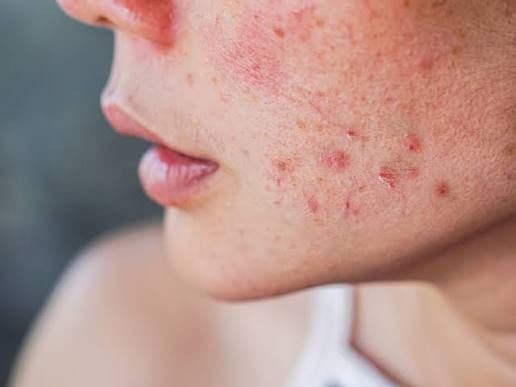
The skin changes visible in the photograph are striking, but there is no way to determine the exact cause from the image alone.
Acne is one possibility, while irritation, folliculitis, contact dermatitis, perioral dermatitis, rosacea, and other conditions can sometimes produce similar-looking changes.
If your skin seems worse after sleeping, examine the entire nighttime environment.
Pillowcases, friction, sweat, heat, hair products, cosmetics, skincare products, and hormonal changes may all play a role in certain people.
But don't assume that a single factor is responsible.
Instead, look for patterns and make changes gradually.
Keep your routine gentle, avoid picking or harsh home remedies, and seek professional advice if the condition is persistent, painful, worsening, or leaving scars.
Sometimes the cause of a skin flare-up isn't mysterious at all.
Your skin may simply be reacting to something it encounters every night and identifying that pattern can be the first step toward calmer, healthier skin.