When a whale washed ashore in a small coastal town, it immediately became the center of attention. Locals and visitors alike flocked to the beach, drawn by the rare and tragic sight of such a majestic creature lying motionless on the sand. What began as a collective moment of sadness, however, quickly transformed into one of shock and disbelief as onlookers discovered something utterly unexpected inside the whale's mouth.
As marine biologists and conservationists arrived to investigate the cause of the whale's stranding and death, they made a startling discovery that left the crowd in silence. Lodged within the whale's mouth was a massive accumulation of plastic waste—everything from plastic bags and straws to bottles and fishing nets. This grim find underscored a haunting reality: the oceans are drowning in plastic, and marine life is paying the price.
The sight of the whale, a victim of human negligence, sparked a wave of emotions among the spectators. Many expressed feelings of guilt and helplessness, confronted with the tangible consequences of society's reliance on single-use plastics. The incident served as a poignant reminder of the interconnectedness of human actions and the health of marine ecosystems.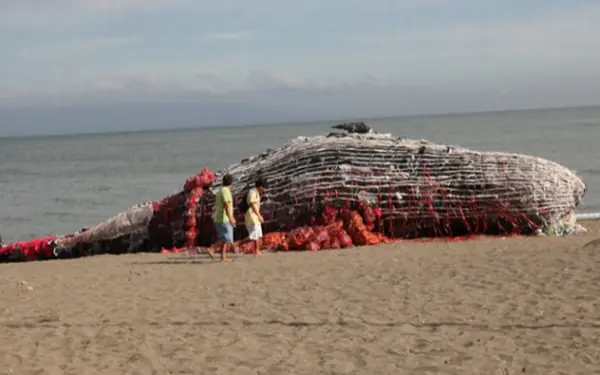
The discovery also ignited a fervent discussion about environmental responsibility and the urgent need for change. Social media platforms buzzed with images and stories from the beach, propelling the issue of marine pollution into the spotlight. The tragedy of the beached whale became a rallying cry for environmental advocacy groups, who seized the opportunity to educate the public about the devastating impact of plastic pollution on ocean life.
In the days that followed, the community took action. Beach clean-up initiatives saw record participation, local businesses began reassessing their use of plastics, and schools incorporated lessons on environmental conservation into their curricula. The whale's death, while tragic, sparked a movement within the town—a collective commitment to prevent such a loss from happening again.
Scientists took samples from the whale and conducted autopsies to further understand the extent of the impact of plastics on marine species. Their findings added to a growing body of evidence that plastic pollution is not just a local issue but a global crisis that requires immediate and concerted action from individuals, corporations, and governments worldwide.
The story of the whale that washed ashore, and the shocking discovery inside its mouth, became a powerful symbol of the environmental challenges facing our planet. It served as a wake-up call, reminding us of the urgent need to rethink our relationship with plastic and to take tangible steps towards protecting the oceans, the Earth's most precious resource. Through tragedy, a new hope emerged—a community galvanized towards action, determined to make a difference for the sake of all marine life and the health of our planet.