Chapter 1: A Jewelry Sale That Could Turn Into a Nightmare
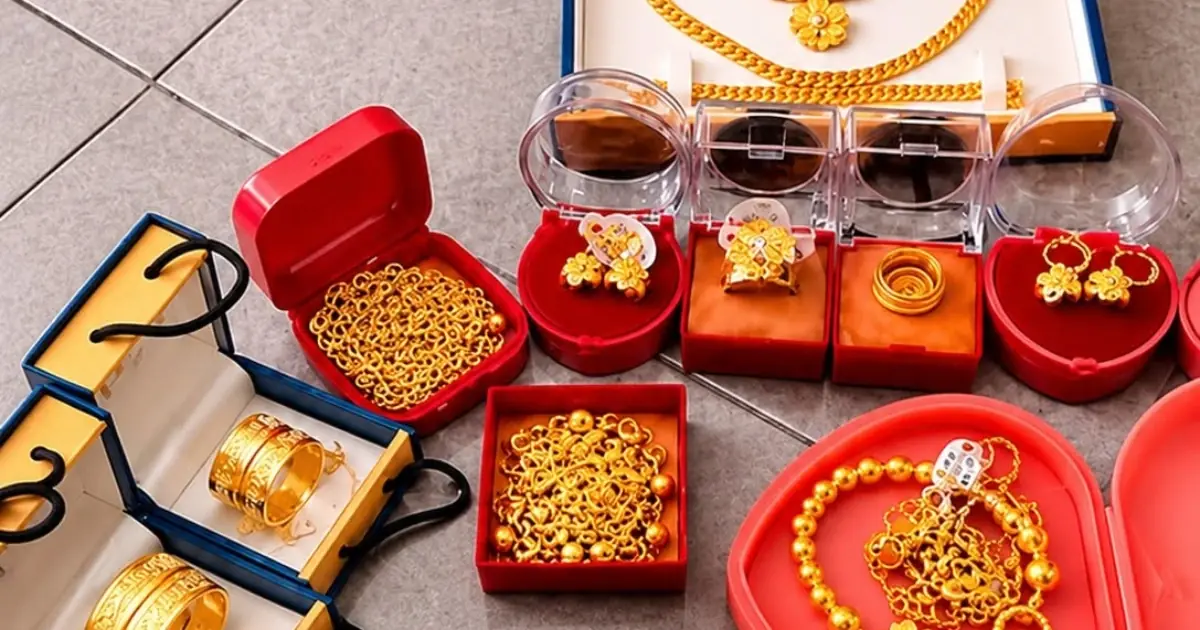
Gold jewelry often represents far more than its market value. For many families, necklaces, bracelets, rings, and earrings are treasured possessions collected over many years. Some pieces are wedding gifts, while others are inherited from parents or grandparents.
When financial pressure becomes difficult to manage, selling some of these items may seem like a reasonable decision.
A woman may decide to sell her gold to cover household expenses, pay unexpected bills, support a family member, or simply convert unused jewelry into money. She may carefully arrange her collection, select the pieces she no longer wears, and visit a buyer expecting a straightforward transaction.
But what happens when the person on the other side of the counter is not trustworthy?
The headline accompanying the image describes a woman who sells her gold jewelry but becomes the victim of a scam. The available image does not provide the exact circumstances, so the details of her experience cannot be independently established here.
Nevertheless, the situation highlights a serious concern: selling valuable jewelry can expose people to financial fraud when the transaction is not handled carefully.
Gold is particularly attractive to dishonest buyers because it has an established market value and can often be resold relatively quickly. Its value also makes even a small transaction potentially significant for someone who depends on the money.
A dishonest buyer may attempt to manipulate the seller's understanding of the jewelry's value, pressure her into accepting an unfair offer, or use a payment method that does not provide genuine protection.
In some cases, the deception may begin before the seller even meets the buyer.
A person might advertise an attractive price online, promise an immediate payment, or claim to represent a reputable jewelry business. The seller may feel reassured by professional-looking messages, photographs, or a convincing explanation.
Unfortunately, appearances alone cannot establish whether a buyer is legitimate.
The danger is not limited to people who sell gold for the first time. Even someone who has previously completed several successful transactions can become vulnerable when a scammer introduces an unfamiliar payment method or creates a sense of urgency.
The emotional consequences can be just as painful as the financial loss.
A woman who sells inherited jewelry may feel that she has lost a connection to her family. Someone who sells a wedding necklace may regret the decision if the money disappears before it can be used for its intended purpose.
That is why gold transactions deserve careful attention.
Before handing over any jewelry, sellers should understand how the gold will be assessed, how the price will be calculated, and how payment will be confirmed.
A legitimate transaction should allow the seller to ask questions, compare offers, and take time to make a decision.
No one should feel forced to surrender valuable possessions simply because a buyer insists that an opportunity will disappear within minutes.
The most important lesson is simple: a gold sale should never depend entirely on trust in a stranger.
A careful seller can reduce the risk by choosing an established business, obtaining a clear valuation, and confirming that the agreed payment has genuinely arrived.
What appears to be an ordinary jewelry sale can involve substantial financial consequences. Taking a few extra precautions before the transaction may help prevent a painful and avoidable loss.
Chapter 2: The Tricks That Can Turn a Gold Sale Into a Scam
Gold-selling scams can take several forms. Some involve dishonest buyers who approach sellers directly, while others use online advertisements, fake payment notifications, or misleading business identities.
One common danger is the promise of an unusually attractive price.
A buyer may claim that they are willing to pay significantly more than other jewelry shops. The offer can sound appealing, particularly when the seller urgently needs money.
However, a surprisingly generous offer should always be examined carefully.
The buyer may later introduce unexpected deductions, claim that the jewelry is not genuine, or insist that the original agreement must be changed.
Another risk involves fake payment confirmations.
A dishonest buyer may show the seller a screenshot, email, or message claiming that money has been transferred. The seller may see what appears to be a successful transaction and hand over the jewelry.
But a screenshot is not proof that funds have actually reached the seller's account.
Payment notifications can be fabricated, edited, or made to resemble messages from legitimate financial institutions.
Sellers should verify the payment independently through their own banking application or by contacting their bank through an official channel.
They should never rely exclusively on a notification displayed on the buyer's phone.
Online transactions can create additional risks.
A seller may advertise jewelry on a social media platform and receive a message from someone claiming to be interested in purchasing it. The buyer may ask the seller to use an unfamiliar payment service or provide personal information to receive the money.
Sometimes, the supposed buyer may send a fake payment link and claim that the seller must pay a small fee before receiving the funds.