The fire had been extinguished relatively quickly, but the questions it left behind were considerably more complicated.
Residents wanted to understand what had happened. Some knew the family personally, while others recognized the address or had seen the children around town. In a small community, even people who were not close friends often share a sense of connection through schools, local events, and everyday encounters.
Yet authorities initially provided very little information.
The Mower County Sheriff's Office did not immediately disclose the identities of the victims or explain the circumstances of their deaths. Investigators needed time to complete the necessary examinations and establish the facts before making public statements.
For the community, those days were filled with uncertainty.
People could see the police presence, but they could not yet understand the full tragedy unfolding behind the investigation.
Then, on Wednesday, November 11, Sheriff Steve Sandvik released the names of the four victims.
The 38-year-old man was identified as Levi David Christenson.
The three boys found inside the residence were his sons: 14-year-old twin brothers Oliver James Christenson and Felix Richard Christenson, and their seven-year-old younger brother, Calvin Jones Christenson.
Suddenly, the investigation was no longer about four unidentified victims.
It was about a father and his three children.
The names brought a human dimension to the tragedy that no initial emergency report could adequately convey. Oliver and Felix were teenagers, just fourteen years old, standing at an age when friendships, school experiences, hobbies, and plans for the future were beginning to take on greater importance.
Calvin was only seven.
At that age, childhood is still filled with discoveries. Ordinary experiences—playing outside, spending time with family, attending school, and enjoying small everyday routines—can become the most meaningful parts of a child's world.
The three brothers were part of the Grand Meadow community. Their lives had been connected to the same local environment that now found itself struggling to understand what had happened.
But the most devastating revelation was still to come.
According to reporting by MPR News, authorities determined that the fire had not caused the deaths of the four family members.
Medical examinations established that all three boys had died from gunshot wounds. Their deaths were officially classified as homicides.
Their father, Levi David Christenson, had also died from a gunshot wound. Investigators determined that his injury was self-inflicted, and his death was ruled a suicide.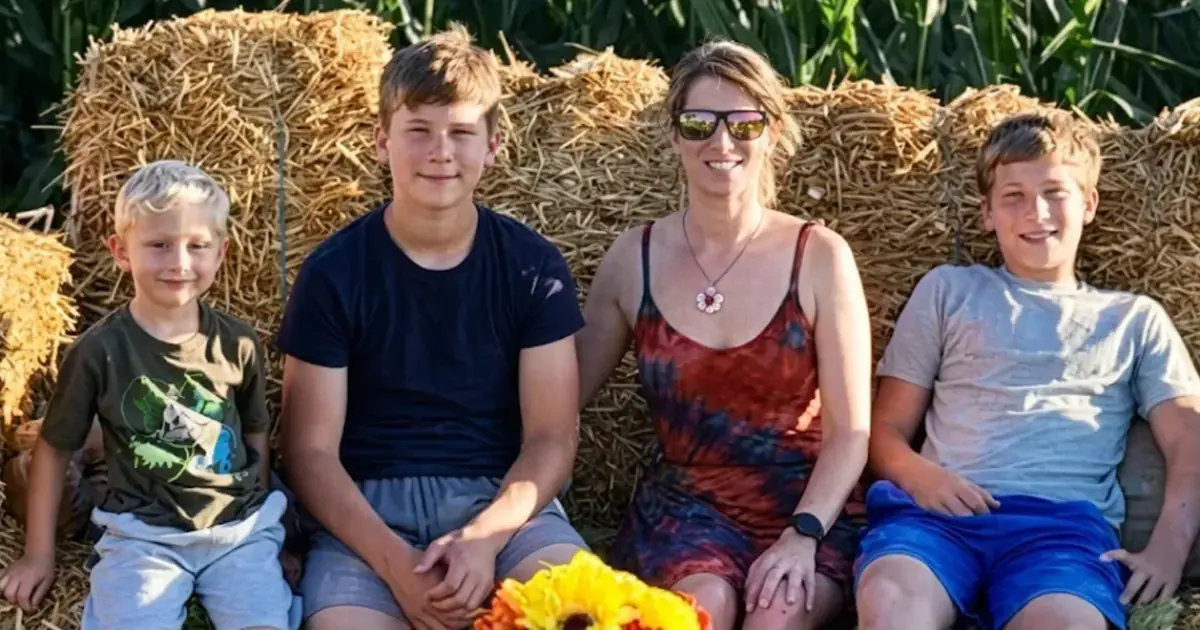
The information transformed the case into a murder-suicide investigation.
What had initially appeared to be a tragic residential fire was now understood as a far more disturbing sequence of events involving the deaths of three children and their father.
The fire was no longer the central explanation for the tragedy. Instead, investigators had to examine the circumstances surrounding the shootings and determine how the blaze fit into the overall timeline.
For residents who had been hoping that the children might somehow have survived, the announcement brought a devastating finality.
Three brothers had died inside their own home.
Their father was also dead.
And the mother of the boys was left facing a loss that no parent should ever have to imagine.
The official announcement answered one important question: how the victims had died.
But it did not explain why.
Authorities had not disclosed a motive, and the public still had no clear account of what had happened inside the house before the neighbor noticed smoke rising at 11:29 that Sunday morning.
There were no immediate answers about the events leading up to the shootings, the timing of the fire, or what might have happened during the family's final hours together.
In the absence of an explanation, the community was left confronting the same unbearable question.
How could a family tragedy of this magnitude unfold behind the closed doors of an ordinary home?
And as investigators continued their work, attention gradually shifted toward the people whose lives had been most deeply affected—especially the boys' mother, Lauren Hosp.
CHAPTER 3: BEHIND THE CRIME SCENE TAPE, INVESTIGATORS FACED QUESTIONS THAT HAD NO EASY ANSWERSThe announcement of the victims' identities and causes of death marked a major development in the investigation, but it did not bring the case to a conclusion.
In many ways, it introduced an entirely new set of questions.
Once authorities determined that the three boys had died from gunshot wounds and that their father had died from a self-inflicted injury, investigators needed to reconstruct the events that had taken place inside the residence.
The house on First Street Northeast had become more than the location of a fire.
It was now a complex crime scene.
To understand what happened, local deputies were joined by specialists from the Minnesota State Fire Marshal's Office and the Minnesota Bureau of Criminal Apprehension.