If it is inside your home or trapped in an area where it cannot safely leave, contact an appropriate local wildlife or animal-control service for assistance.
Not Every Snake Is Dangerous
This is another important distinction.
Many snake species are nonvenomous and play useful ecological roles.
They may help control rodents and other populations.
However, you should never handle an unfamiliar snake simply because you believe it is harmless.
Snake species vary considerably by region.
If you live in an area with venomous species, identification should be left to someone with appropriate expertise.
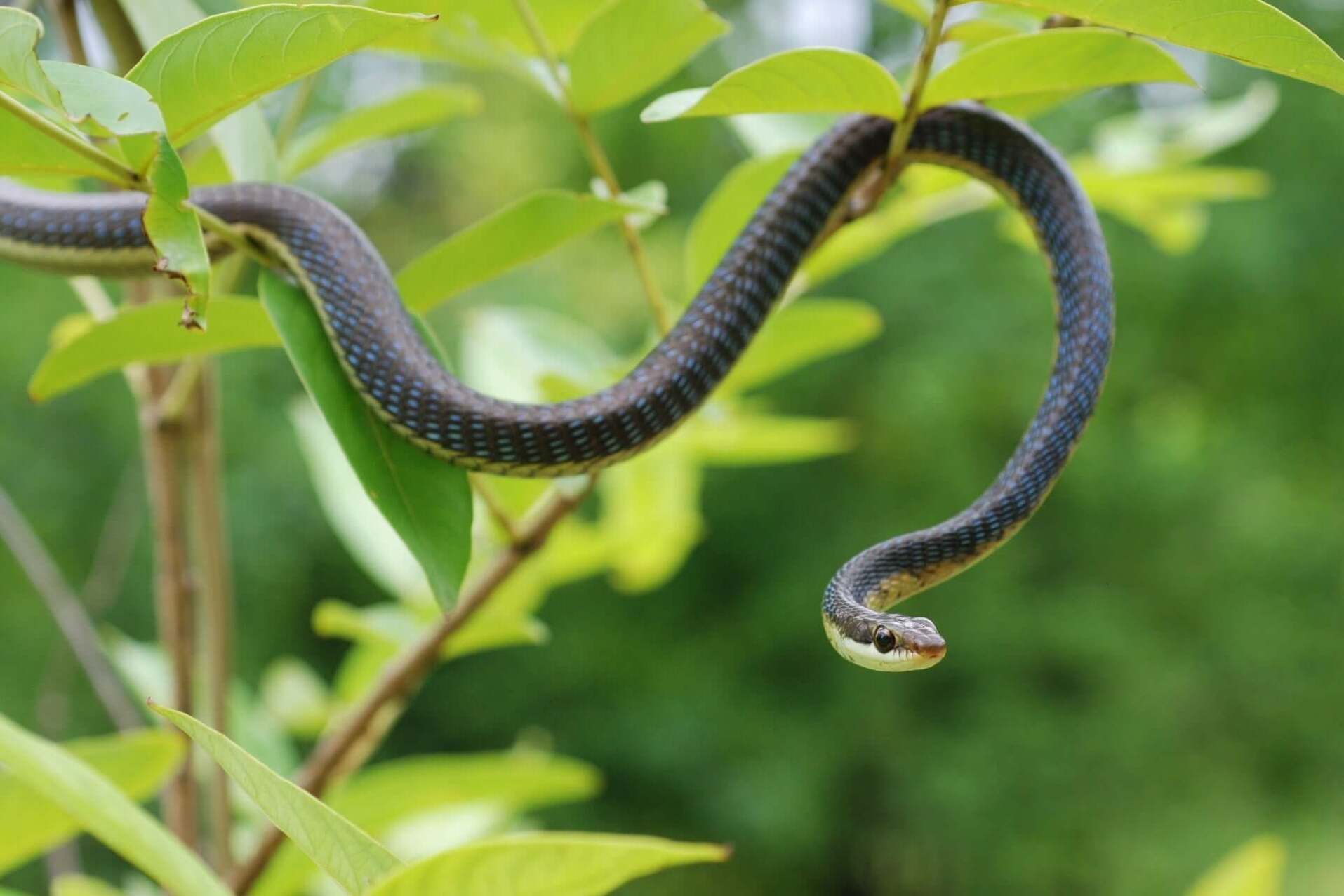
When a Snake Bite Occurs
If someone is bitten by a snake that may be venomous, treat the situation as a medical emergency.
Seek emergency medical care immediately.
Keep the person as calm and still as possible while waiting for professional help.
Avoid attempting to suck out venom, cut the wound, apply a tourniquet, or use other traditional remedies that can cause additional injury.
If it can be done safely from a distance, a photograph of the snake may help professionals identify it—but do not risk another bite trying to capture or approach the animal.
A Better Way to Think About Your Garden
The question shouldn't simply be:
“Which plant attracts snakes?”
A more useful question is:
“What conditions around my plants are making this area attractive to wildlife?”
That shift can completely change how you manage the problem.
A dense shrub may provide shelter.
A fallen fruit may attract rodents.
A leaking hose may create moisture.
A pile of wood may create a hiding place.
Together, those features can create a surprisingly attractive habitat.
Remove enough of those conditions, and your property may become less appealing to snakes without sacrificing the garden itself.
Final Thoughts
Seeing snakes around your home can certainly be unsettling, but the idea that five specific plants automatically “attract snakes” is too simplistic.
Plants generally don't function as magical snake magnets.
Instead, dense vegetation, ground cover, tall grasses, shrubs, climbing plants, and other landscaping features can sometimes provide shade, shelter, moisture, or habitat for prey animals.
And those conditions can make an area more attractive to snakes.
If you are experiencing repeated snake sightings, look beyond individual plants.
Control rodent food sources. Keep vegetation manageable. Remove unnecessary clutter. Reduce excess moisture. Maintain visibility around your home. Seal gaps that could provide access to buildings.
These measures address the environmental conditions that matter far more than simply removing a particular plant.
And remember: a snake in your yard isn't automatically a sign of danger.
It may simply be passing through an environment that provides food or shelter.
The goal isn't necessarily to eliminate every snake from your surroundings. It's to make your home and the areas where people spend time less attractive as hiding and feeding locations—while keeping both people and wildlife safe.